

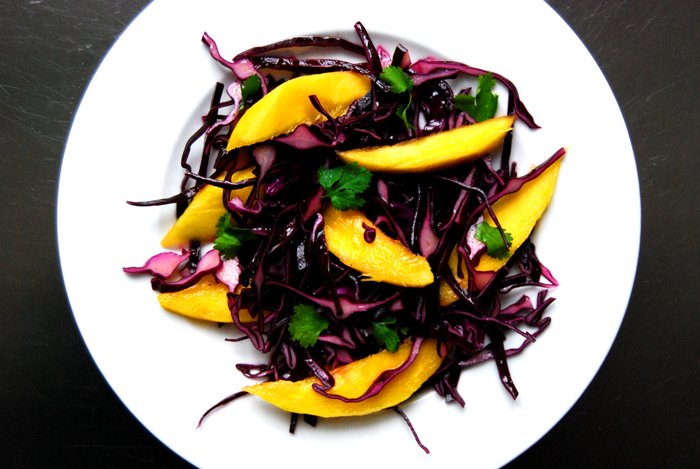
Red Cabbage and Mango Salad
When I had my tea this morning, I stared at a bright red cabbage on my kitchen table for about 5 minutes. I was lost in a daze, still overwhelmed by yesterday's response to the eat in my kitchen feature by ZEIT Magazin. I got so many beautiful messages, thank you all! In case you didn't read it yet, here is the link: http://blog.zeit.de/zeitmagazin/2014/01/05/sonntagsessen-92/
So, back to the red cabbage! My spontaneous decision: I chop the cabbage thinly and mix it with mango slices - I waited patiently for it to ripen, it should be good by now. All this salad needs is a light dressing with olive oil and orange juice and some coriander leaves on top. The light spiciness of the cabbage is great together with the sweet fruitiness of the mango and orange. A vibrant quick and easy Monday lunchtime kick!
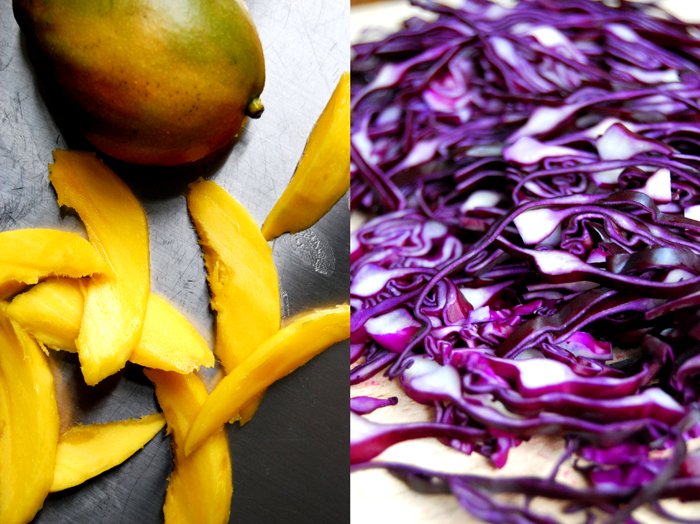
Red Cabbage and Mango Salad
For 4 people you need
red cabbage, rinsed, dried and sliced thinly, 400g / 14 ounces
ripe mango, cut into thin slices, 1
orange juice 5 tablespoons
olive oil 3 tablespoons
salt and pepper
coriander leaves, a handful
Mix the olive oil with the orange juice. Season the dressing with salt and pepper and pour over the cabbage. Lay the mango slices and coriander leaves on top - that's it. Tastes great, feels good, prepared in a few minutes - and it looks gorgeous!

A Gnocchi Treat with Pumpkin and Nuts

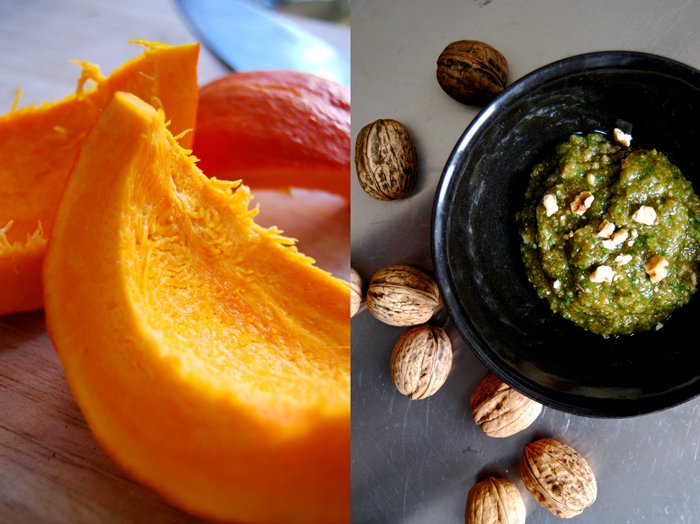
I love Hokkaido pumpkin (squash), in fact I always buy too many of them. They look stunning, their curvy shape and bright orange colour - I can't resist! Whenever I see a nice one I have to buy it and end up with far too many pumpkins in my kitchen. I have two on my kitchen table right now - perfect candidates to mix into tonight's Gnocchi dough!
Usually, I make potato Gnocchi with blue cheese sauce or sage butter, but today it's pumpkin Gnocchi with walnut pesto. They are absolutely delicious and easy to prepare. The most important trick is: never mix the flour with the warm pumpkin and potatoes! The mixture must be cold, that way the Gnocchi will keep their shape and have the right, firm texture.
This recipe has been featured on Food52 Halfway To Dinner!
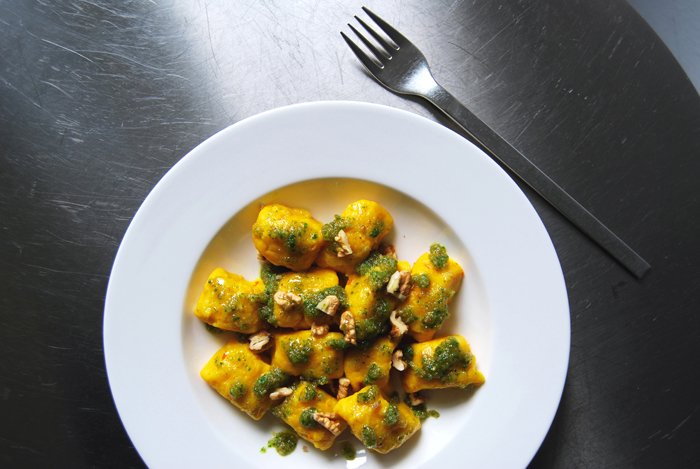
Pumpkin Gnocchi with Walnut Pesto
There are two important rules for Gnocchi making:
1. First, you make the pre-dough with the pumpkin, potatoes, butter and egg yolks which has to cool completely before you mix in the flour, otherwise the Gnocchi will turn out too soft.
2. Mix more flour into your Gnocchi mixture if it's too sticky. If the dough is too soft, the Gnocchi won't stay in shape.
For 4 people you need
For the walnut pesto
walnuts 100g / 3.5 ounces plus more for the topping
parsley, chopped, 3 tablespoons
olive oil 110ml / 1/2 cup, plus more to taste (enough to give the pesto a smooth but thick texture)
salt and pepper
Mix all the ingredients in a blender and season with salt and pepper to a taste. Add more olive oil if the mixture is too thick.
For the Gnocchi
pumpkin (squash), seeds and fibres scooped out, cut into 2.5cm / 1" cubes, 600g / 21 ounces (I like to use Hokkaido pumpkin with skin, or peeled butternut or Musquée de Provence)
potatoes, peeled, cut into 2.5cm / 1" cubes, 200g / 7 ounces
organic egg yolks 2
butter 2 tablespoons
plain flour 280g / 10 ounces
salt 3 teaspoons
nutmeg, grated
pepper
Cook the pumpkin and potatoes in lots of salted water until soft (for about 15 minutes). When they are done, take them out with a slotted ladle and drain them (gently push with a spoon and make sure that no more water comes out). Press the drained potatoes and pumpkin through a potato ricer, take any water out that might come out with pressing.
Mix the warm pumpkin/ potatoes with the butter and egg yolks and put in a cool place (or in the fridge) until the mixture is completely cool.
In a large pot, bring lots of salted water to the boil.
With a spoon, mix the cold potato/ pumpkin mixture with the flour, salt, nutmeg and pepper until combined. If the texture is too sticky and not firm, mix more flour in.
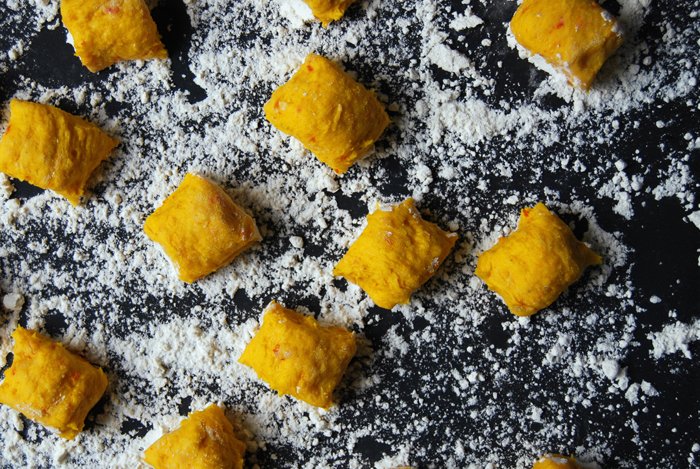
Dust your hands with flour and roll the dough into a sausage shape (about 1cm / 0.5" thick) on a well floured working surface (in batches). Cut off Gnocchi of 2.5cm / 1" length and put them on a well floured baking sheet.
Cook the Gnocchi in the water in batches on medium heat (simmering). When they start to come up and float on the surface take them out with a slotted ladle and drain them. Keep the Gnocchi in a covered ovenproof dish in the warm oven (100°C / 210°F) until the last batch is done.
Serve the Gnocchi sprinkled with the pesto and some crushed walnuts.
Butter Bean and Fennel Soup
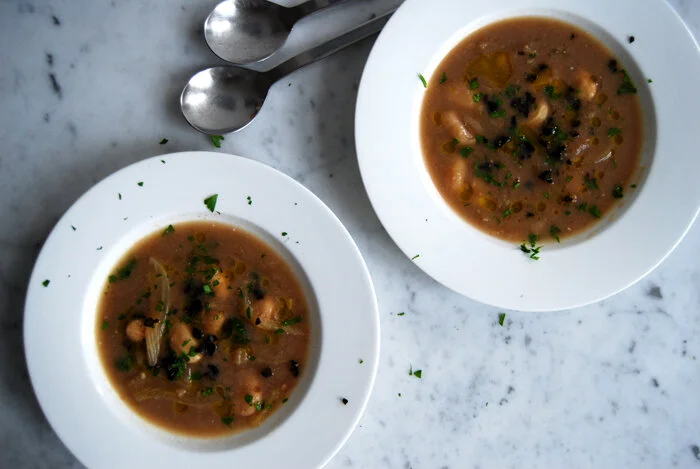
It's time for soup! The colder it gets the more I feel like food that is up-lefting and soul-warming. Something that makes me feel strong and prepares me for the cold, dark months ahead of me. Although I love winter, the snow, even the cold, when you get cosy inside, slow down and relax, it's important to treat yourself to the right food to renew your body and mind.
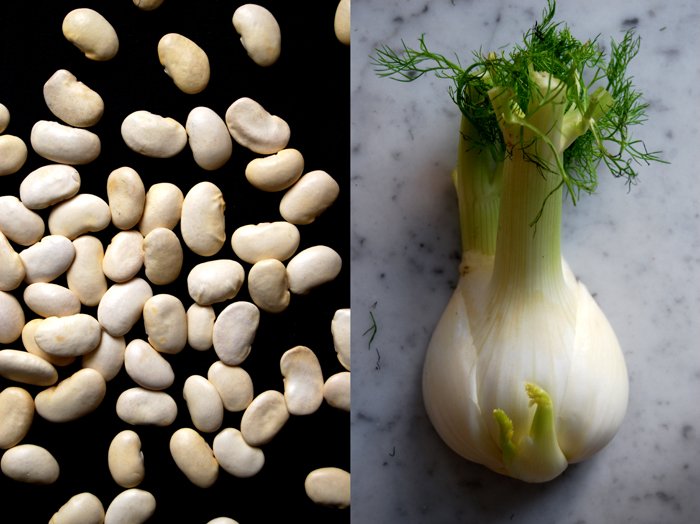
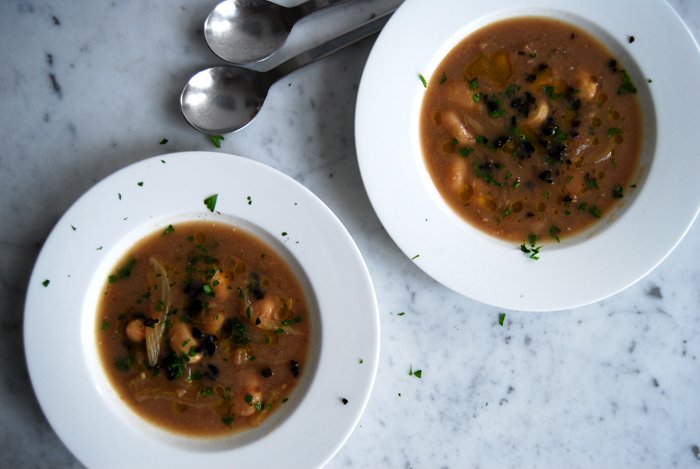
I'm in the mood for a thick soup, smooth but light - like my Minestrone with big butter beans and fennel with some parsley and black olives sprinkled on top. The texture is velvety and it tastes a bit sweet. Today I add a piece of bacon to it as I feel like something deeper in taste. Usually I cook the vegetarian version, I don't prefer one over the other, both are nice winter treats!
Butter Bean and Fennel Soup
Keep in mind that you have to soak the dried beans in water overnight. I like to cook soups in bigger batches to store some in the freezer - great for busy days. This recipe is for 4 people, sometimes I even double the amount.
dried butter beans or Cannellini beans, soaked in cold water overnight, 250g / 9 ounces
fennel, rinsed, cut in thin slices, 300g / 10.5 ounces
celery stalk, cut in cubes, 1
onion, cut in cubes, 1
broth or water, around 1500 ml
optional: a piece of bacon, 40g / 1.5 ounces
garlic, crushed, 1 clove
bay leaf, 1
salt and pepper
olive oil for frying
parsley, chopped, for the topping, 2 tablespoons
black olives, chopped, for the topping, 4
good olive oil, for the topping
Heat some oil in a large pot. Fry the onion, celery, garlic and bacon (left in one piece) for a few minutes. Add the fennel, take the beans out of the water and put them into the pot as well. Fill with broth, add the bay leaf and close with a lid. Don't season with salt before the beans are done or they won't become soft. Cook for 30 minutes or until the beans are soft. Depending on the bean's texture it may take another 30 minutes. Mine needed 60 minutes today but I must admit that I found them in a dark corner of my shelf.
When the beans are done, take out half of the vegetables (cooked beans and fennel) and put them to the side. Mix the other half of the vegetables together with the liquid in a blender and season with salt and pepper. Put everything back into the pot together with the remaining vegetables. When you arrange the soup in soup bowls sprinkle with olives and parsley and drizzle your best olive oil on top.

The last spaghetti (in 2013)
The last day of the year always gives me a funny feeling, an emotional mixture of memories, feelings - and excitement for what the future will bring.
I need some pasta to relax.
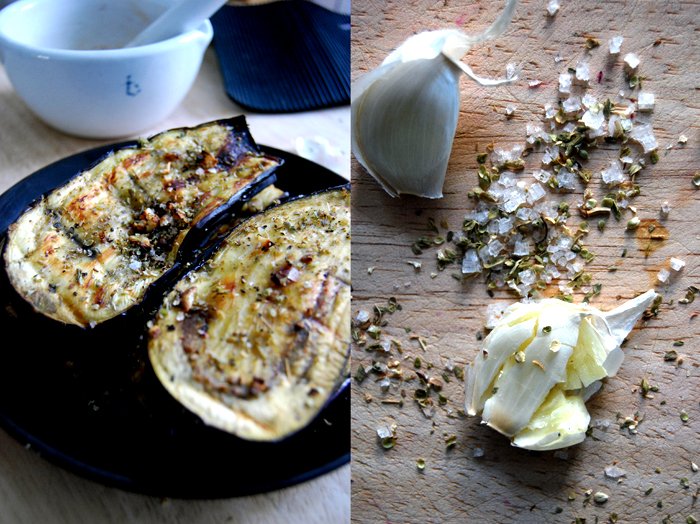
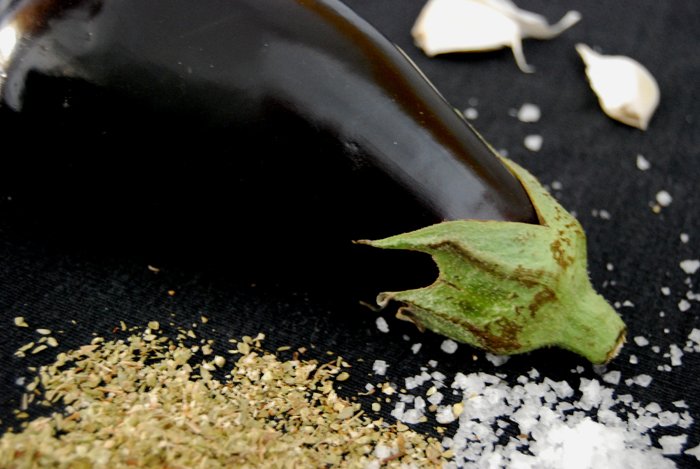
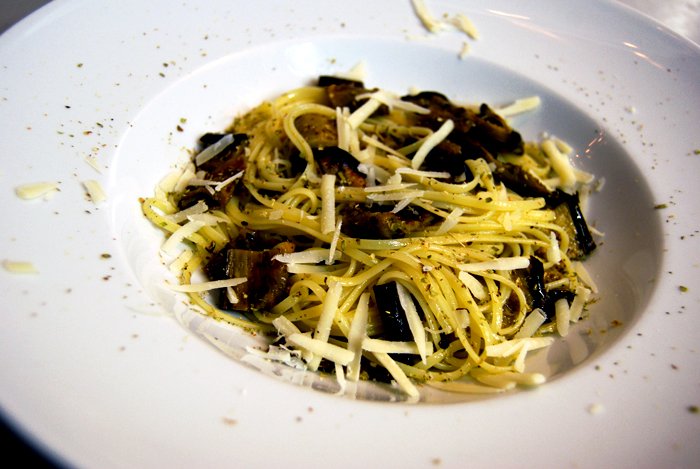
Tonight, we are invited to dinner, we will have cheese fondue. I don't want to eat too much for lunch before this cheese feast but I have some grilled aubergine left from our Sunday pizza. Golden brown and soft, brushed with olive oil and sprinkled with oregano, crushed garlic, salt and pepper - I just cut them in bite sized pieces. I throw some spaghetti in boiling water, when they are done, mix them with the aubergine, a bit of olive oil, some more dried oregano and crushed pepper and sea salt - from Mr. Cini's salt pans in Gozo. You can sprinkle some Parmesan on top if you like. A simple meal to relax in the last hours of 2013!
Fennel Carpaccio with Caper and Lemon
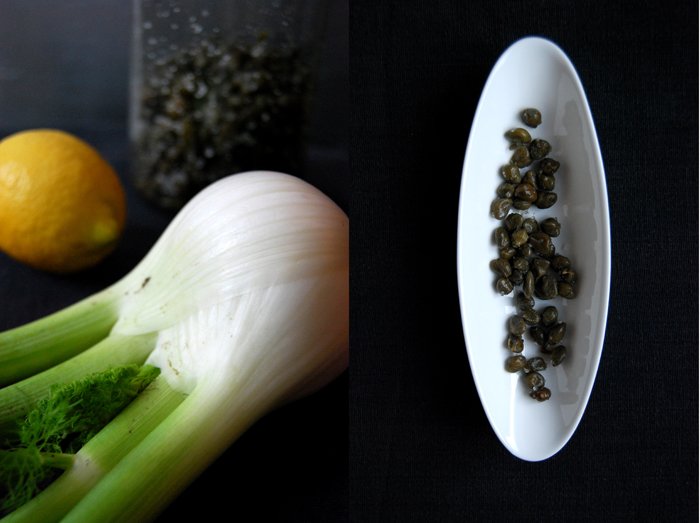
Two days left in 2013 - an easy and comfy lunch is in order to lean and look back on the past months. I feel like a quick carpaccio with fennel, caper and lemon, fresh and light, the right foundation for an honest review of an exciting and inspiring year - and the start of eat in my kitchen!
My mother told me about this vegetarian carpaccio which she enjoyed at a restaurant in Italy, so much that it became part of her - and my - recipe collection. Sometimes she is so excited by her food discoveries that she calls me immediately after she ate to tell me about her find. She knows that I love fennel and caper - a perfect match together with lemon and olive oil. I can get good quality fennel all year round therefore I cook with it quite often. As much as I love this carpaccio as a quick lunch because it's so easy to prepare, it makes a beautiful, light starter as well.
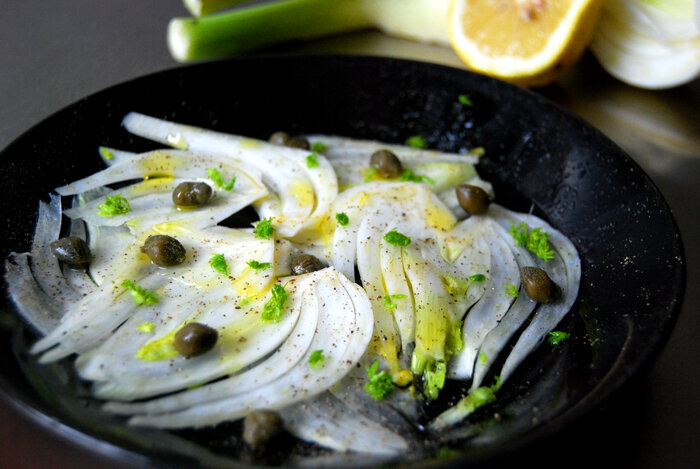
As a starter for 4, cut 1 fennel bulb in very thin slices and arrange them on plates. Add 6-10 capers on each plate, mine are salted so I have to rinse them first. Drizzle some olive oil and fresh lemon juice on top and season with salt and pepper. It only takes a couple minutes.


My Sunday Pizza Tradition

Another tradition of mine - I always bake pizza on Sundays, always. My friends joke about my unwavering dedication (I barely break this tradition) but to me pizza is the ultimate cosy mood food. Nothing beats an evening on my sofa with a nice big piece of pizza in my hands and a good movie. It's the perfect preparation for a smooth transition into a new week. So why change it. The only variation is what's on top which depends on the season, my appetite and spontaneous inspiration. So far, my Sunday tradition has never seemed boring.
For today, my pizza gets a topping with aubergine slices (grilled with garlic and oregano oil), Pecorino slices and one part with ricotta. A very concentrated tomato sauce with lots of oregano and slices of organic Mozzarella go with it, that's all it needs. I make the pizza dough with olive oil which makes it richer and very tasty. A very easy recipe, it takes its time to rise but it's worth it. Nothing beats homemade pizza dough! It makes such a big difference to the taste - and kneading the dough with your own hands is great stress relief!
For years I made my pizza base the same way. First I let it rise in a bowl and then, a second time, on a baking sheet before I put the topping on. This summer I got a great tip from a friend of mine from Switzerland. He told me to put the baking sheet for the pizza on the bottom of the oven while the oven is heating up. As soon as the baking sheet is hot you take it out of the oven and flip it over. You take the well risen pizza dough (which has been rolled out) and place it on the hot baking sheet. The dough will start to rise and bake straight away which makes an amazing crust - like pizza stone. Once the topping is on, bake it in the oven for a few minutes and you will get the crispiest pizza you can imagine!

Pizza with Aubergine and Pecorino
I start to prepare the dough 2 hours before I bake it to give it enough time to rise.
For 1 big pizza (size of 1 baking sheet) you need
For the dough
plain flour 350g / 12.5 ounces plus more for mixing
dry yeast 1 package (for 500g / 1 pound of flour)
water, lukewarm, 190ml
olive oil 3 tablespoons
salt 1 teaspoon
Combine the flour with the yeast and salt, add the olive oil and the lukewarm water, slowly, not all at once (you might not need all of it). Mix with your dough hooks for a few minutes. The dough shouldn't be moist and sticky at all, more on the dry side. Continue kneading and punching with your hands until you have an elastic dough ball, not too hard, not sticky. Put the dough back in the bowl, cover it with a tea towel and let it rise in the warm oven (35°C / 95°F) for 40 minutes. This works really well but make sure that your oven is set to top/ bottom heat and not to fan.
When the dough is well risen, roll it out on a very well floured (this is very important!) working surface. It should be a bit smaller than the size of your baking sheet. Cover with a tea towel and let it rise for another 10-15 minutes
For the tomato sauce
tinned tomatoes 400g / 14 ounces
oregano, dried or fresh, 1 tablespoon plus more for the topping
salt (1 teaspoon) and pepper
Mix the ingredients in a small sauce pan, chop the tomatoes and let everything cook down until very concentrated and thick. If you leave the sauce too liquid it will be soaked up by your pizza base.
For the topping
I prepared the grilled aubergine (eggplant) a day before. You can keep it in the fridge for days and use it for other recipes as well, or enjoy it as antipasti.
aubergine, cut in thick slices, 1
garlic, crushed, 1 clove
olive oil, to brush the aubergine and to drizzle on top of the pizza
salt and pepper
pecorino cheese, cut in thin slices, 100g / 3.5 ounces
mozzarella, cut in cubes, 125g / 4.5 ounces
ricotta, 100g / 3.5 ounces (I sprinkled just 1/4 of the pizza with ricotta)
Brush the aubergine slices with olive oil, sprinkle with oregano and garlic and season with salt and pepper. Grill in the oven until golden brown and soft and cut in long strips.
The pizza
Set your oven to 260°C / 500°F. My oven has a special pizza setting but you can use top / bottom heat as well. Put the baking sheet on the bottom of your oven to heat it.
Take the hot baking sheet out of the oven, flip it over and place it carefully on two stable wooden boards or mats as it will be very hot. Place your risen dough carefully but quickly (best done by two people) on the baking sheet, push it gently into place if necessary. Spread the tomato sauce on top and sprinkle with oregano, continue with the aubergine, Pecorino, mozzarella and ricotta. Put the baking sheet back into the oven, on the bottom again, and bake for a few minutes until the pizza is golden brown, bubbling and crisp!


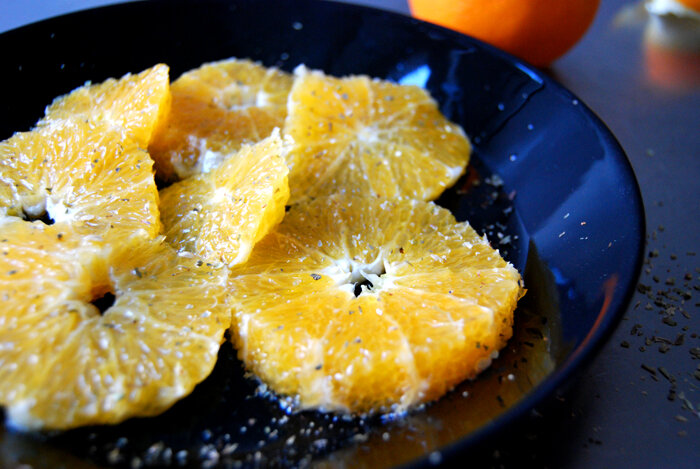
A Sicilian Salad with Oranges, Oregano and Olive Oil
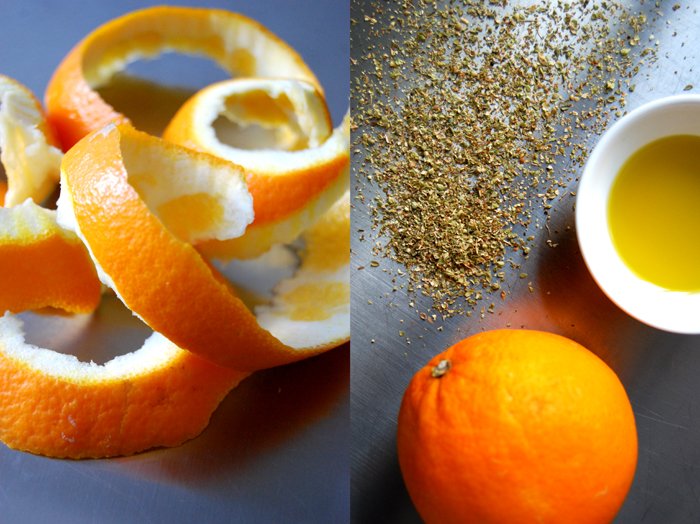
My friends and family live all over the world. On the big festive days of the year, we spend quite a bit of time on Skype to share the special moments. We talk and laugh and - very often - show each other what we cook for our festive meals. Yesterday, my boyfriend's mother Jenny, presented a beautiful piece of ham that she had just pulled out of her oven. It looked so tempting! She also told me about the orange tree in her garden in Malta which is sagging with oranges and held a huge box of oranges for me to see. I knew what I would have for lunch today: my Sicilian salad with oranges, oregano and very good olive oil!
I know this combination sounds a bit extraordinary. It is another one of my Sicilian discoveries which I had for breakfast at a little farm in Noto two years ago. They used the oregano which grew on their farm and it was the best oregano I ever had in my life. It was unbelievably good! I never thought there could be such big differences in the taste of oregano.
This salad makes a perfect snack after the last Christmas days of culinary richness - refreshing, light and comfortable. All you need to do is to peel two oranges (including the softer inner skin) and cut them in thick slices. Drizzle some good olive oil on top and sprinkle with dried or fresh oregano and a bit of salt.

Cheese Spaetzle, a Swabian Feast
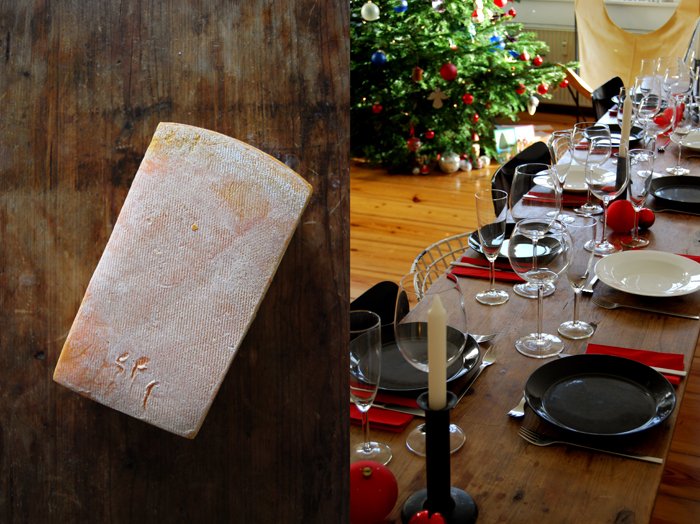
This meal is a feast, one of my all time favourite foods! It's luscious, rich and simply stunning. I am talking about Cheese Spätzle - originally from Swabia in the South of Germany. Spätzle are little noodles made of flour, durum wheat semolina and egg. They are thick, with bite. You press the Spätzle dough through a potato ricer into boiling water and then you layer the cooked Spätzle noodles with lots of good mountain cheese and fried onions - just addictive! Whenever our family comes together for a few days Spätzle is one of our dinners.
I make Spätzle with a ricer. Originally they are "cut" into pieces by placing the thick dough on a little chopping board, letting it run into boiling water and cutting pieces off. I must admit that I never tried this. I prefer to stick to my ricer.
Yesterday I had a big dinner for ten at mine and Cheese Spätzle were my first choice. They are so easy to prepare, hearty and perfect for the cold season and - to me - there is nothing more beautiful than placing a big bowl of food in the middle of my long wooden table. It was a true feast, savoured by us all!
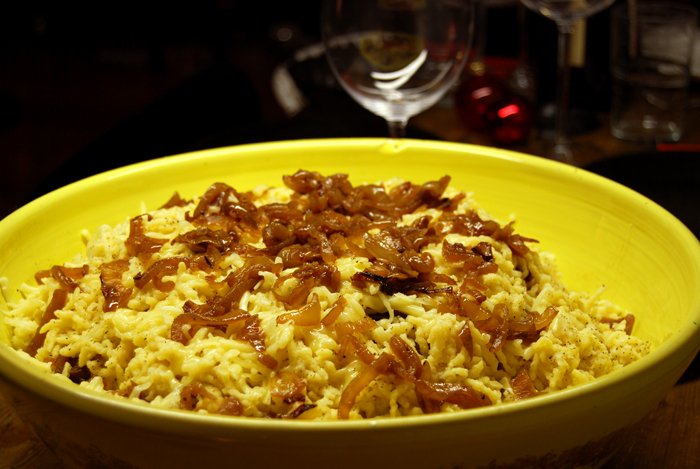
Cheese Spätzle
You need a potato ricer with large holes or a special Spätzle ricer.
I served the Cheese Spätzle with a wintery salad with beetroot on the side. As there were 10 of us yesterday I made the Spätzle dough with 27 eggs! Usually I calculate 5 eggs for 2 people.
For 2 people you need
plain flour (I use spelt flout type 630) 130g / 4.5 ounces plus more for mixing
durum wheat semolina 180g / 6.5 ounces plus more for mixing
organic eggs 5
salt 1 teaspoon
onions, medium sized, cut in thin slices, 5
olive oil for frying
aromatic cheese (like Appenzeller or Raclette), grated, 200g / 7 ounces
salt and pepper
Put the flour, semolina and the salt in a big bowl, add the eggs and mix with a wooden spoon until everything is combined. Whip the dough at bit harder until bubbles appear on its surface. Add more semolina if necessary until you have a smooth, thick dough that drips slowly off your spoon. Let the dough rest for 10 minutes.
Fill a large pot with salted water and bring to the boil.
Place an ovenproof dish (big enough for all the Spätzle) in the the oven and set to 100°C / 210°F.
Fry the onions in some oil on medium heat for at least 20 minutes or until soft and golden brown. Grate the cheese.
Fill your Spätzle or potato ricer with some of the Spätzle dough, press into the boiling water and cut off the dripping ends with a long knife. Let the Spätzle cook for 30 seconds, drain and place them in the warm dish from your oven. Season gently with salt and pepper as you will season every Spätzle layer. Sprinkle the top with some of the grated cheese and fried onions. You have to divide the onions and the cheese depending on how many batches of Spätzle you make. Place the bowl with the Spätzle in the warm oven again and continue with the next batch, always seasoning each layer and topping with cheese and onions.
Place the bowl with your Cheese Spätzle on the table - you can offer some freshly crushed pepper and more salt with it.
Enjoy your Spätzle feast!
A small but important note: Clean the cooking ware that was in touch with the Spätzle dough only with cold water. Don't use warm water as it will make the bits of dough as hard as concrete.


Spicy Pumpkin Soup with Bittersweet Chocolate
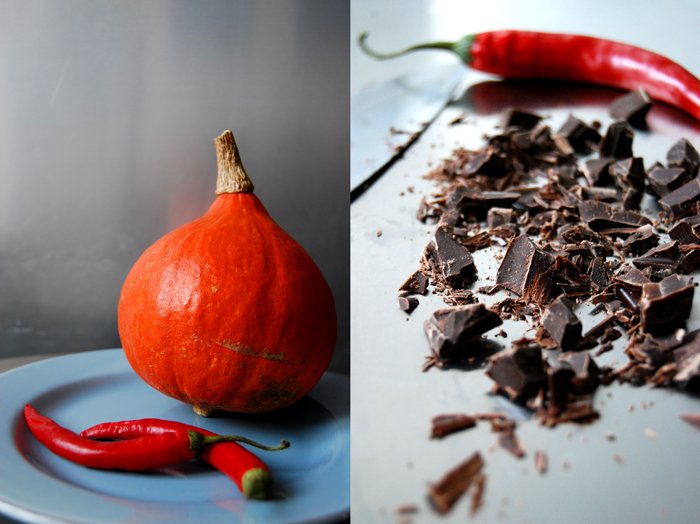
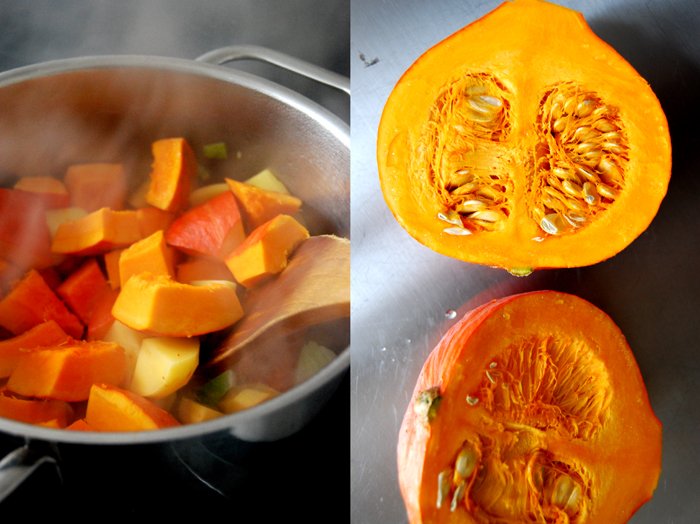
It's cold outside and I see a bright orange pumpkin right in front of me telling me what I need - a warming pumpkin soup. I have played around with many pumpkin variations in the past, with bacon, curry mixtures, roasted onions and I also love my puristic version with pumpkin seed oil and pumpkin seeds. Over the years my pumpkin soups became more spicy. I tend to feel cold all the time in Winter and nothing beats a hot and spicy soup to warm up your body from the inside.
Today I want my soup really hot and I also feel like adding some bittersweet chocolate on top (I love the combination of bitter, sweet and spicy!). I mix the soup in a blender which gives it a smooth and velvety texture. Together with the chili and bittersweet chocolate sprinkles on top, it makes quite a sensual meal!
This recipe has been featured on Food52 Halfway To Dinner!

Pumpkin Soup with Chili and Bittersweet Chocolate
For 4 people you need
For the soup
pumpkin (squash), without the seeds and fibres, cut into cubes, 600g / 1.5 pounds (I like to use Hokkaido squash with skin, or peeled butternut or Musquée de Provence)
medium sized potato, cut into cubes, 1
medium sized leek, sliced thinly, 1/3
medium sized carrots, cut into small cubes, 2
medium sized onion, chopped, 1
garlic, quartered, 1 clove
bay leaf 1
small dried chili peppers 2
a pinch of mace or nutmeg
salt and pepper
olive oil
water around 1l / 2 pints
For the topping
fresh red hot chili pepper, chopped finely, 1
bittersweet chocolate, grated, 4 heaped teaspoons plus more to taste
In a large pot, heat a splash of olive oil and cook the onion for a few minutes until golden and soft. Add the garlic, leek and carrots and cook for 2 minutes, stirring constantly. Add the pumpkin and potato, cook for 2 minutes and cover with water. Add the bay leaf and the dried chili peppers and season with mace (or nutmeg), salt and pepper. Bring to the boil and cook for about 30 minutes (without a lid) or until the pumpkin is soft.
Take the pot off the heat and remove the bay leaf and dried chili peppers. Purée the soup with a stick mixer or in a blender until smooth, season with salt and pepper to taste. Divide the soup between the plates and sprinkle with the fresh chili pepper and chocolate.
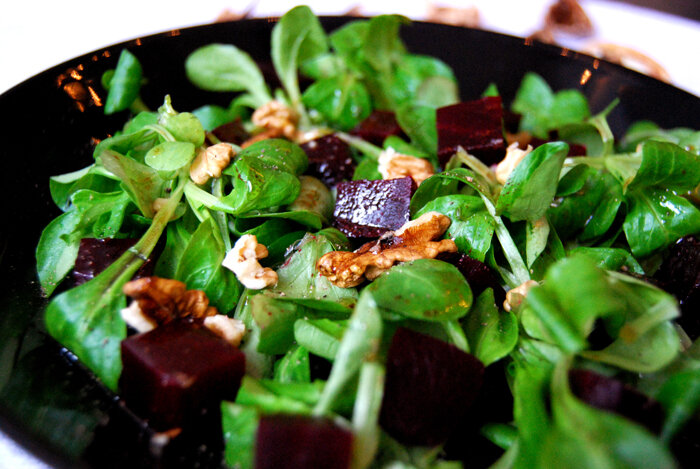
A Wintery Salad with Beetroot and Walnuts

I must confess that I literally lived in my cookie boxes the past weekend but - at least for today - I will take a sweet break (as much as I love them). My body needs something light and healthy, a salad. In winter I love to get boxes of organic field salad, its nutty taste is great to combine with roots, fruit and nuts. You just need to throw a handful of these little leaves in a bowl, add whatever you feel like and drizzle some olive oil and balsamico on top. It makes a great lunch or dinner even with some cheese and bread on the side. As this salad is so easy to prepare and looks and tastes so good, it is also a very nice starter for a wintery dinner party.
Sometimes I arrange this lettuce with mango or apple slices but my favourite combination is cooked beetroot and walnuts. I cooked a few beetroots a couple days ago and still have some left. I chop up one medium sized beet in little cubes and mix it with two handful of field salad. My dressing is simple but matches the beetroot perfectly: 3 tablespoons of olive oil mixed with 2 tablespoons of balsamico vinegar, seasoned with salt and pepper, that's all it needs. I pour the thick dressing on top of the salad and drizzle 5 chopped walnuts on top. Today there are two of us enjoying this tasty and healthy treat!
We eat beetroot quite often, I buy 3 or 4 of them every week and cook them with 2 bay leaves in salted water for 45 minutes (more or less depending on their size). This way they keep their strong and unique taste. I love them sliced thinly as a carpaccio or cut into cubes in wintery salads.

Couscous with Orange, Ginger and 6 Spices
Two days ago I filmed a live session at a recording studio. As there were five of us and we had to work till late, I wanted to prepare something nice for us to eat, and to feed our energetic mood.
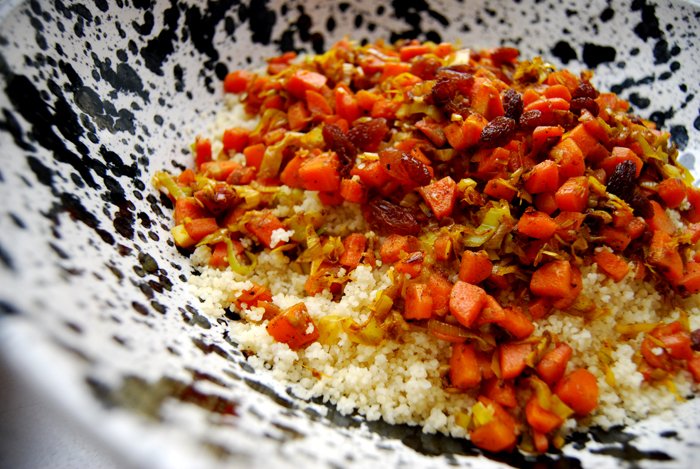
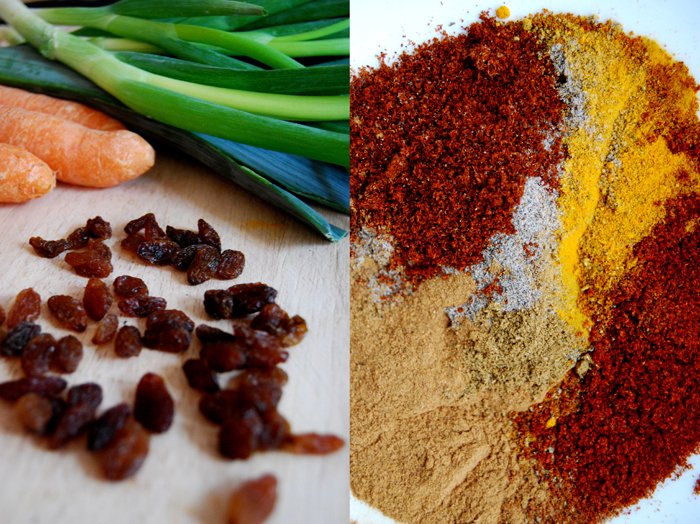
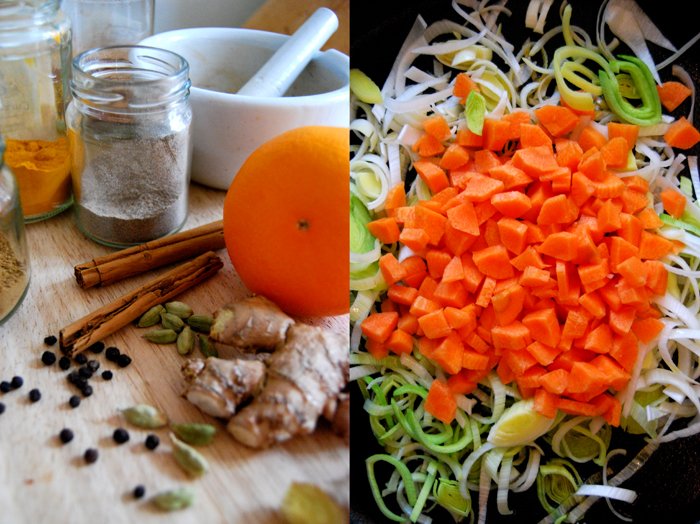
I didn't have much time to prepare, so a box of couscous caught my attention (5 minutes and it's done!). My mother had just sent it to me a couple days before because, I think, something that has to sit rather than cook for just a few minutes didn't quite satisfy her idea of cooking. I had half an hour to enhance it a bit so I decided to mix it with slices of leek and carrot and to add some strong exotic flavors - a homemade curry mixture with orange zest, ginger, turmeric, black pepper, cumin, cardamom, cayenne pepper and cinnamon. I mixed in some raisins to add some sweetness to the fruity spiciness of the curry mixture. Quick and easy - perfect food to wake you up (exactly what we needed at 11pm)!
A Couscous with Orange, Ginger and 6 Spices
For 6 people you need
couscous 360g / 12.5 ounces
water 540ml (mixed with 1 teaspoon of salt)
1/2 a medium sized leek, thinly sliced
spring onion, thinly sliced, 2
carrots, cut in small cubes, 4
raisins, a handful
olive oil, 3 tablespoons plus more for frying
butter, 2 tablespoons
sour cream, 3 tablespoons
For the spice mixture
ginger, grated, 2 teaspoons
zest of an orange, 2 teaspoons
turmeric, ground, 1 teaspoon
black peppercorns, ground, 1 teaspoon
cinnamon, ground, 1 teaspoon
cardamom, ground, 1 teaspoon
cayenne pepper, ground, 1 teaspoon
cumin, ground, 1 teaspoon
Let the raisins soak in a cup of hot water.
Bring the salted water to the boil. Take the pot off the heat. Add 3 tablespoons of olive oil to the water, add the couscous and mix immediately, cover with a lid (but leave the pot off the heat). Let it sit for 5 minutes. Add the butter, mix and separate the grains with a fork.
Mix all your spices for the spice mixture (including the ginger and orange zest) and grind in a mortar. Warm some olive oil in a large pan and add the leek, spring onions and the carrots. Push the vegetables to the side after a couple minutes, pour some more oil in the middle of the pan and fry 3 teaspoons of your curry mixture for a minute on medium heat. Mix everything together and fry for another 1o minutes (keep in mind that the carrots shouldn't become too soft). Season with salt.
Mix the couscous and the fried vegetables in a big bowl, add the sour cream and more of your curry mixture until you find the right balance of spiciness (I added another 3 teaspoons of the spices at that point, so 6 teaspoons in all). When you are happy with the result, take the raisins out of the water and sprinkle on top of your couscous.

Sicilian Memories with my Tangerine Jam
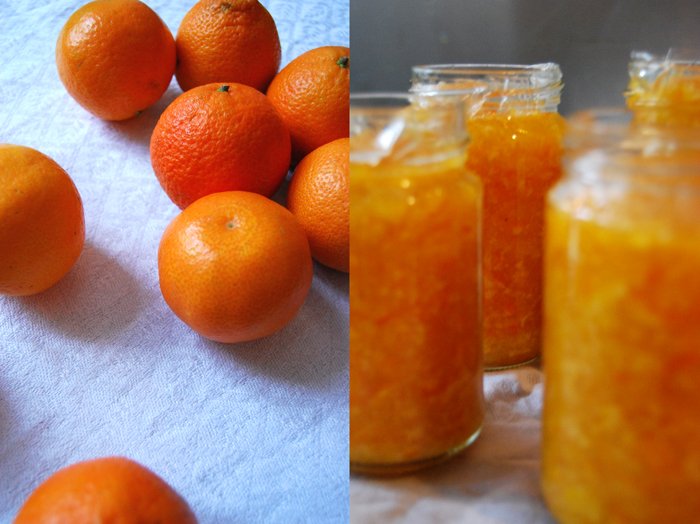
Last year I went to Sicily for the first time in my life. We stayed at a beautiful farm close to Noto located in soft hills between lemon, orange and tangerine trees. Every morning we got the most delicious breakfast served under pine trees with the old city of Noto in the distance. Freshly baked cakes, fruit, white bread fried in olive oil together with oregano (from the farm as well, the best oregano in the world!), it was heaven!
One of my many breakfast discoveries was a jam which looked like the golden sun and tasted so sweet and refreshing, with a hint of sourness and bitterness. Just divine! This jam was made of tangerines and I think I must have emptied jars of it during our holiday. As soon as I got home and tangerines were available I made my own! This year, I have to refill my pantry with my Sicilian jam.
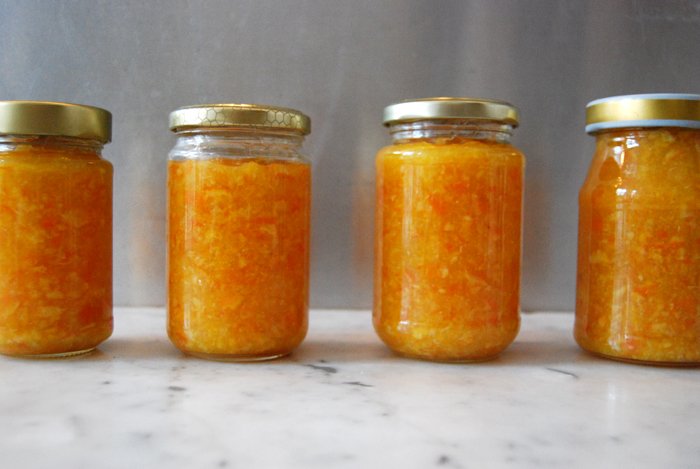
Sicilian Tangerine Jam
For 4 medium sized jam jars you need
organic tangerines, rinsed, 1200g / 2 1/2 pounds
sugar 600g / 1 1/4 pounds
juice and seeds of 2 lemons
spirit to sterilise the rims of the jars
Sterilise the 4 jam jars in boiling water for 5 minutes.
Fill a large pan with water and bring to the boil. Put the tangerines in the water and let them boil for 20 minutes. Take the tangerines out and keep some of the water.
Quarter the cooked tangerines (don't peel them, you use the whole tangerine!), take out their seeds and put them aside. Cut the lemons in half and keep their seeds as well. Heat up some of the tangerine cooking water in a small pan (it should come up to 2cm / 3/4"), add the lemon and tangerine seeds and let them cook for 5 minutes.
Shred the quartered tangerines in a food processor for a few seconds. Put them in a large pan, add the sugar, the lemon juice and the water used to boil the seeds. Bring to the boil gently (the sugar has to dissolve first) and boil everything for 18-20 minutes.
Dip the rim of your jars in the spirit and wash out the lids of the jars with the alcohol as well. Fill your jars with the jam and close well immediately.
Let the jars cool off and enjoy their amazing color - and the taste after a day or two as the jam has to sit a bit!


A Celebration of Roots, Garlicky Potatoes and Gingery Rutabaga
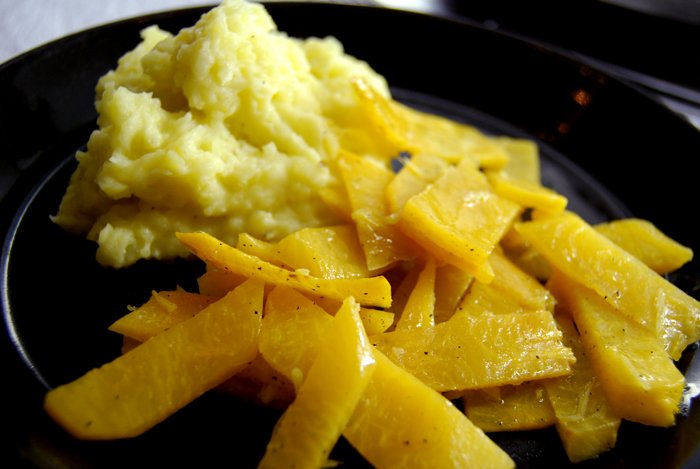
This meal celebrates roots in all their variety. On one side, mashed potatoes which are absolutely addictive, combined with garlic and lemon. The mash is fluffy, it is tasty and it is so good that you don't really need anything else with it but I want another root on the plate: rutabaga (also known as swede). This root gets spiced up with ginger as the two flavors combine perfectly.
Winter is the time for roots and I love to try out different variations otherwise I wouldn't be able to eat it for so many months. But there is so much you can do with it! You just have to be a bit brave and play around with it. The potato-garlic-lemon idea came up because we love mash potatoes (also in the very basic version) but I thought it would be nice to add some favors to make it more suitable for other, more extreme combinations like the gingery rutabaga for example. Together with garlic and lemon we can still have our mash on the plate even when there are more exotic roots involved!
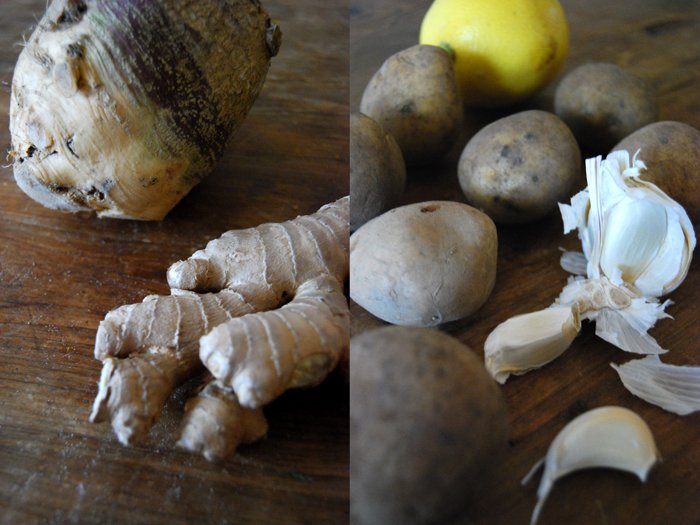
Mashed Potatoes with Garlic and Lemon and Gingery Rutabaga
For two people you need
For the mash (the amounts are a rough guideline)
medium potatoes, cooked, 6
clove of garlic, crushed, 1
juice of half a lemon
olive oil, 2-3 tablespoons
butter, 30g / 1 ounce
milk, around 150-200ml
salt and pepper
Heat up all the ingredients in a pot on medium heat and mash. If the mixture becomes too dry add more milk, if it is too liquid let it cook a bit more. Season with salt and pepper.
For the rutabaga
small rutabaga, peeled, 1
ginger, grated, a thumbnail sized piece
olive oil for frying
white wine for deglazing
salt and pepper
Cut the rutabaga in very thin slices (about 2mm). Cut these slices in strips (1cm / 1/2") and cut these strips in 2-3cm / 1" pieces (see my first picture for the shape).
Heat up the oil in a pan, add the rutabaga and let it become golden. Add the ginger, fry for a minute and deglaze with the wine. Add salt and pepper and a splash of water if necessary (the liquid should come up to 2cm / 1"), close with a lid and let it cook on medium heat for 15-20 minutes. Check the rutabaga in between as it shouldn't get too soft and season with salt and pepper if necessary.

A Salad with White Beans, Orange and Thyme

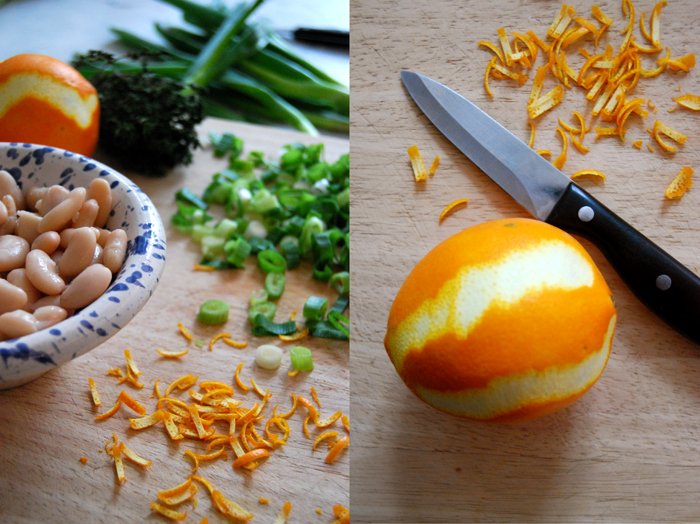
This salad is quite extraordinary in its combination but quick and easy to prepare. The first time I made it, I used dry beans which involved pre-soaking and cooking but I use tinned beans when I need a quick lunch like today. White beans are great to combine with other strong flavours and in this salad they still manage to stand out next to the strong tastes of orange peel, thyme and spring onions. They create a perfect match.
For a lunch for two people you just need a big tin of white beans (rinsed), 1 orange, 4 spring onions, a sprig of thyme and salt and pepper. Maybe a few slices of bread to go with it and your lunch will be ready in a few minutes.
Cut fine strips of orange peel (I chop up four strips of peel, each 1x6cm / 1/2"x2 1/4") and cut the spring onions thinly. Mix the beans with the leaves of the thyme sprig. For your sauce mix 3 tablespoons of olive oil together with 5 tablespoons of orange juice and season with salt and pepper. Mix everything together and you will have a beautiful lunch.

A trusted companion, my beloved Quiche
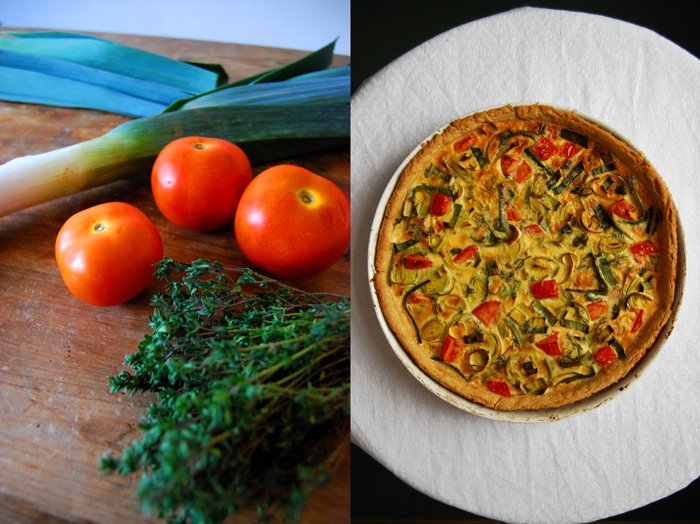
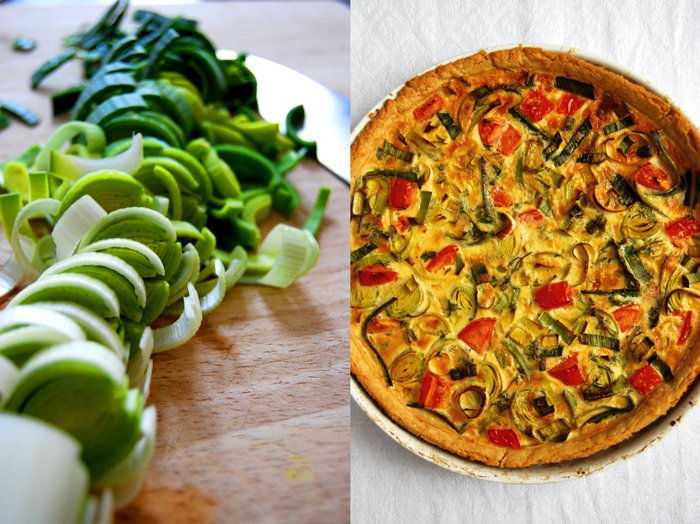
This recipe has been with me for a very long time. I think I cooked it for the first time nearly twenty years ago. And since then it has made lots of people very happy (including myself). My time trusted companion is a quiche with a wonderful crisp and buttery short crust base and a simple but perfect filling of leek, tomatoes and thyme. What I also like about it is that the egg and cream filling isn't as high and heavy as in many other versions of this famous French dish. There is still something light about mine.
In past years I tried out different fillings with spinach or broccoli but I still prefer the combination of leek and tomatoes. The taste is just perfect. I once covered the base with slices of pear and crumbled Stilton for a party, very nice too, and perfect finger food.

Quiche
Usually I double the amount and make two quiches, one to eat warm straight away, the other to eat cold the next day. I can't say which I prefer as the different flavours come through very strongly when the quiche has cooled down.
For one quiche you need a 27cm / 10.5" baking dish or tart pan. I use spelt flour type 630 (but you can use any other plain flour) and organic eggs.
For the short crust base
flour 250g / 8.5 ounces
butter, cold 125g / 4.5 ounces
egg, organic 1
salt 1 teaspoon
Combine the flour with the salt and cut the butter with a knife into the flour until there are just little pieces of butter left. Continue with your fingers and work the butter into the flour until combined (there shouldn't be any lumps of butter left). Add the egg and continue mixing with the hook of your mixer until you have a crumbly mixture. Form a disc, wrap in cling film and put in the freezer for 10 minutes.
For the filling
medium leek, thinly sliced, 1
tomato, cut into cubes, 1
thyme, leaves of a few sprigs
eggs, organic, 3
heavy cream 125ml
crème fraiche or sour cream 125ml
salt 1 heaping teaspoon
pepper
nutmeg, best freshly grated, a generous amount
Set your oven to 210°C / 410°F.
Mix the eggs with the heavy cream, crème fraiche, salt, pepper, nutmeg and thyme.
Roll out the dough between cling film and line your baking dish with the flat pastry. Prick it with a fork and blind-bake in the hot oven for 10 minutes. Take your baking dish out of the oven and set the temperature down to 175°C / 350°F.
Spread the leek slices and tomato cubes over your pre-baked pastry base and pour the egg / cream mixture over. Put the quiche carefully on a baking sheet in the oven and bake for about 40 minutes or until golden. Let it cool for about 10 minutes before you eat.
Bon appétit!


Tomato, Leek and Cream Cheese Bagel
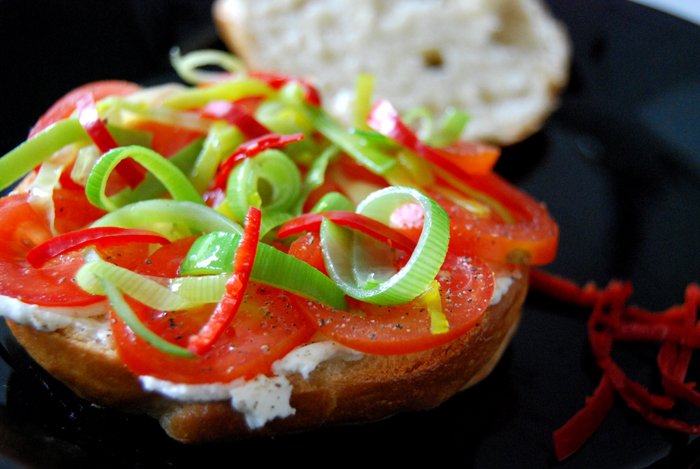
Today has been a busy day so we are going to keep it simple and make some sandwiches. I love trying out new variations as there are so many great things one can place between two slices of bread - or, in our case today, in a bagel.
Even though my bagels are really good (my recipe will follow soon), I must admit the true star of this snack is the filling of sour cream cheese together with spicy chilli, fried leek rings and fresh slices of tomato. Some salt and pepper on top and you have a most satisfying meal.
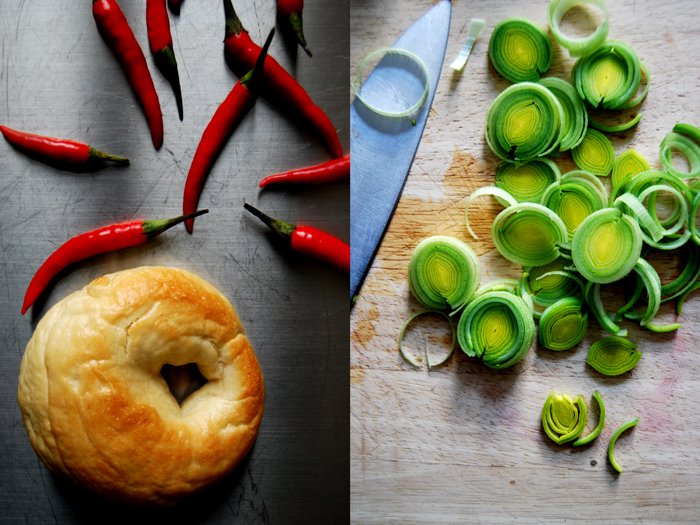
When I make bagels I bake them in bigger batches because it is very convenient to have a few of them in the freezer and you just have to warm them up in the oven for a few minutes whenever you feel like. For our sandwiches today I prepare two bagels which I had baked with spelt flour (my favorite flour). But four thick slices of any other nice, fresh white bread will work as well. While the bagels are defrosting in the oven, I gently fry thinly sliced leek (a thumb length piece) in some butter and cut a fresh chili pepper (4 cm) in very thin slices as well. Then I spread the cold cream cheese on the warm bagels, layer this with thinly sliced tomatoes (I use four cherry tomatoes) and scatter the leek and chili on top. Seasoned with some sea salt and pepper, this makes you feel like you never want to eat anything else ever again!
Winter Lentils with Chestnuts and Star-anis
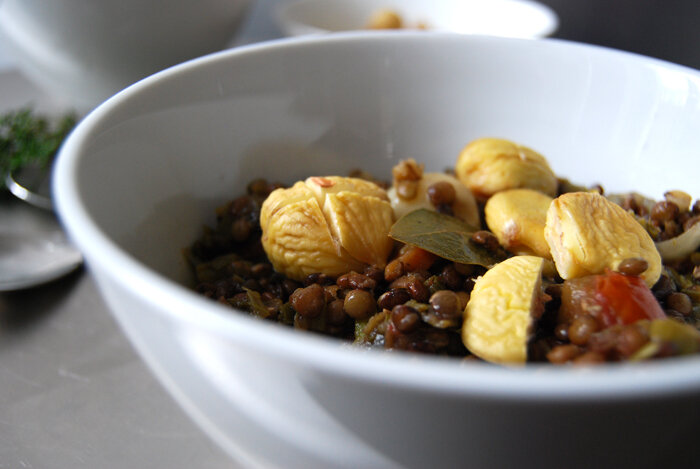
My mother loves lentils – and so do I – and she also loves to share her new lentil creations with me like her all time favorite lentils with chard (a variation which I will post another time). So for many, many years she has sent me her recipes by fax, written on a type writer, as she doesn't like emails and computers. I have a folder full of faxes from her with wonderful recipes and always signed with a sweet motherly note.
Today's lentil creation is something new, I need a soul warmer, with typical winter spices. I bought some French chestnuts and brought out the star-anis and cloves inspired by my last baking sessions. I will use very aromatic lentils from Swabia in the South of Germany sent to me - of course - by my mother. They are cultivated by an organic producer group called Alb-Leisa which recovered this treasure from oblivion. These re-cultivated lentil types had disappeared abruptly in the 1950s due to costs and extensive work. Luckily the Alb-Leisa work is well appreciated, their production has expanded and we can now buy aromatic lentils with old-fashioned names like "Späth's Alblinse I and II".
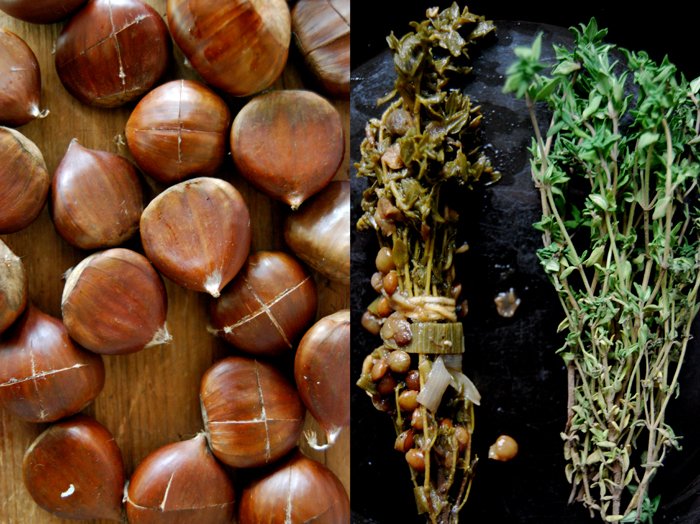
Lentils with Chestnuts and Star-anis
Here comes the soul-warming recipe, enough for 4 people. I use small lentils which don't need pre-soaking.
lentils 300g / 10.5 ounces
small leek, cut in thin slices, 1
carrots, sliced in half and chopped, 3
small onion, chopped, 1
garlic clove, cut in half, 1
olive oil
broth or water 1l
thyme, a bunch
star-anis 1 (single, not a whole star)
bay leaves 2
cloves 2
allspice, whole not ground, 2
chestnuts, a hand full
salt and pepper
I prepared the chestnuts earlier as they don't need to be warm. Preheat the oven to 200°C / 390°F and place an ovenproof bowl filled with water on the bottom of the oven. Cut a cross on the curved side of the chestnuts and put them in the oven on a baking sheet 10 minutes or until they get dark and their crosses start curling up. Take them out of the oven and cover them with a wet tea towel immediately. This makes it much easier to peel them. Take them out of their outer hard and soft, inner skin while they are still warm. Mind your fingers as they can still be hot.
Warm olive oil in a pan and fry the leek, onion, carrots and garlic on medium heat. Add the lentils and pour the broth on top. Add the thyme and the spices (star-anis, bay leaves, cloves, allspice) but don't season with salt yet or the lentils won't cook and stay hard. Some people put the spices in a disposable tea filter which makes it easier to get them out later. I don't mind them, I prefer to add them unwrapped. Cover with a lid and let it simmer. The cooking time depends on the lentil type. Mine need 20 minutes. After 10 minutes check if there is still enough liquid. When the lentils are soft, season with salt and pepper. Take out the thyme, bay leaves and the spices you can find.
Serve the lentils in deep bowls with broken chestnuts on top and enjoy this soul warming treat.
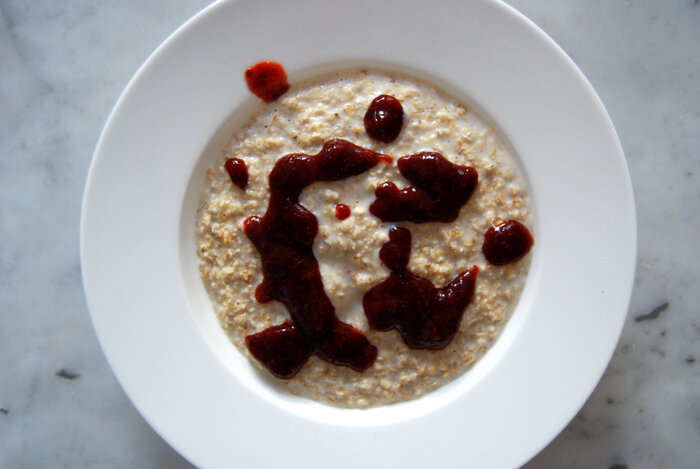
Oats and Plums
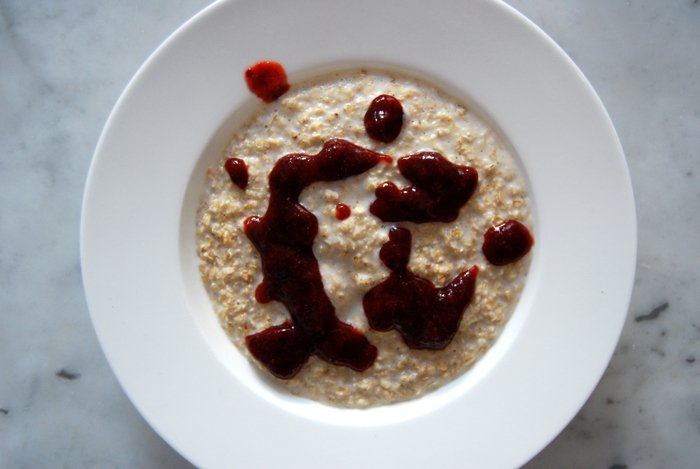
As a child I loved oats with cocoa powder and milk - the famous porridge. I loved it so much that I had to have a bowl of this every day. I think that was the beginning of my love for food; food, which I prepare for myself. It might sound like a rather simple start to the culinary wonders of life. But I must have been around 5 years old when I cultivated this daily routine of going to the kitchen, preparing my bowl with oats, unsweetened dark cocoa powder, sugar and fresh milk. Always in the same bowl. It felt like a very special treat for myself, a pure moment of pleasure, eating with relish.
This intuitive routine which I created just for myself made me realise that I need these recurring moments of simple pleasure and enjoyment - a treat, just me and my food. This never changed, my approach to food is still totally intuitive. Since those days I discovered so much (I don't concentrate on oats anymore) but I still feel the same satisfaction in the happy moments with my food, every day.
This morning I found a bag with puréed plums in my freezer which I had prepared originally for spontaneous ice cream ideas in winter (it makes such a wonderful ice cream when mixed with yoghurt). It was a very cold morning and I felt a bit nostalgic. I needed a bowl of steaming porridge and decided to sweeten it with my (warmed up) freezer-discovery. I took out a pan, cooked a bowl of oats together with milk until it bubbled and poured the warm plum sauce on top. I had made the plum purée from 300g / 10.5 ounces of plums mixed with a few tablespoons of sugar and some cinnamon.
So simple yet so delicious!
