Radicchio with Caramelised Red Onions and Lemon Thyme

In the past few days I've had caramelised onions on my mind, sweet and syrupy, preferably the red ones or shallots which taste softer and reveal an intense natural sweetness when they are cooked. There is a big bowl in my kitchen which is always filled with onions. I like to have the whole range at hand, red, yellow, white, big and small, but most of the time I use the spicy yellow bulbs, mine are medium sized and organic, they bring tears to my eyes as soon as the knife touches the peel. They are great too cook with but painful to prepare! A few shallots are in the bowl as well and red onions of course which I love to use for pies or in salads, which rarely happens as I'm not too fond of raw onions.
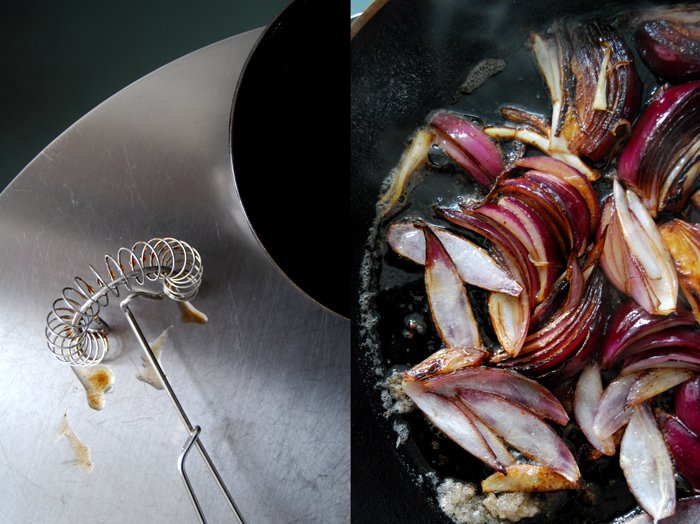
I have a beautiful head of radicchio in my fridge just waiting to be used, the big leaves falling over its sides like a ball gown, almost too perfect to destroy! But I must, I want to combine its bitterness with the sweetness of caramelised red onions and some lemon thyme. The radicchio is uncooked but the onions caramelise in sugary butter, softening over less than 15 minutes before I deglaze their juices with dark Balsamico vinegar. The result is delicious, a salad of bitter sweet flavours glazed in a thick sweet and sour dressing!

A Salad of Radicchio, Caramelised Red Onions and Lemon Thyme
For a side dish for 2 you need
radicchio, torn into bite sized pieces, 4 big leaves
medium sized red onions, each cut into 8 pieces (lengthwise), 2
butter 3 tablespoons
sugar 2 tablespoons
balsamic vinegar 2 tablespoons
olive oil 4 tablespoons
lemon thyme, 10 young and soft sprigs chopped roughly or just the leaves
salt and black pepper
In a large pan, heat up 1 tablespoon of oil together with the butter and sugar on medium temperature. As soon as the butter starts to sizzle add the onions, stir once in a while. Let the onions soften over 10 minutes, they can become a bit dark but shouldn't burn as that would make them bitter. When the onions are soft, caramelised and have turned a dark red, season with salt and pepper and take them out keeping their caramel juices in the pan. Deglaze the bits and pieces left in the pan with the Balsamico, put on medium heat for a few seconds and mix it so that just a little of the vinegar evaporates. Take it off the heat, pour the liquid into a bowl, whisk with 3 tablespoons of olive oil and season with salt and pepper to taste.
On large plates, arrange the radicchio with the caramelised onions on top, carefully as they are very soft, sprinkle with some salt and pepper and add the thyme. Drizzle the thick dressing over the leaves, it's so strong that a few drops are enough to spread the sweet flavours.

Spicy Ramp Pesto with Spaghetti
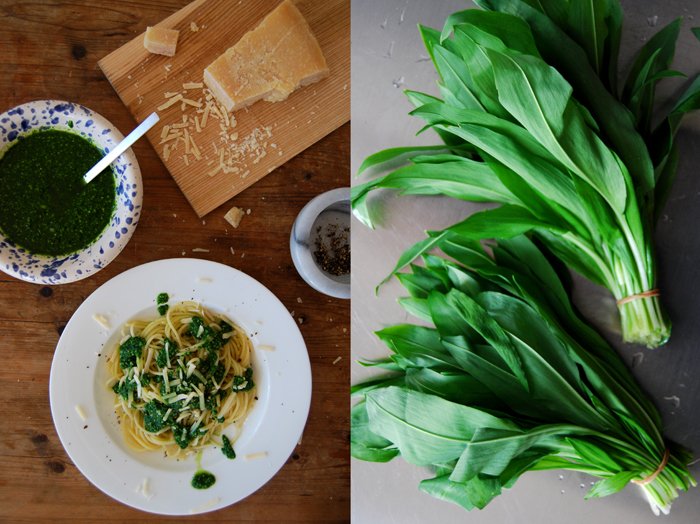
When I wrote about my wild garlic soup two weeks ago, a couple of the more attentive followers of eat in my kitchen told me that "ramp" is the more common name for my beloved "wild garlic". I'm happy they let me know and to avoid confusion I will change its name in my recipes to "ramp". "Wild garlic" has a bit of an adventurous touch, I like that, it fits to its distinct taste but if only a few know it as such then I have to compromise.
At the moment, this plant is at its seasonal peak. The long leaves cover the moist ground in the forests, filling the air with their beautiful smell of fresh green onions. When I go to the market, I buy ramp in bulk as I'm a bit obsessed with it. I even start my shopping earlier in the morning just to make sure that I get enough of the little bunches for all the recipes I have in mind. The recipe I make the most (at least once a week) is a pesto, spicy and very strong in taste, great with pasta or spread on toasted dark bread which is an absolutely delicious snack! In the fridge, it stays fresh for a few days so I always prepare a big bowl.
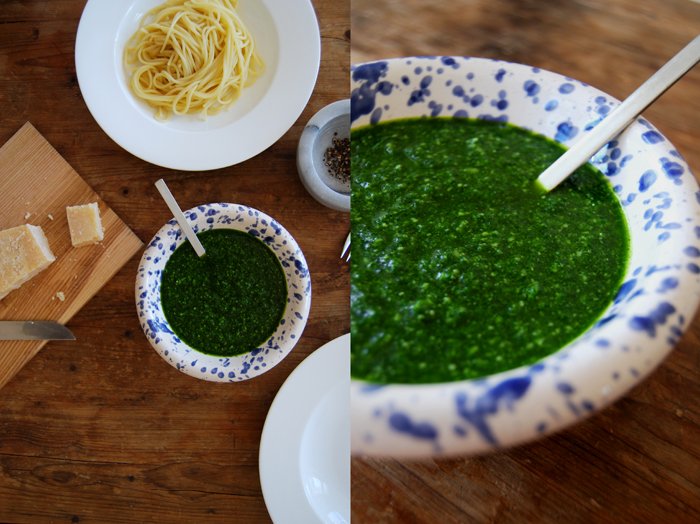
For my pesto, I use the leaves of 2 bunches of ramp (around 90g / 3 ounces), rinsed and dried well, and mix them in a blender with 110ml of olive oil, 50g / 2 ounces of parmesan and 1/2 teaspoon of salt. You could add some pine nuts but I find them too weak to come through, I prefer to concentrate on the ramp and the cheese. When we eat the pesto with spaghetti or linguine I add some crushed pepper and more grated parmesan on the warm pasta.
Tomorrow I will write about a burger which didn't manage to escape my ramp obsession!


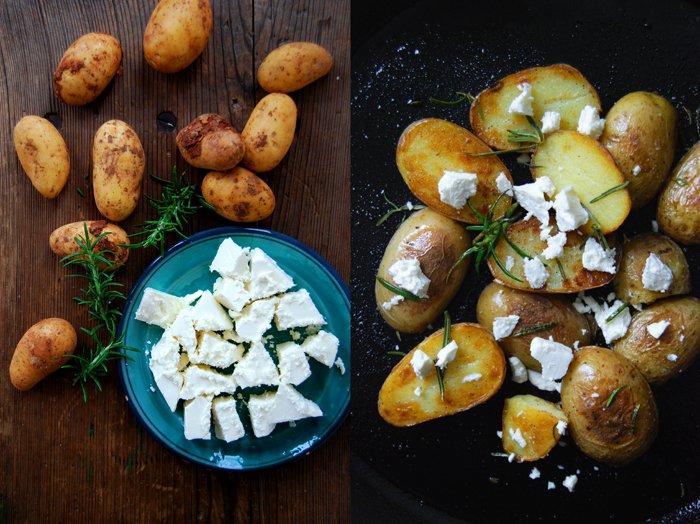
Crisp Golden Rosemary Potatoes with Feta Cheese
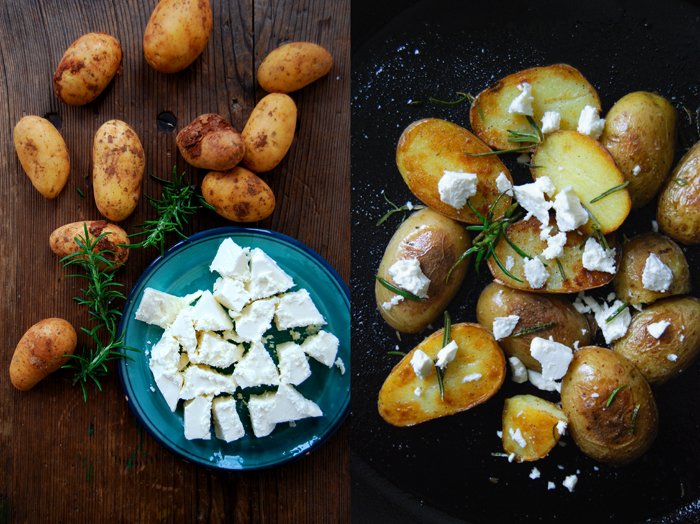
Some days call for a quick lunch or dinner and potatoes are often my solution - apart from pasta, of course. Mashed, fried, baked or in salads, preparations never take too long to create a satisfying meal which won't leave me hungry. Sometimes when I know that stressful days are ahead, I put a big pot of potatoes on the cooker, enough to be turned into a few delicious meals in the following days. This is perfect when there are fried potatoes on my cooking plan as they should always cool and dry after cooking before you throw them into the hot pan, that way they turn nice and crisp and won't become mushy. My favourites are the classic version with bacon and onions or a bit lighter and Mediterranean, golden fried potatoes with rosemary. I could leave it at that, good potatoes fried in olive oil with some herbs, sea salt and pepper don't really ask for more but I'm in the mood for cheese at the moment. I could throw it into anything, like last week's rocket salad with goat cheese, my Bavarian Obatzda sandwich with camembert or the gnocchi with blue cheese sauce.
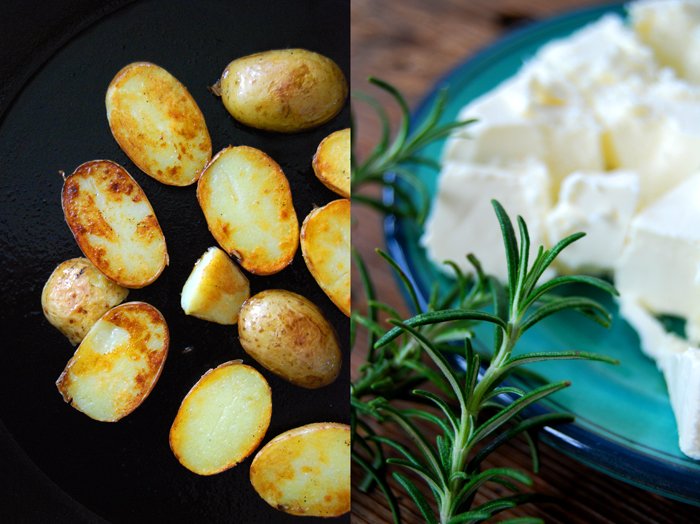
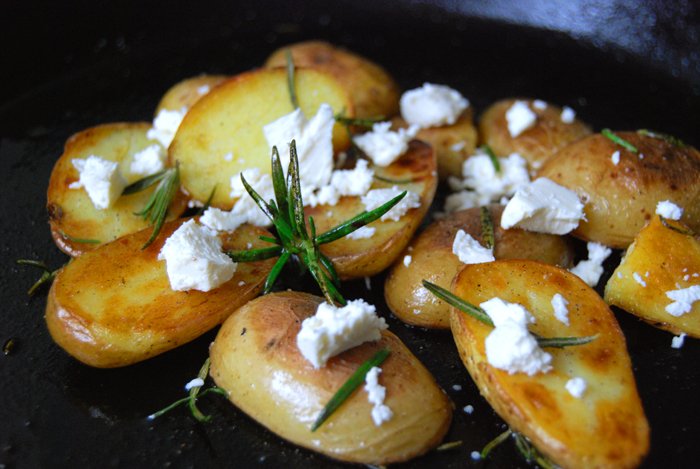
So my potatoes get a cheesy add-on as well, in the form of Greek Feta cheese. I cut 500g / 1 pound of small cooked and cold potatoes in half and fry them in olive oil on medium heat until golden on all sides. For the last 2-3 minutes I add the needles of 3 small sprigs of rosemary, they become bitter when fried too long. When the potatoes are nice and crisp I season them with crushed black pepper and coarse sea salt and crumble 150g / 5.5 ounces of Feta cheese on top. A ripe goat cheese would work as well, or an aromatic French cheese like Comté grated and melted on the hot potatoes, so many options!

Gnocchi with Blue Cheese Sauce
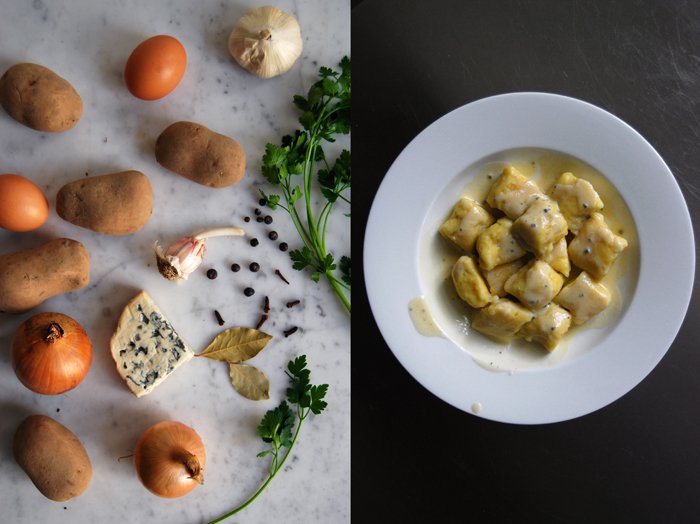
As soon as the temperatures start to rise the Mediterranean influence on my cooking begins to increase accordingly. I feel like olives, fresh herbs, capers and garlic, lemons and seafood, and all the fresh vegetables which finally start to grow. The tomatoes and cucumbers start to taste strong again and yesterday I bought my first bottle of rosé wine of the year, another sign of the official start of the new season!
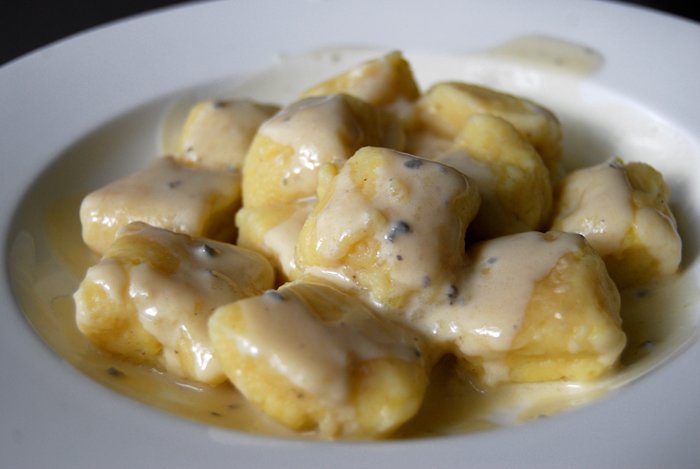
From now on, I could just live of pasta, vegetables, simple dishes which sparkle through the ripe flavours of their ingredients, basically Italian cooking which refines minimal dishes to perfection and celebrates each single element of a dish. A great example are gnocchi. After I ate my own, homemade gnocchi for the first time I couldn't enjoy the store bought ones anymore. The dough is so easy to make, potato and nutmeg as the dominant flavours, flour, eggs, butter, salt and pepper mixed together and shaped into little gnocchi. Far less complicated than homemade pasta as long as one rule is obeyed, the potatoes must have cooled off before mixed with the flour. Apart from that it's an unbelievably easy dinner and so delicious that some sage leaves fried in olive oil and some grated parmesan would be enough to make me happy. If only there wasn't this amazing blue cheese sauce that I fell in love with a couple years ago. It's smooth but aromatic, cooked with garlic, onions, parsley, juniper berries, cloves and bay leaf which are taken out before the blue cheese is mixed in. I use Fourme d'Ambert cheese from the Auvergne region in France which is creamy but very strong in taste, the gnocchi just need to be glazed with the sauce, enough to enjoy all the intense aromas.
In January I made my wintery gnocchi with pumpkin and potatoes and a walnut pesto. Sometimes I mix spinach into my gnocchi dough which I have to make again, soon, as there is nice and crunchy spinach at the moment!
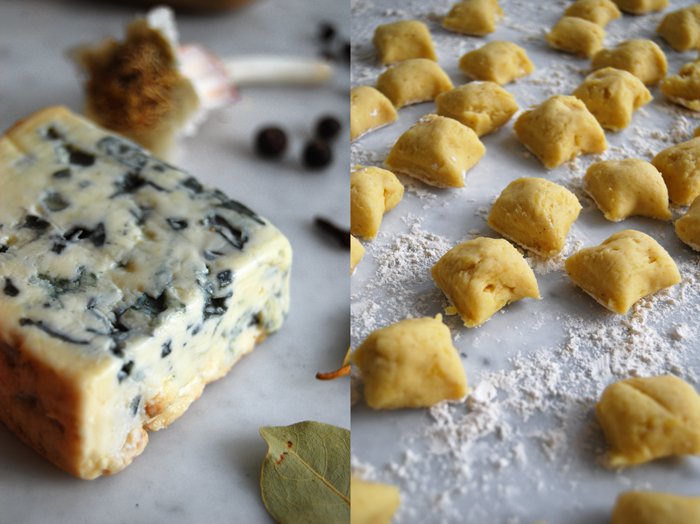
Gnocchi with a Fourme d'Ambert Blue Cheese Sauce
It's best to use floury potatoes with a fluffy and dry texture for the gnocchi dough. Keep in mind that you don't mix the flour with the cooked potatoes unless they are absolutely cold.
For 2-3 people you need
For the Blue Cheese Sauce
small onion, chopped, 1
garlic, cut in half, 1
butter 30g / 1 ounce
milk 125ml
heavy cream 125ml
white wine 150ml
fresh parsley 3 sprigs
cloves 2
juniper berries 2
bay leaf 1
black peppercorns 4
blue cheese such as Fourme d'Ambert 45g / 2 ounces
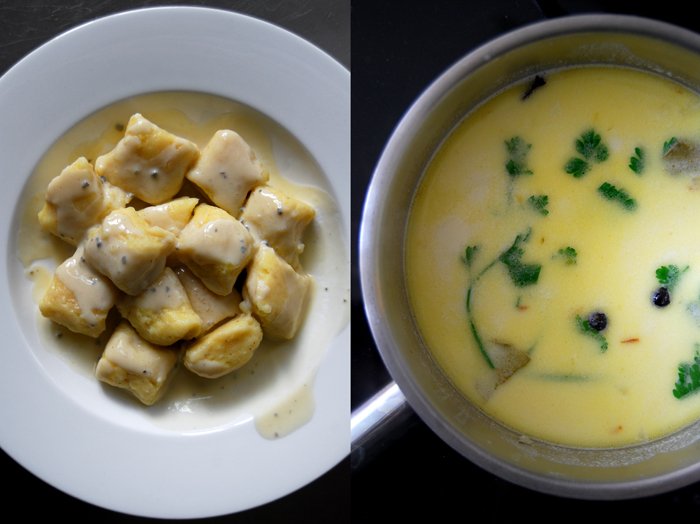
In a sauce pan, fry the onions and garlic in butter until golden and soft, add the other ingredients except the blue cheese and bring to the boil. Let it simmer for 10 minutes on medium heat, pour through a sieve and add the cheese. When the cheese has melted, let the sauce simmer for 5-8 minutes on low heat until it starts to thicken slightly. Season with salt and pepper.
For the Gnocchi
potatoes, cut into cubes, 450g / 16 ounces
butter 30g / 1 ounce
organic egg yolks 2
plain flour 125g / 4.5 ounces
nutmeg, grated
salt 1 1/2 teaspoons
black pepper
Cook the the potatoes in salted water until soft (around 15 minutes). Drain them when they are done. Press the drained potatoes through a potato ricer and mix immediately with the butter and egg yolks. Put in a cool place (in the fridge) until the mixture is completely cool.
In a large pot, bring plenty of salted water to the boil. Set the oven to 100°C / 210°F and put an ovenproof dish inside. You will need it to keep the gnocchi warm while you cook them in batches.
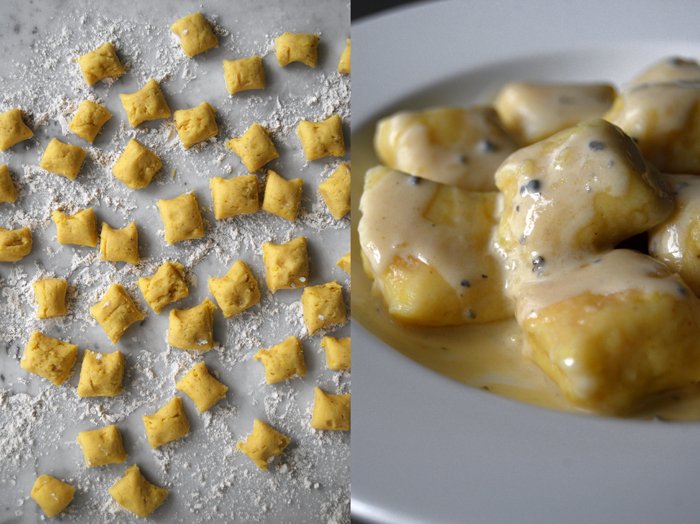
With a spoon (or your hands), mix the cold potato mixture with the flour, salt, nutmeg and pepper until combined. Dust your hands with flour and roll the dough – in batches – into sausage shapes on a well floured working surface and cut off 3x3cm / 1x1″gnocchi. If you like you can roll them on a fork for the typical gnocchi pattern. Put them onto a floured baking sheet.
Cook your gnocchi in batches in the boiling water so that they can float. After 3 minutes, when they start to come up and float on the surface take them out with a slotted ladle and drain them. Keep them in the warm dish in the oven until you are done with the last batch.
Arrange the gnocchi on plates and pour some of the blue cheese sauce over them.

A Bavarian Sandwich with Obatzda and spicy Radish
In a Bavarian beer garden, you can be sure you will find plenty of beer, sausages and at vesper time a traditional delicacy which is served with bread, I'm talking about Obatzda also known as Obatzter meaning mashed. Drinking beer in Bavaria demands strong physical condition as it's served in a 1 liter mug, the "mass". You may imagine that it's quite helpful to have some rich food on the side when drinking such quantities (obviously people don't stop after their first "mass" of beer). Obatzda is one of them and it's offered in huge varieties. It's basically a cream made of aged cheese leftovers often mixed with either herbs or spices like hot paprika powder or caraway seeds, onion, garlic, a shot of beer, horseradish, butter, cream cheese, I could continue endlessly. It is, again one of those dishes that evolved in each region with each personal preference and local tradition.
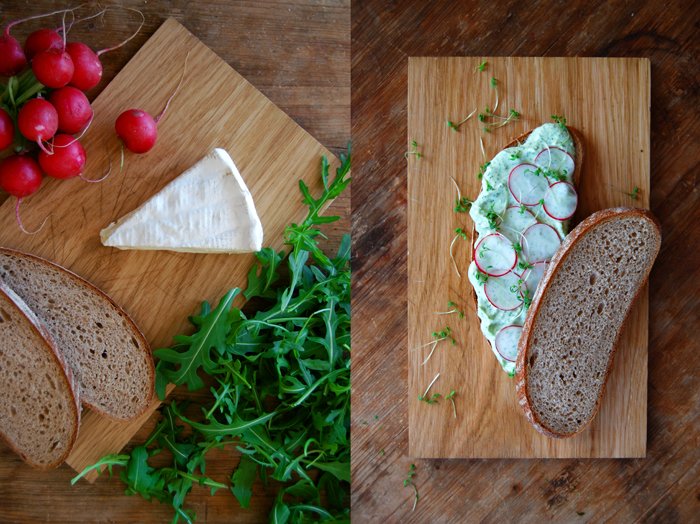
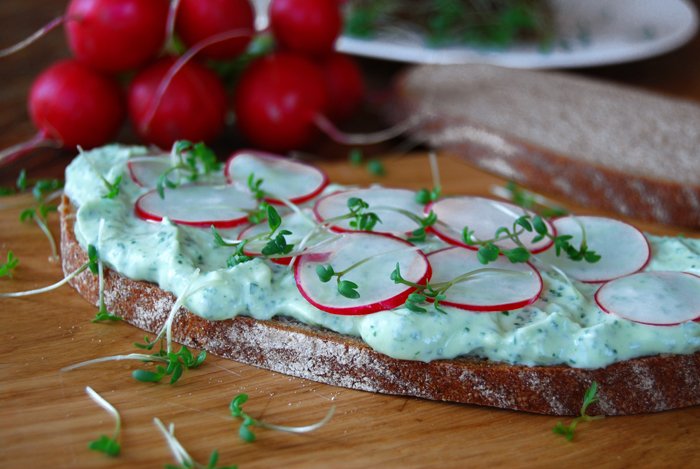
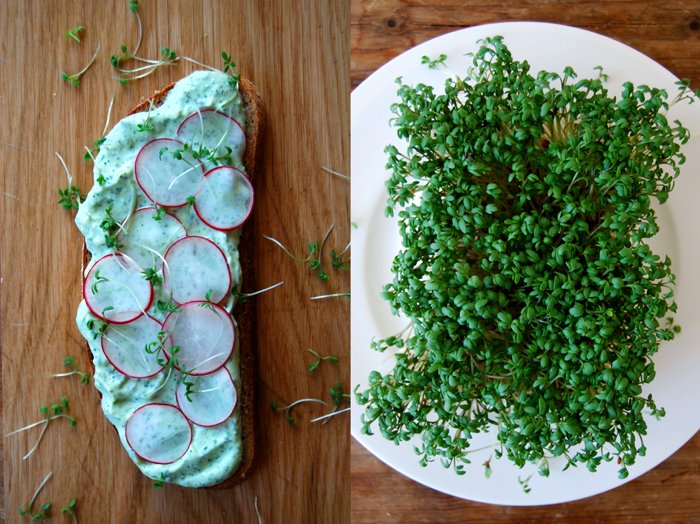
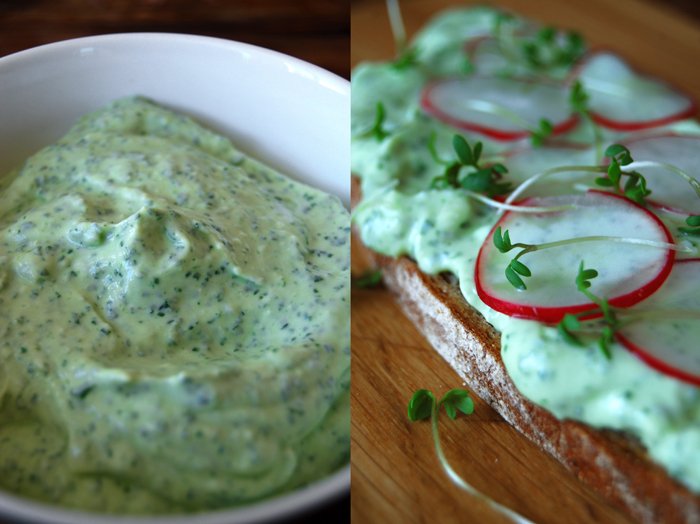
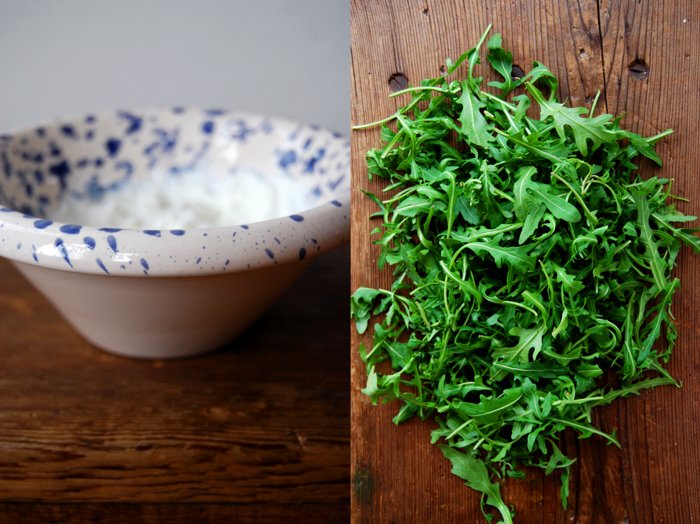
My Obatzda is green, it's based on rucola and a middle-aged camembert and cream cheese. I added some radish and watercress to bring out the rucola's mild spiciness next to the rich and tangy cheese. White bread wouldn't have managed to keep up with these strong flavours, I used dark spelt bread. This sandwich needs a dense and juicy texture, strong bread with a nice crust. What is great about this dip is that you can really play around with the leftovers of your fridge. Spring onions, dried tomatoes, olives, all the ingredients mentioned above, you can create your own Obatzda after your own preferences. After your selection is made, mix everything in a blender or mash with a fork and spread on a slice of bread, a thick layer, this is a luscious Bavarian sandwich after all!
For a little bowl of Obatzda, I mixed 30g / 1 ounce of rucola with 50g / 2 ounces of aged camembert, 150g / 5.5 ounces of cream cheese and 1 tablespoon of heavy cream, seasoned with salt and pepper to taste. Depending on the camembert's age and tanginess you might need more or less cream cheese, the same with salt. When the dip is spread on a slice of bread, sprinkle with thin slices of radish and some watercress.

Rucola Salad with Goat Cheese, Honey Dressing and Pink Peppercorns
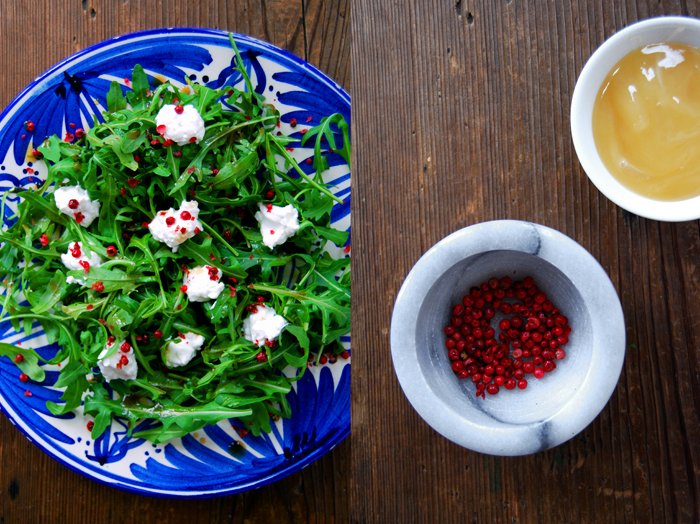
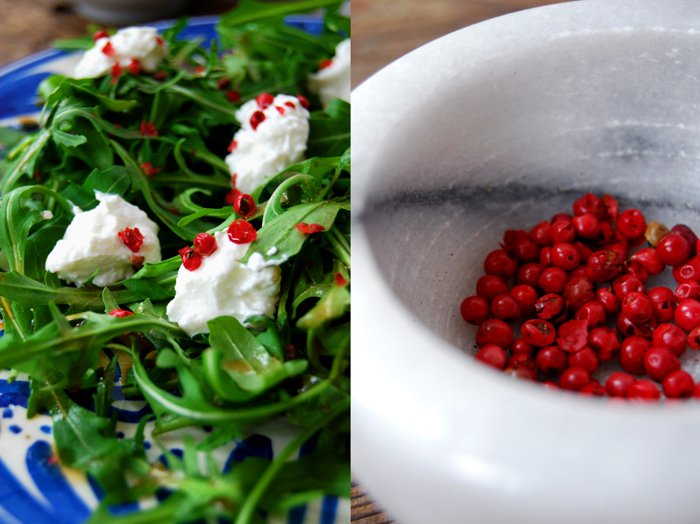
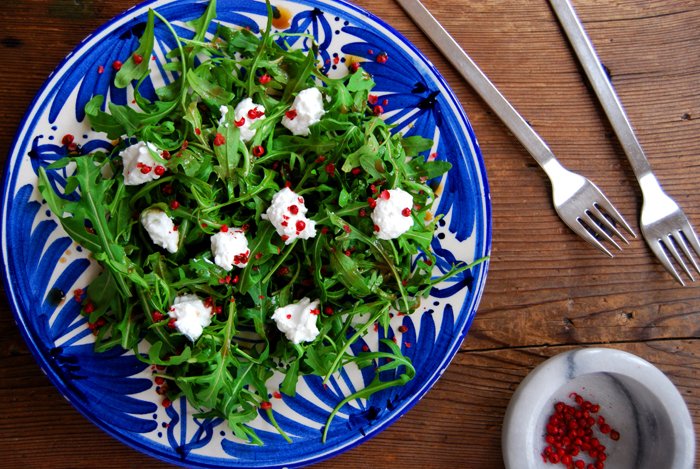
Here's the salad which accompanied yesterday's salmon with spice crust, rucola with goat cream cheese, crushed pink peppercorns and a sweet honey Balsamico vinegar dressing! I wanted to use both the pink and the green peppercorns which I had just bought at the market, not in the same dish but in the same meal. The spiciness of the green pepper fit perfectly with the crust I chose for the fish but my salad, sweet and milky, needed a mild and less spicy aroma, pink peppercorns. The berries matched the sourness of the creamy cheese very well which was so young that there was only a hint of goat milk. I could have used mozzarella instead but I wanted this special, slightly sharp aroma which balanced out the sweetness of my vinaigrette on the other side.
Usually, I make a quick dressing for my salads, 3 tablespoons of olive and 2 tablespoons of balsamic vinegar plus salt and pepper, but this salad asked for more. I kept the ratio of vinegar and oil but I mixed my dark balsamic vinegar with the white one and added 1 small teaspoon of honey (depending on the sweetness you want to achieve you might need more or less honey). It turned out thick, sticky and syrupy, exactly what I wanted! For 2 I spread 2 handfuls of rucola leaves on plates and sprinkled 125g / 4.5 ounces of fresh goat cream cheese in big lumps on top. I drizzled the dressing over the leaves and garnished my salad with 1 tablespoon of crushed pink peppercorns. It would have made us just as happy as a light and easy lunch on its own. I have to remember that, it will be perfect on a hot summer evening!

Wild Garlic Soup to start off the Spring
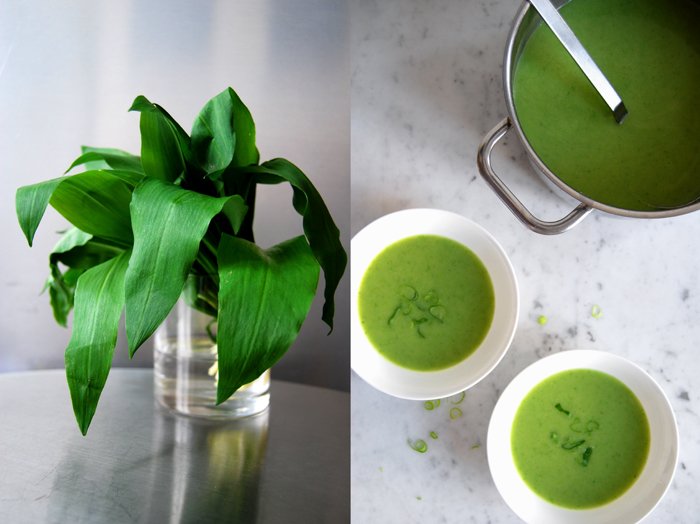
Walking through the forest is one thing I miss the most living in the city. Its earthy smell, the musty air captured by the trees changing with the seasons makes me feel at home. Especially in spring, when the green comes out again and everything smells light and fresh with the first flowers starting to blossom. I want to walk on soft soil watching nature unraveling around me!
One of the most distinct smells you can find at the moment when walking though a European forest close to a river or lake is the smell of garlic, wild garlic. Coming from a little plant which covers the ground in large areas and looks similar to lilies of the valley. It's a wild relative of chives also known as ramps, ramsons, buckrams, wood garlic or bear's garlic as they must be quite taken by it. In taste it's similar to chives but with a unique touch to it, spicy, a bit like garlic but fresher, more "green". The leaves are best when young and fresh, great in pesto, soups or to spice up other vegetables and meat.
I'm totally with the bears, I love cooking with it and when I spotted it at the market I got excited and had lots of recipes on my mind. Inspiration for the weeks to come! I will start with a tangy but smooth soup, the leaves of two bunches of wild garlic, potatoes, onion and a few spring onions on top. It doesn't take much to make this springy soup of the forest!

Wild Garlic Soup
For 4 people you need
wild garlic (ramps), rinsed and stems cut off, the leaves of 2 bunches (around 100g / 3.5 ounces)
potatoes, cut into cubes, 750g / 1.5 pounds
onions, chopped 2water 1500ml
heavy cream 180ml
salt and pepper
olive oil for frying
spring onion, cut into thin slices, 1, for the topping
In a large pot, bring the water to the boil and cook the wild garlic for 2 minutes. Take it out with a slotted ladle, rinse under cold water for a few seconds but keep the boiled water! Fry the onions in some oil until golden, add the potatoes, some salt and the water used to cook the wild garlic and cook for 12 minutes or until the potatoes are soft. Add the wild garlic and cream and mix in a blender till smooth. Season with salt and pepper and sprinkle with spring onions when served on plates.

Chicory Boats with Pear Dressing and Pink Peppercorns
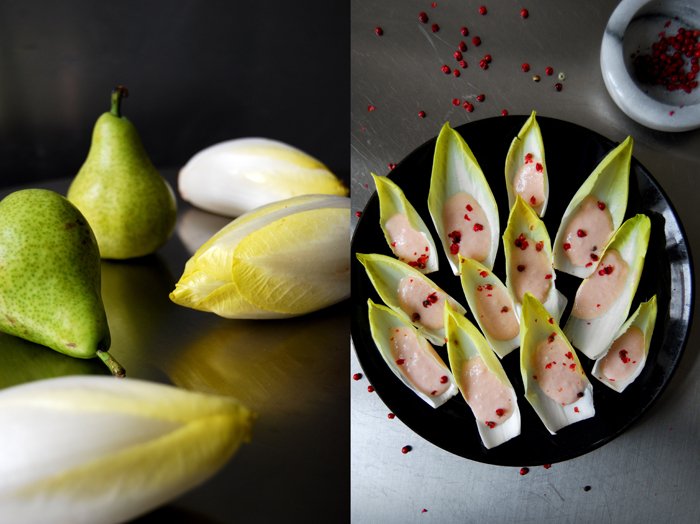
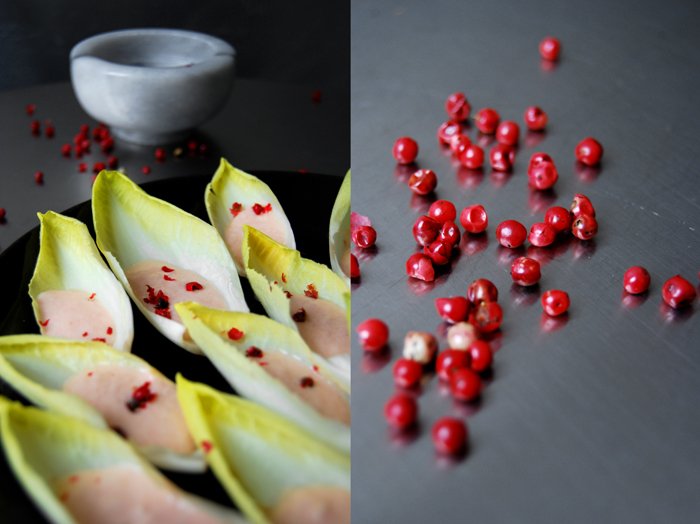
Last week I bought some pink peppercorns, the first ones in years. I forgot about them after I used them the last time, I just emptied the jar and it never got refilled. Although the pink berry is the fruit of the Peruvian Pepper Tree it's not related to common pepper, it's just a berry. Nevertheless, I used to love them, on steak, in creamy sauces, and even on desserts. That's actually the reason why I bought them again, in the next few months I want to try out a few sweet combinations. They taste mild, with a flowery aroma, and offer lots of culinary possibilities but first I have to think about a few ideas. For now I'll start with a simple savory dish.
I have some finger food in mind, an easy in between nibble. I take the big leaves of 3 chicory (also known as Belgian endive) and dollop a little of a fruity dressing on top. It's made of 4 heaped tablespoons of yoghurt mixed with 3 teaspoons of tomato paste and 1 crunchy pear, grated without peel and stirred in as well. I season it with salt and black pepper and my pink peppercorns, crushed and sprinkled on top. The pink berries had a tasty return to my kitchen!


A Ginger Carrot Salad with Spring Onions
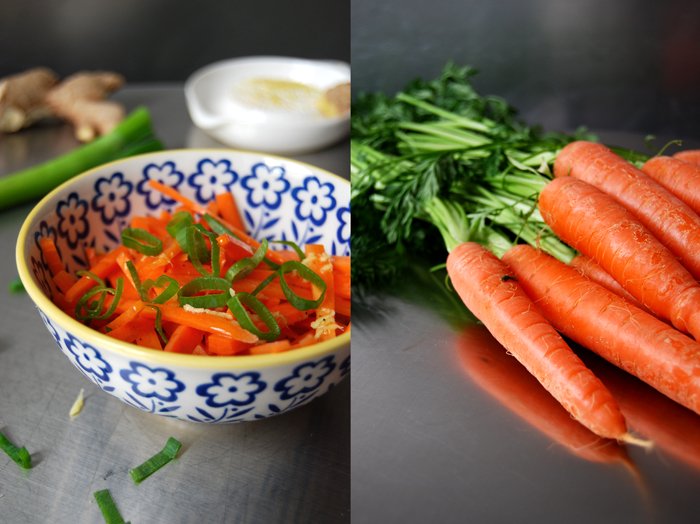
Carrots are unbelievably versatile and uncomplicated vegetables which create wonderfully easy but delicious side dishes, salads and soups. They never cause a hassle, always sweet and strong, they aren't very sensitive to prepare. When cooking fish or meat that demands all your attention, the carrots are patiently waiting on the side in their pot not loosing any of their qualities when left cooking a bit longer. The same goes for salads, you can mix them with the strongest flavours, go overboard with lemon, spices or herbs, no problem, this little orange root will manage!
I'll go easy on them in my salad, I just add some freshly grated ginger (1 1/2 tablespoons) to my dressing, made of 2 tablespoons of olive oil and 1 1/2 tablespoons of fresh lemon juice, some salt, pepper and 1/2 a teaspoon of sugar. 4 carrots peeled and cut into julienne are enough for a side dish for 2. Half a spring onion cut into thin slices sprinkled on top adds a bit of spiciness. The carrots still have enough space to show their sweet side.


Baked Crespelle with Spinach, Béchamel and Parmesan
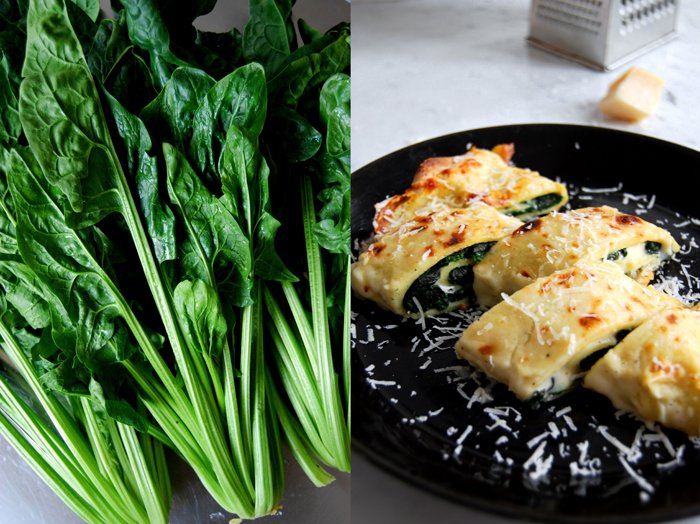
Spinach combined with a creamy sauce, be it Béchamel, ricotta or a blue cheese sauce is a delicious filling for any kind of pasta. This combination doesn't need a lot of additional spices besides salt, pepper and nutmeg. It's one of those things that's best kept simple. I love it in cannelloni or lasagna but I'm extremely fond of it in crespelle, thin Italian pancakes, wrapped around a tasty filling. You could also use a sauce Bolognese but that wouldn't give the crespelle much space. Keep it pure and you can enjoy the eggy wrap complemented with a mild filling.
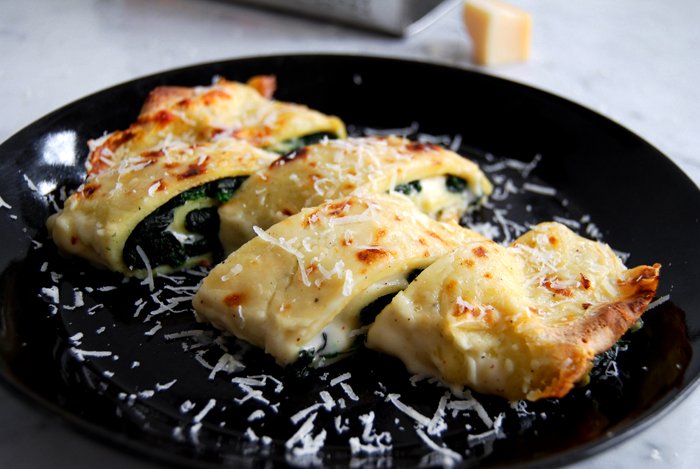
When I'm in Italy I have this meal with tomato sauce poured on top, it looks like the Italian flag, green, white and red. The man of the house asked for the green and white version, just some parmesan grated on top of the rolled crespelle before they bake in the oven for 15 minutes. They turn golden, partially crisp but the spinach and Béchamel mixture keeps it moist and juicy inside. You could also replace the spinach with chard, I do that sometimes, it's similar to my Chard and Ricotta Lasagna.
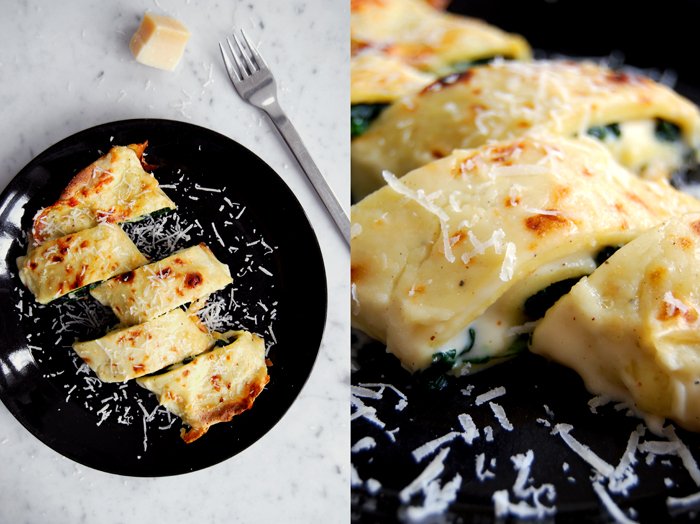
Baked Crespelle with Spinach, Béchamel and Parmesan
For 4 filled crespelle you need
spinach, rinsed, without stems, 350g / 12.5 ounces
fresh Parmesan, grated, 80g / 3 ounces
Cook the spinach in salted water for 1-2 minutes (the thick leaved spinach needs 2 minutes), rinse with cold water for a couple seconds and drain. Chopped roughly, season it with salt, pepper and nutmeg and set aside.
For the Sauce Béchamel
milk 600ml
butter, melted, 30g / 1 ounce
plain flour 30g / 1 ounce
bay leaf 1
a pinch of nutmeg, grated
salt and pepper
Mix the milk with the nutmeg, salt and pepper. Whisk the flour into the hot butter. Bring the milk to the boil and whisk into the roux. Continue mixing until smooth. Add the bay leaf and cook for around 5 minutes on low heat until the texture is thick and smooth. Take the bay leaf out and season with salt and pepper.
For the crespelle
milk 160ml
organic eggs 2
plain flour 130g / 4.5 ounces
salt 1/4 teaspoon
butter for frying
Mix the ingredients well and let the dough rest for 5 minutes. Heat some butter in a large pan and fry 4 thin crespelle one at a time, golden on both sides.
The filled crespelle
Set the oven to 200°C.
Lay a crespelle flat on a plate, spread with 1/4 of the spinach and 3 tablespoons of the Béchamel on top, roll into a wrap. Continue with the rest and put them next to each other in a baking dish. Pour the rest of the sauce on top and sprinkle with parmesan (keep some cheese for the baked crespelle, I like to put some fresh cheese on when they come out of the oven). Bake for 12 minutes or until golden brown. You can also switch on the grill for 1-2 minutes, that makes it partially crisp.

Yu-Kyong's Bibimbap, a traditional Korean treat
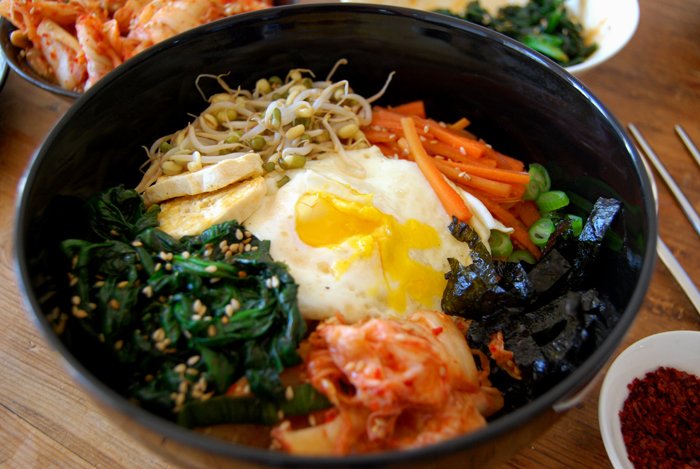
A few weeks ago I met a very sweet couple from Norway, Lena and Knut, we sat opposite each other at a supper club and started talking. Days later I found out about their wonderful blog Teak Tray Weekdays where they share little treasures of their daily life in Trondheim and their traveling trips, I got peacefully lost in their stories. When Lena asked me if I would like to cook something together with them I was very happy. I liked the idea of the three of us cooking the same meal in different kitchens in different countries and with different recipes. I let them choose what we would cook and they suggested Bibimbap. They had just been to Berlin and enjoyed this Korean speciality at a restaurant so much that they wanted to cook it at home.
At first, I wasn't sure about my approach to this meal. I had never cooked Korean before and I usually need an experience, a memory, a story, taste, something that opens the door to a new culinary experience. I asked my oldest friend Yu-Kyong for help, we lived next to each other through our whole childhood, she has Korean roots, her father grew up in North Korea and her mother in the South. She lived in Germany all her life but her mother cooks Korean for the family and introduced her daughter to the traditional recipes, like Bibimbap.
When I asked Yu-Kyong to write down the recipe so that I could buy all the ingredients she told me that this wouldn't work, we would have to go shopping together. We met at an Asian market and she gave me an introduction to Korean cooking. She explained the necessary spices, mixtures, spice pastes and preparations to me, all in between hundreds of boxes, tins and bottles of food, freezers stuffed with tiny crabs, octopus and fish. The scent of a different world in my nose, visually overwhelmed, I tried to keep up with her. She told me about the different flavours and qualities of sesame oil, I learnt how to cook sticky rice properly, which cutlery I have to use (a metal spoon and metal chopsticks, not wooden!) and so much more. Basically, a one hour crash course on Korean cooking, in the middle of an Asian market, typing everything more or less precisely into my phone, not to forget a single detail.
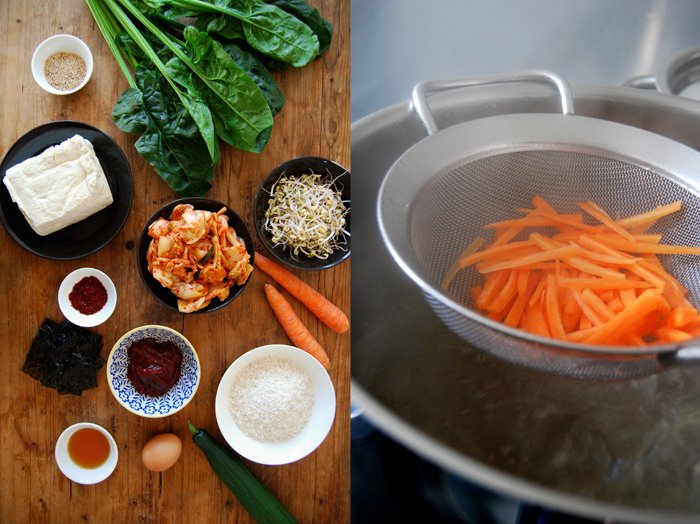
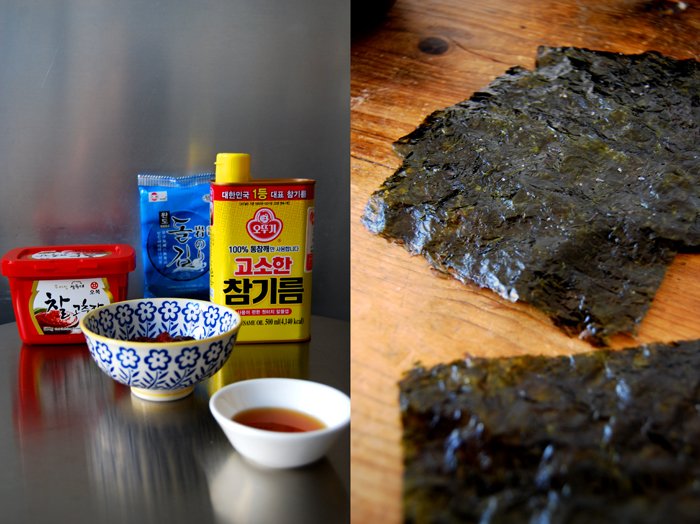
I got home with bags of vegetables, Kimchi, roasted seaweed, Obok Gochujang hot pepper paste, many colourful tins and boxes. I bought the first tofu of my life and I felt happy and finally prepared for this new cooking experience.
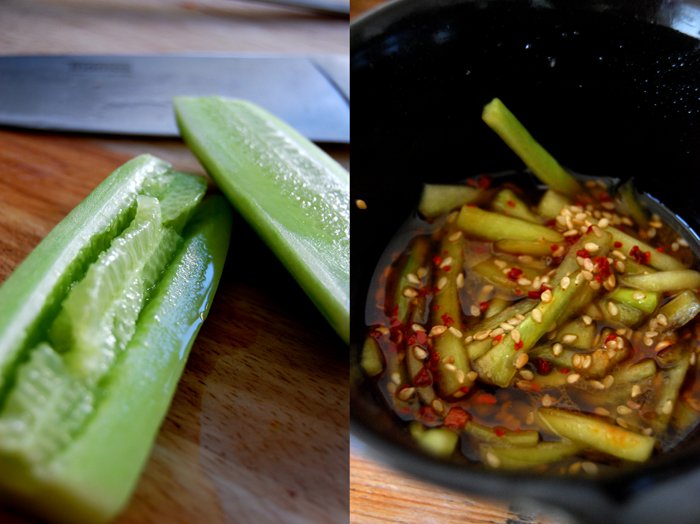
Here's a quick description of Bibimbap, it's a one pot meal, rice at the bottom and steamed vegetables mixed with a sesame oil and soy sauce dressing on top. I steamed spinach, sprouts and carrots and added strips of seaweed, Kimchi (spicy fermented cabbage), fried tofu and eggs. The spinach is glazed with the special Bibimbap Gochujang sauce which is mixed into the rice as well. I made a traditional cucumber salad on the side, mixed with sesame oil and soy sauce, sprinkled with chili powder and toasted sesame seeds.
This meal needs good preparation before you mix everything together, it's a ceremony of pure tastes mixed with the strong flavour of good quality sesame oil and the spiciness of Gochujang. When you make your own Bibimbap you should allow some extra time to enjoy the cutting, steaming and mixing, it's meditative. I learnt that this is not a warm meal, the rice and egg (which I fried in the end) have to be warm but the steamed vegetables can be cold.
Vegetable Bibimbap and Cucumber Salad
For 3-4 people you need
sticky rice, rinsed, 170g / 6 ounces
soybean sprouts, steamed for 1-2 minutes, a handful
spinach, steamed for 1-2 minutes, 250g / 9 ounces
carrot, cut into julienne, steamed for 1 minute, 1-2
tofu, cut into 0.5cm / 1/4" slices, 200g / 7 ounces
Kimchi 6 tablespoons
spring onions, cut into thin slices, a small handful
Korean roasted seaweed, cut into strips, 5 sheets
organic eggs 3-4
sesame seeds, toasted in a pan for a couple minutes on medium heat, 2 tablespoons
cucumber, peeled, cut in half, without the seeds and soft parts, a 15cm / 6" piece for the cucumber salad
dried chili spice for the cucumber salad, 1/8 teaspoon
Gochujang hot pepper paste 1 tablespoon
sesame oil 6 tablespoons
soy sauce 5 tablespoons
sugar
garlic, crushed, 4 cloves
Whisk the following ingredients for the sauce used for the steamed soybean sprouts, carrots and cucumber salad
4 1/2 tablespoons of the sesame oil
3 tablespoons of the soy sauce
1 1/2 tablespoons of sugar
3 small crushed cloves of garlic
Whisk the following ingredients for the Bibimbap sauce (used for the steamed spinach and the rice)
1 tablespoon of the Obok Gochujang hot pepper paste
1 1/2 tablespoons of the sesame oil
2 tablespoons of the soy sauce
3/4 tablespoon of sugar
1 small crushed clove of garlic
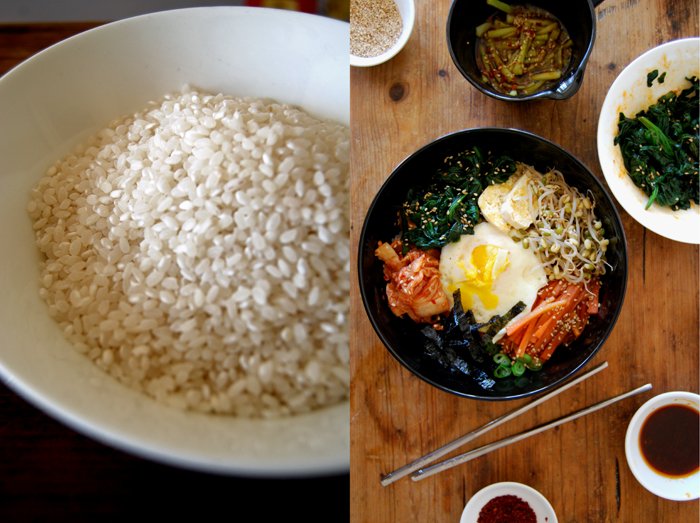
Cook the rice in a pot filled with water and a pinch of salt (the water should be 2cm / 1" above the rice) for 12 minutes, on medium heat, keeping the lid closed. If the rice is still hard and didn't soak all the water, keep it on the heat for a couple more minutes. When it's done, keep the rice covered and set aside.
For the salad, cut the cucumber into strips, mix with 1/3 of the dressing (not the Bibimbap sauce) and sprinkle with some sesame seeds and the dried chili spice. The cucumber salad is served as a side dish, not on top of the Bibimbap like the rest of the vegetables.
Glaze the steamed soybean sprouts with 1/3 of the dressing (not the Bibimbap sauce) and the steamed carrots with the rest of the sauce, sprinkle both with sesame seeds.
Mix the steamed spinach with 4 teaspoons of the special Bibimbap sauce (keep the rest of the sauce to mix with the rice).
Fry the tofu in a little sesame oil for 2 minutes until golden, turn gently and fry on the other side. When it's done, set it aside.
Fry the eggs, leaving the egg yolk soft.
Put the rice in a large bowl and the spinach, carrots, sprouts, Kimchi, spring onions, tofu and seaweed on top, arrange them in a circle next to each other. Place the fried eggs in the middle and sprinkle everything with sesame seeds.
When you serve the Bibimbap at the table, you can either mix everything in the bowl together with the rest of the Bibimbap sauce or divide it between the plates and add some sauce to it (that's how I did it).


Broccoli Pesto with Spaghetti and Sun-dried Tomatoes
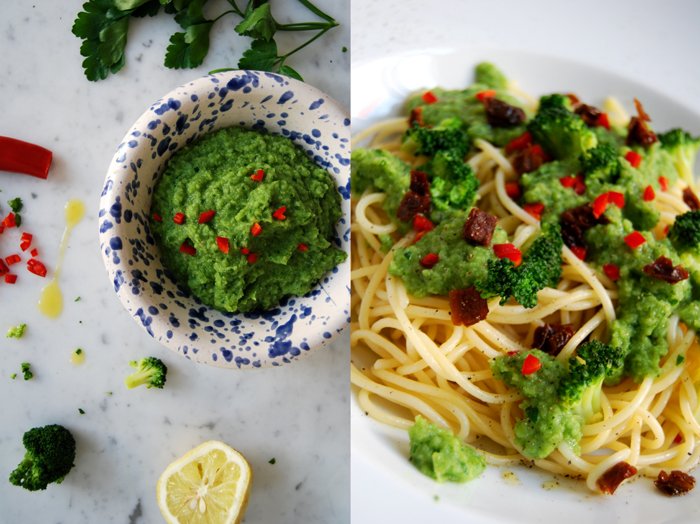
Finally pesto! I love it, bunches of basil, parsley, chopped green or black olives, sun-dried tomatoes, capers, garlic, anchovies mixed with olive oil, nuts or cheese. There are endless possibilities to bring one of the most satisfying meals onto the table, pasta with pesto. It's so simple yet so special! When I make pesto I just follow my mood and appetite, picking what the kitchen herbs on my window sill offer and mixing it together with the Mediterranean fruits and vegetables preserved in salt or oil I keep in jars in my fridge. Sometimes I mix fresh vegetables in as well, like green asparagus or broccoli.
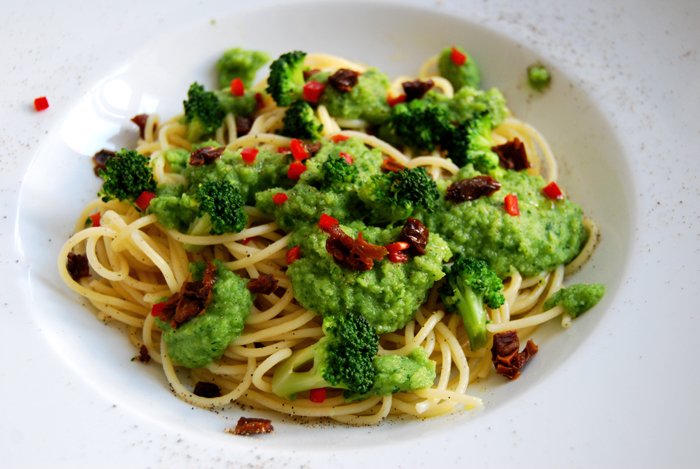
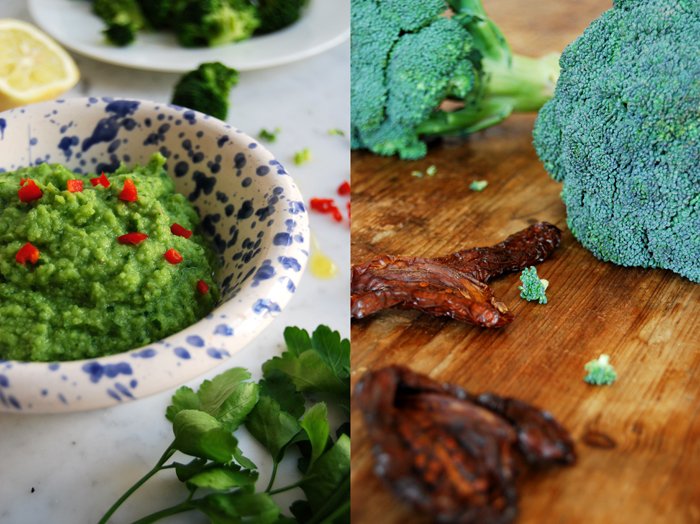
Today is a broccoli day! I cook it al dente, put some of it in a blender and mix it with parsley, ginger, garlic, anchovy, lemon juice and olive oil. Some of the water used to cook the broccoli stirred in makes the pesto nice and smooth, it's lighter than using just olive oil. When the warm spaghetti has been mixed with the broccoli pesto, I sprinkle some broccoli, sun-dried tomatoes and red chili on top. There are lots of different flavours in this pesto but they blend in perfectly and allow the broccoli to show its fresh side.
Broccoli Pesto with Spaghetti and Sun-dried Tomatoes
For this meal it's best to warm the plates in a 75°C / 165°F warm oven for a few minutes. I prepare them while the pasta is cooking.
For 4 people you need
spaghetti 400g / 14 ounces
broccoli, florets and the soft part of the stem, 450g / 16 ounces
water used to cook the broccoli 50ml
sun-dried tomatoes, cooked in a little water for 2 minutes to wash off the salt, dried and chopped, 1 1/2, for the topping
water used to cook the sun-dried tomatoes, 3 tablespoons
fresh parsley, chopped, 3 heaping tablespoons
garlic, crushed, 1 big clove
ginger, grated, 1/2 teaspoon
anchovy preserved in salt (optionally), rinsed and dried, 1
lemon juice 2 teaspoons
olive oil 3 tablespoons
salt and pepper
fresh red chili, chopped, 1, for the topping
In a large pot, bring water to the boil, add some salt and cook the broccoli al dente. Keep 1/3 of the cooked florets, cut into bite sized pieces and set aside.
Cook the spaghetti al dente.
Put the rest of the broccoli (florets and stem cut into pieces) in a blender and mix together with some of the water used to cook the broccoli and sun-dried tomatoes. Add the parsley, garlic, ginger, anchovy, lemon juice, olive oil and mix well. Season the pesto with salt and pepper but keep in mind that the tomatoes used for the topping will add some saltiness as well.
Arrange the spaghetti and the pesto on big plates and sprinkle with the chopped tomatoes, pieces of broccoli, chili and some more black pepper.

A Sandwich with Lemon Lentil Mousse and Roast Garlic

The legume section in my pantry is overflowing, it's time to empty some lentil boxes! My plan is to make a smooth lentil mousse enhanced with parsley, lemon and garlic, to spread on sandwiches and to eat together with raw vegetable sticks. I prepare a big bowl as we'll have my brother in law over for the next couple of days. When guests stay with us, I like to have some food ready in the fridge, easy nibbles and snacks that everyone can enjoy whenever they feel like, but first I'll need the mousse for my Sandwich Wednesday.
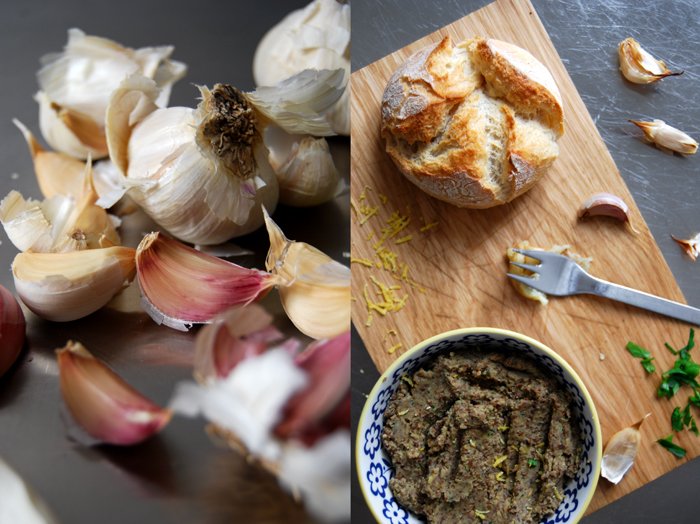
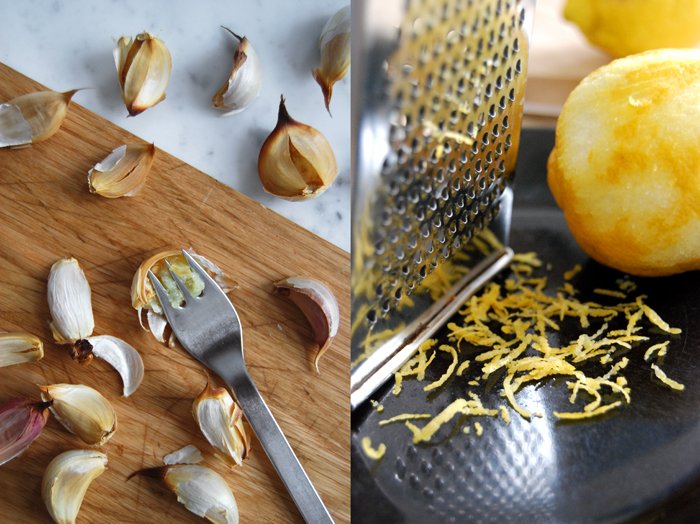
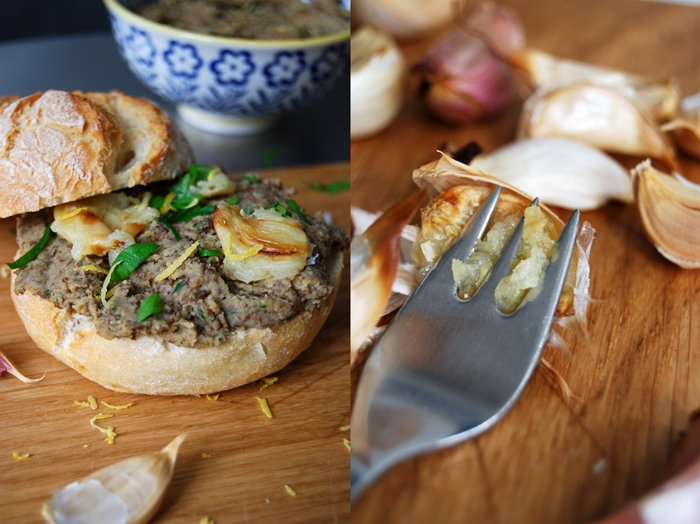
Besides the lemon and parsley aromas, the garlic plays an important role. I don't leave it plain and raw, I roast it, golden and sticky, almost sweet. I bake big, fleshy cloves in their skin and after 10 minutes in the oven they turn into a delicious paste. They taste so good that I throw a couple more into the oven, as an extra topping. Squeezed with a fork I lay the warm and juicy garlic on top of the lentil spread. This is such a great combination, the nuttiness of legumes together with the sourness of the lemon juice and zest, the aromatic parsley and the sweet and spicy garlic. I've made a few variations on this lentil mousse already, but this one is the freshest!

Lemony Parsley Lentil Mousse and Roast Garlic on a Sandwich
For the sandwiches you need white buns with a nice crust, crisp and crunchy. I made lots of mousse, it stays fresh for a few days. It's also great as finger food for parties, on slices of bread or served together with vegetable sticks!
lentils 350g / 12.5 ounces (I use a small type which doesn’t need to soak overnight)
bay leaf 1
fresh parsley, chopped, the leaves of a medium bunch plus more for the topping
freshly squeezed lemon juice 5 tablespoons
lemon zest 3 teaspoons plus more for the topping
olive oil 50ml
salt 2 1/2 teaspoons
black pepper
garlic, 12 big cloves in their skin (6 for the mousse, 6 for the topping)
Cook the lentils in 1 liter of water together with the bay leaf for 20 minutes or until they are done. Don’t season with salt yet or the lentils will stay hard. Take out the bay leaf and drain the lentils.
Set the oven to 220°C / 430°F (I used the Rotitherm roasting setting) and roast the cloves of garlic in their skin for 12 minutes or until they are soft. Peel the garlic and squeeze with a fork.
Mix the lentils in a blender to a smooth paste together with the parsley, lemon juice and zest, olive oil and half of the garlic. Season with salt and pepper to taste.
For the sandwiches, cut the buns in half, spread the lentil mousse on one side and lay 1 or 2 squeezed, roast garlic on top. Sprinkle with some parsley and lemon zest and close the bun.

A Monday Morning Juice with Grapefruit, Banana, Orange and Ginger

I have the tendency to become overly excited as soon as the temperature rises above 10°C and the sun comes through for more than a couple hours. I know it's only the beginning of March but I already feel like spring. I want to get out my summer clothes and jump around in the springy, fresh air. I want to sit outside a café with a glass of chilled white wine, enjoying the warm sun. Unfortunately, there's still a gap in temperature between my dreams and reality which I don't want to accept (sometimes) and that's exactly the problem! I'm prepared for the coldest winter and arctic temperatures, I never get a cold, but at this time of the year, a stone's throw away from the end of the cold season, I tend to be too carefree and strain my immune system.
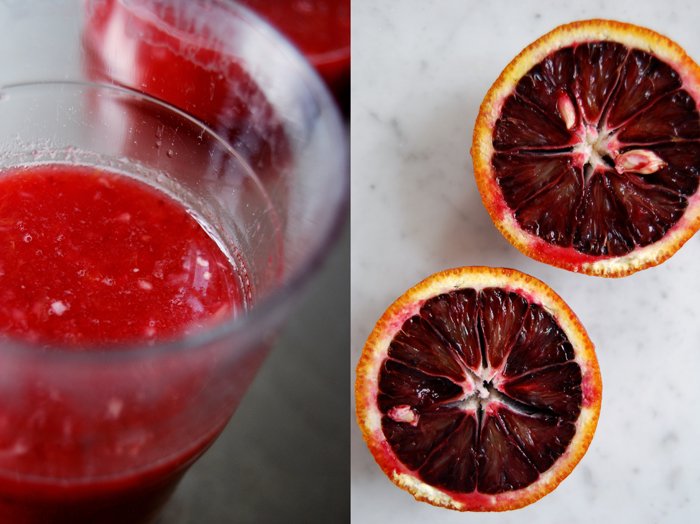
To avoid any deficit in vitamins, I start the week off with a powerful juice made of grapefruit, banana, blood orange and ginger. For two glasses of juice (400ml in all), I squeeze 1 pink grapefruit and 3 oranges. I add 1/8 teaspoon of grated ginger and half a banana, mashed smoothly with a fork. You can use a whole one but I didn't want its taste and sweetness to be too overpowering.
It's a true energy boost, like my January's Turmeric and Ginger Blood Orange Juice!

Carnival and a Cauliflower Soup with Ginger and Lemon
A couple weeks ago I wrote about our traditional family feast, a time when we all meet at my mother's house in the countryside to celebrate carnival. It's always silly, loud and involves lots of good food. The festive highlight is the making of our Berliner which involves each family member. A Berliner is a sweet speciality which looks a bit like a doughnut without a hole. It’s made of yeast dough, filled with jam, deep fried in vegetable shortening and sprinkled with cinnamon icing sugar. The jam filling changes with the years, a few weeks ago I filled mine with blueberry jam which became my favourite (for now), they tasted divine! The reason I made them at my home without my family before carnival, was a blog tour I was asked to joined. I decided to share our "Berliner" family tradition. I made them on my own for the first time in my life, they were as good as at my mother's but it's more fun with family and friends.
In the end it turned out to be (subconsciously) a wise choice as this carnival will be different. This year there is neither a family feast nor a Berliner to enjoy, for us it's soup instead. A wisdom tooth got in our way and needed to come out quick. Needless to say, a jam filled Berliner isn't the appropriate food in a situation like this, porridge and soup is more like it!
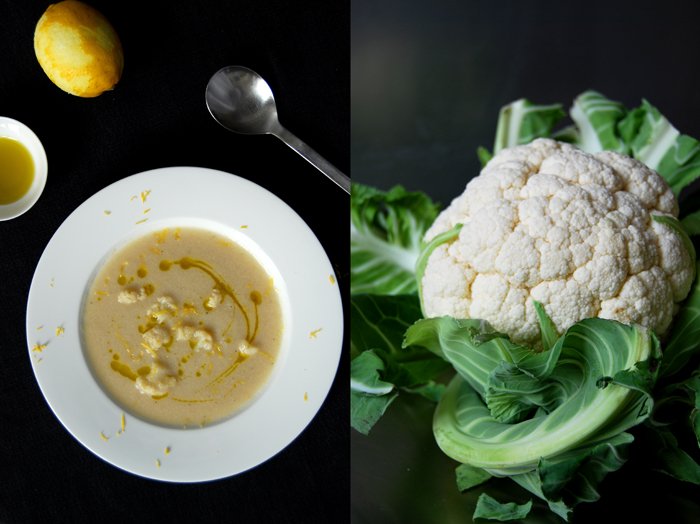
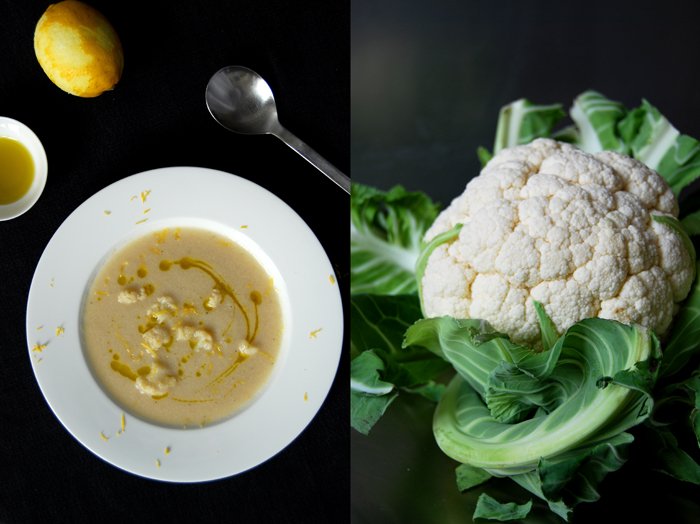
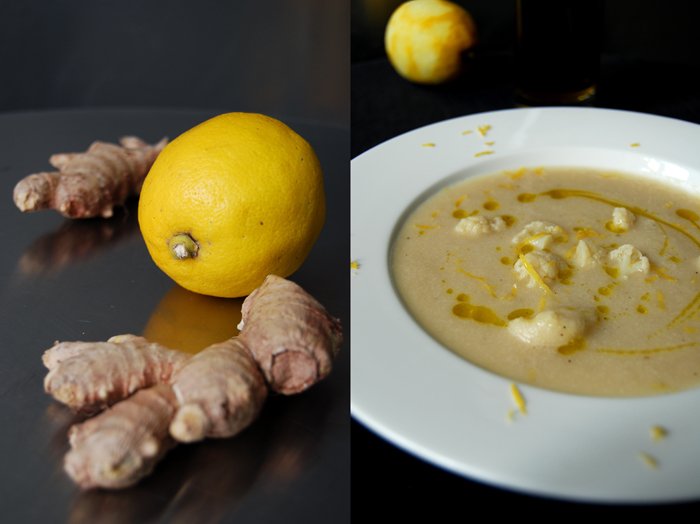
I have a big, beautiful cauliflower in the kitchen, a cabbage I don't use so often but in a velvety soup it shows its finer qualities. The sweet taste and smooth texture is great for puréed soups. I don't add any cream, just broth, onion, garlic and some tangy flavours, lemon and ginger. A piece of ginger simmers together with the cauliflower in the broth before I season it with grated ginger to taste. I add the lemon's juice and zest when the soup is done, arrange it in plates drizzled with some good olive oil and sprinkle some more lemon zest on top. I'm impressed, it's still smooth but fresh!
Last week I told you that eat in my kitchen was nominated for The Kitchn's Best Daily Read Cooking Blog Award 2014. Food52 won the award but I want to thank you all for your support and all your votes, with your help eat in my kitchen reached the final!

Ginger Lemon Cauliflower Soup
For 4 people you need
a big cauliflower, rinsed and cut into 5cm / 2" pieces, around 750g / 1.5 pounds (weight without stem)
vegetable broth 1500ml
onion, chopped, 1
garlic, cut in half, 1
bay leaf 1ginger, thumbnail sized piece plus 1 teaspoon grated
lemon juice 1 tablespoon
lemon zest 1 teaspoon
salt and black pepper
olive oil for frying and topping
In a large pot, fry the onion and garlic in a little oil until golden and soft. Add the cauliflower, bay leaf, the piece of ginger and broth and bring to the boil. Cook for 10 minutes or until the cauliflower is al dente. When it's done take out the bay leaf and ginger and put a few smaller pieces of cauliflower (a small plate full) aside before you mix the soup in a blender. Season with salt, pepper, the grated ginger, lemon juice and zest and put the cauliflower pieces back into the smooth soup. When you arrange the plates, drizzle some good olive oil on top and sprinkle with some lemon zest.

A Bittersweet Chicory Grapefruit Salad

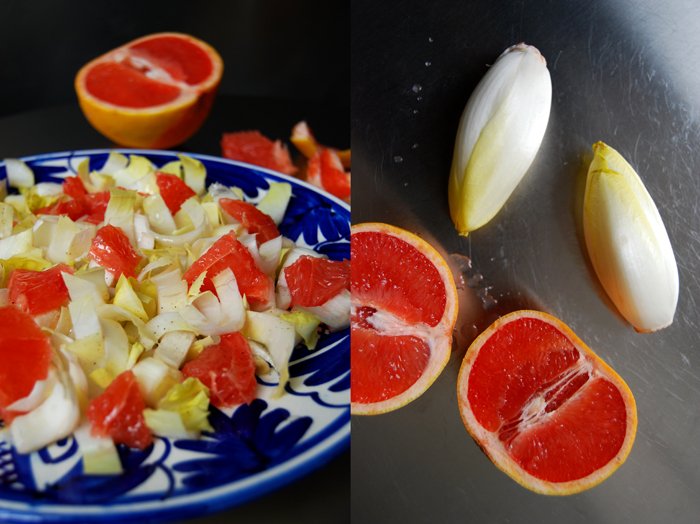
My lunch looks like summer, bright pink and yellow, a glowing sunset on the table! I got my Mediterranean plates out to make the holiday feeling complete. This is a quick salad, it doesn't require many ingredients or much time. It's a variation on my Chicory Pear and Walnut Salad, but this time I combine the crunchy chicory with the bitter sweetness of pink grapefruit. It's lighter, more like spring. Full of vitamins, this mix refreshes the body and mind within seconds!
For a salad for 2 (as a side dish) I cut 2 chicories in half and then into thick slices. I mixed them with the juicy bite sized pieces of half a pink grapefruit, you can use more but I wanted more leaves than fruit on the plates. My dressing is also simple and quick to prepare, 3 small tablespoons of olive oil mixed with 2 small tablespoons of white Basamico vinegar, seasoned with salt and pepper. I drizzled it carefully over my salad, just enough to glaze the leaves and fruit. Too much of the dressing would cover the salad's sweet bitterness with sourness, they have to keep a balance.


Fougasse Sandwich with Baked Beetroot, Goat Cheese and Thyme

I got really hooked on the roots and syrup combination in the past week. It all started with my ginger honey glazed Navet, yellow turnip fried as vegetarian steaks followed by caramelised maple parsnip with goat cheese combined in a warm salad and I'm still in the mood for sweet and earthy duos, at least one more.
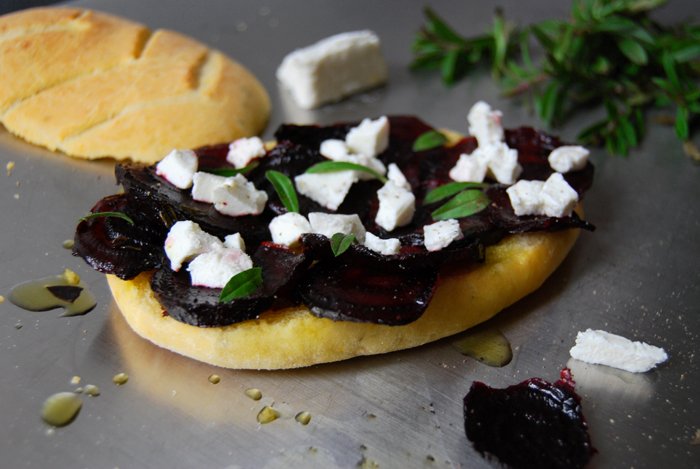
It's Sandwich Wednesday and the first thing that came into my mind when I looked at the beautiful Fougasse bread I baked yesterday, was a baked beetroot sandwich. My flatbread has strong aromas of orange and sage, perfect to add some more earthy and sweet flavours. There are some beetroots lying on my kitchen window sill, just waiting to be baked in maple syrup and olive oil sprinkled with thyme. I found a kind of thyme at the organic store that I have never seen before, with thick, long leaves. They are stronger in taste compared to the small leaved one, a bit woody. The thin slices of the roots are done after 10 minutes in the oven, soft, syrupy and partly crisp. I let them soak into the oily bread and finish my sandwich with some mild goat cheese crumbled on top to add some fresh milkiness.
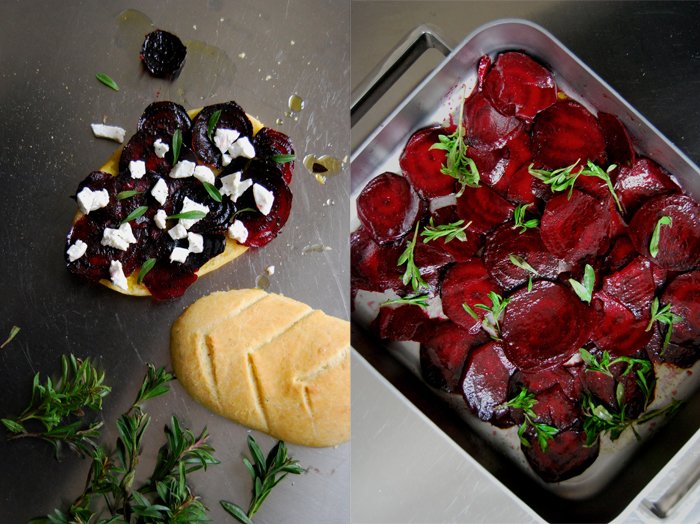
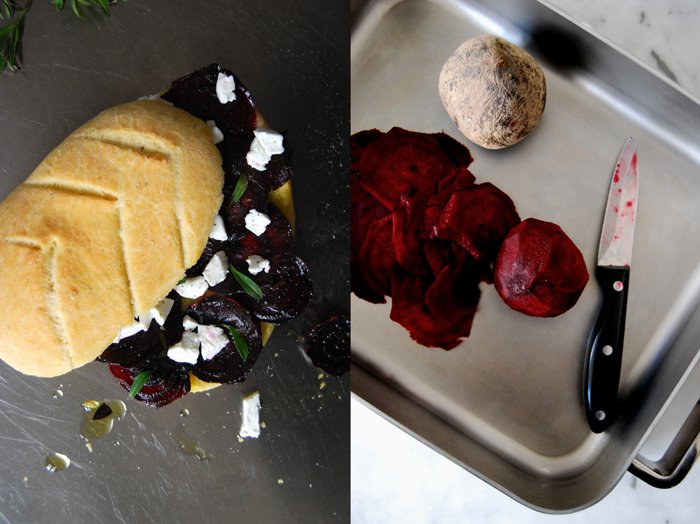
I made 3 flatbread sandwiches with 3 small beetroots peeled and cut into very thin slices and mixed with 3 tablespoons of olive oil and 2 tablespoons of maple syrup. I seasoned the roots with salt and pepper, mixed them with a few sprigs of thyme and roasted them spread in a roasting tin for 12 minutes in the hot oven set to 220°C / 430°F (Rotitherm roasting setting) until they were soft.
If you don't want to make your own Orange Sage Fougasse bread (I can just recommend it as it's fantastic), you can also use focaccia or soft buns (I made some very soft and juicy Mountain Buns with spices a couple months ago). I cut the flatbread in half, drizzled some olive oil (generously) on one side and spread the roast beetroot slices on top. After I sprinkled them with goat cheese (for 3 sandwiches I used 100g / 3.5 ounces of cheese), some fresh thyme leaves, salt and pepper, I closed my Fougasse sandwich, pleased about another great sweet root variation!

Fougasse Bread with Orange, Sage and Olive Oil
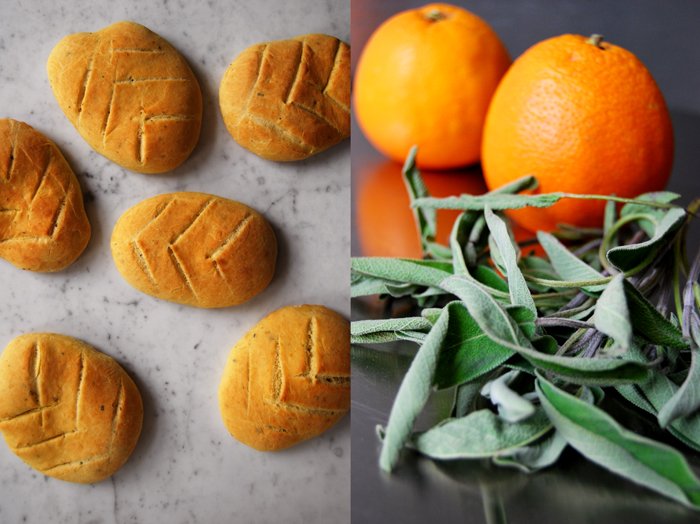
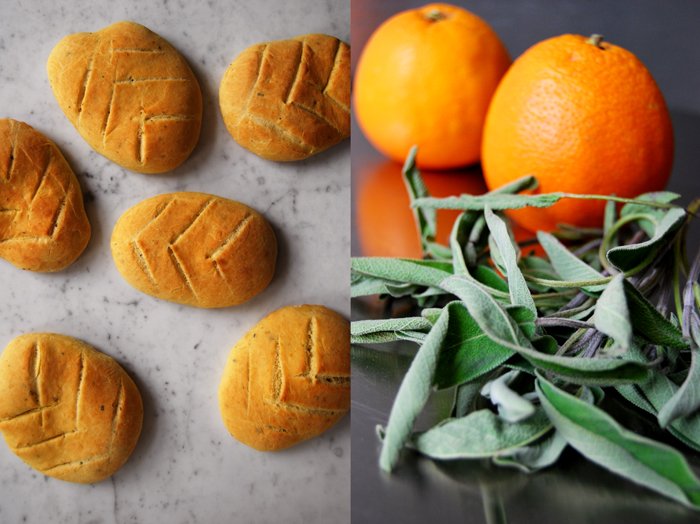
It's time to bake bread again! I use a recipe which involves sage and my beloved blood oranges, they'll be out of season soon, so I'm using every possible occasion that allows me to cook or bake with my sweet citrus fruits. I mix generous amounts of their zest and juice into the dough and the result is impressive!
My bread is a light and aromatic Fougasse, a French flatbread very popular in Provence where it's often made with olives, herbs and cheese. It's similar to the Italian Focaccia but with a leaf pattern of cuts in the dough. In some recipes, the cut goes all the way through creating holes in the bread while it's baking which makes the bread harder. I prefer to leave mine juicy with shallow cuts on the surface. Besides the orange and sage I add good olive oil in and on the bread. I use the wonderful extra virgin olive oil from the Molise region which I got from Marilena. Its strong and fruity taste is just what my Mediterranean flatbread needs!
I already have a great idea for a sandwich I can make with this bread for tomorrow's Sandwich Wednesday!
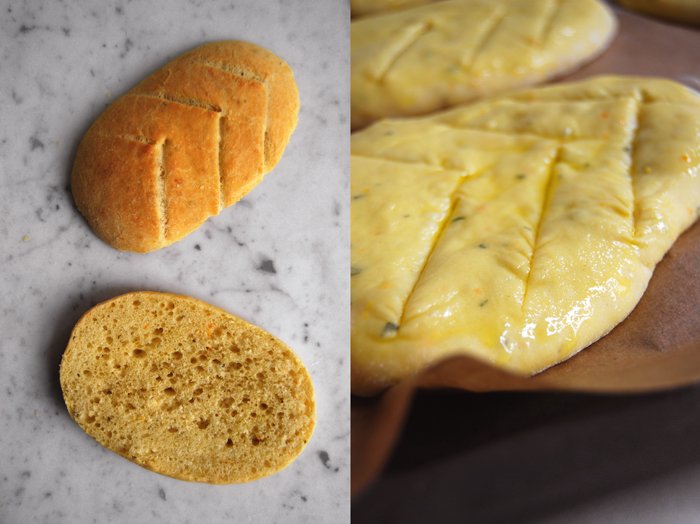
Fougasse with Orange, Sage and Olive Oil
For 6 flatbreads you need
plain flour 400g / 14 ounces (I use spelt flour type 630 but you can use any other plain flour)
dry yeast 1 package (for 500g / 1 pound flour)
salt 1 teaspoon
fresh sage, chopped, 8-10 leaves
zest of 1 medium sized orange
freshly squeezed blood orange or orange juice 100ml
water, lukewarm, 100ml
olive oil 5 tablespoons plus more for brushing the bread
organic egg 1
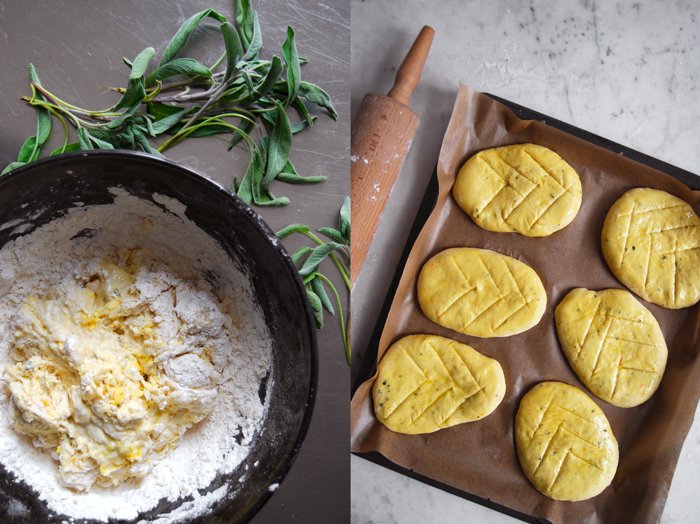
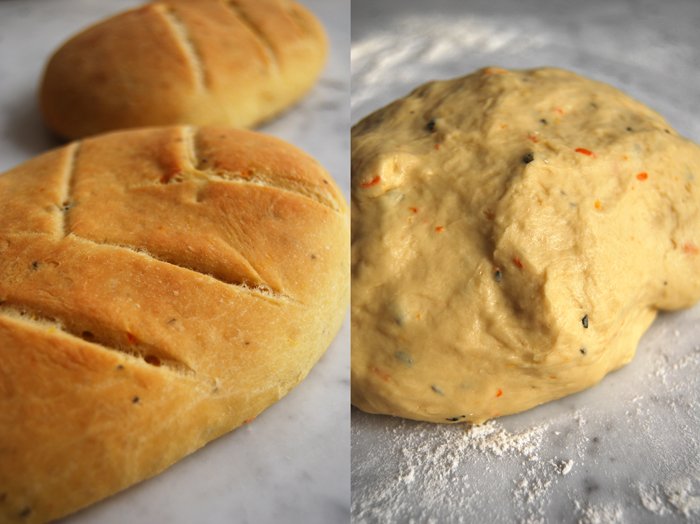
Combine the flour, yeast, salt, orange zest and sage in a large bowl. Add the water, orange juice and egg and mix with your dough hooks for 5 minutes. On a floured surface, continue kneading with your hands for a few minutes until you have an elastic dough ball. Put the dough back into the bowl and cover with a tea towel. Let the dough rise in a 35°C / 95°F warm oven for 45 minutes. This works really well but make sure that your oven is set to top/ bottom heat and not to fan.
Take the dough out and punch it down. Divide it into 6 pieces and roll them out into egg shaped discs (on a floured working surface, around 1 1/2 cm / 1/2″ thick). Put them on a baking sheet lined with parchment paper, cover with a tea towel and let them rise for 20 minutes.
Set your oven to 210°C / 410°F.
Brush the flatbread with olive oil and cut a pattern of 6-8 diagonal slashes into the dough to make a leaf pattern. Bake the flatbread on the lowest level for 12-15 minutes or until golden brown. Take them out and let them cool for 2 minutes.
I cut the warm flatbread in half and drizzled some more olive oil over it, it merged perfectly with the orange and sage aromas!
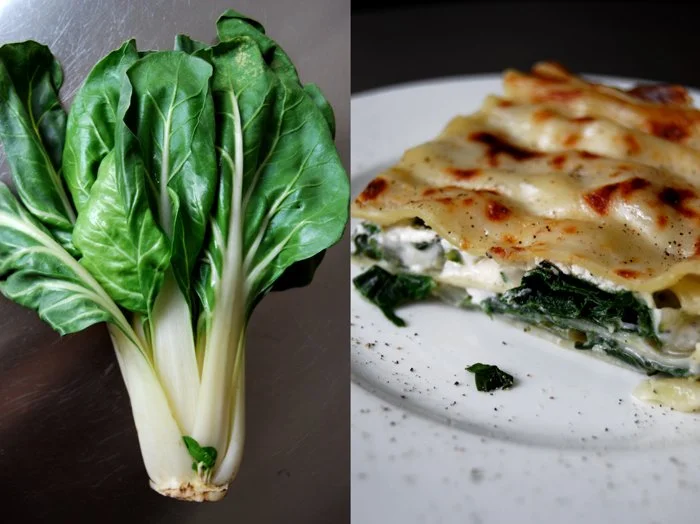
An earthy Chard and Ricotta Lasagna
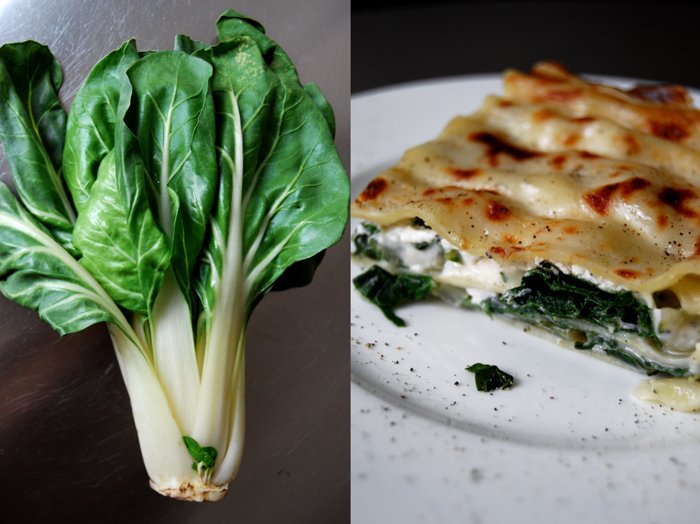
One of the qualities of chard, besides its wonderful taste, is that it gives me a spring feeling even in the coldest and darkest February evening. The thick green leaves are a promising hint of all the fresh green which will be on my plate in the next months, but for now I gladly enjoy this versatile vegetable. Chard tastes similar to spinach, but stronger with earthy flavours. I like it in combination with pasta and milky cheese. For a quick and easy dinner I chop the leaves roughly, cut the thicker stems into very thin slices, fry them in oil and deglaze everything with a glass of white wine. Mixed with spaghetti, some heavy cream and parmesan it's a wonderful pasta dish.
With a bit more time, chard makes a delicious lasagna together with ricotta, Béchamel and some parmesan. For a cold night, I recommend this comfortable dish. It's done after less than half an hour in the oven, you just need to blanch the chard beforehand and prepare the Béchamel.
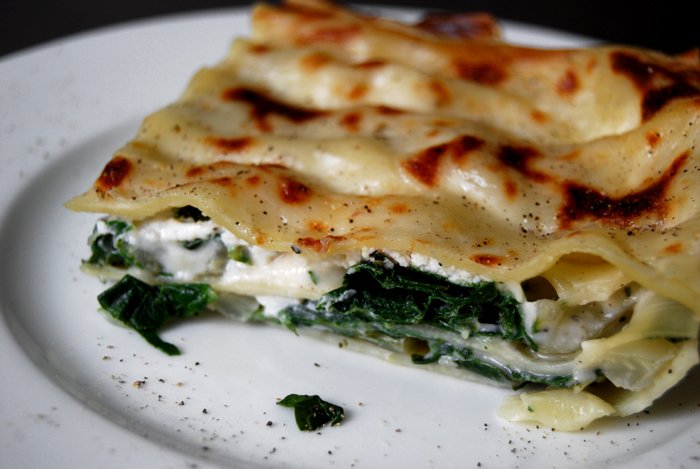
Chard and Ricotta Lasagna
I use a 27cm x 20cm / 10.5″ x 8″ baking dish, definitely big enough for 4 people.
For the chard
chard, rinsed, 500g / 18 ounces
nutmeg, ground
salt and black pepper
Bring a large pot with water to the boil. Cut the soft green of the chard into 1 cm / 1/2" strips and the hard white parts into very thin slices. Salt the water, first boil the white slices of chard for a couple minutes until al dente, then throw in the the green as well and cook for 1 minute. Take the chard out of the water and rinse in a sieve with cold water for 1-2 seconds. Season with salt, pepper and nutmeg to taste and set aside.
For the Sauce Béchamel
milk 600ml
butter, 30g / 1 ounce
plain flour 30g / 1 ounce
bay leaf 1
a pinch of nutmeg, grated
salt and black pepper
Mix the milk with the nutmeg, salt and pepper and bring to the boil. In a sauce pan, melt the butter and whisk in the flour. Pour the hot milk into the roux and continue mixing till smooth. Add the bay leaf and simmer for around 5 minutes on low heat until the texture is thick and smooth. Take the bay leaf out and season with salt and pepper.
For the Lasagna
lasagna pasta sheets around 250g / 9 ounces
ricotta 250g / 9 ounces
Parmesan, grated, 4-6 tablespoons
Set the oven to 180°C / 355°F and butter the baking dish.
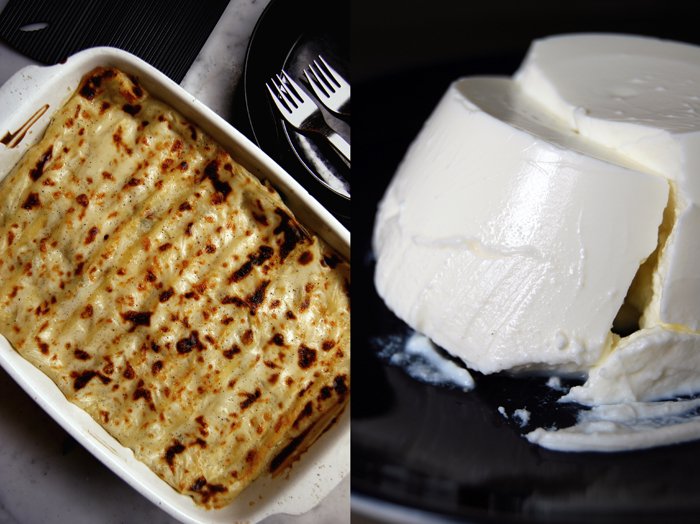
Put down a layer of pasta in the baking dish, spread with 1/2 the chard, pour 1/3 of the Béchamel over it and sprinkle with 1/2 of the ricotta (in big lumps). Repeat with another layer of pasta, the rest of the chard and ricotta and 1/3 of the Béchamel, cover with the final layer of pasta and the remaining Béchamel. Sprinkle with parmesan. Bake for 25 minutes or until the pasta is done, switch on the grill for 2 minutes or until the pasta becomes golden brown and partially crisp.
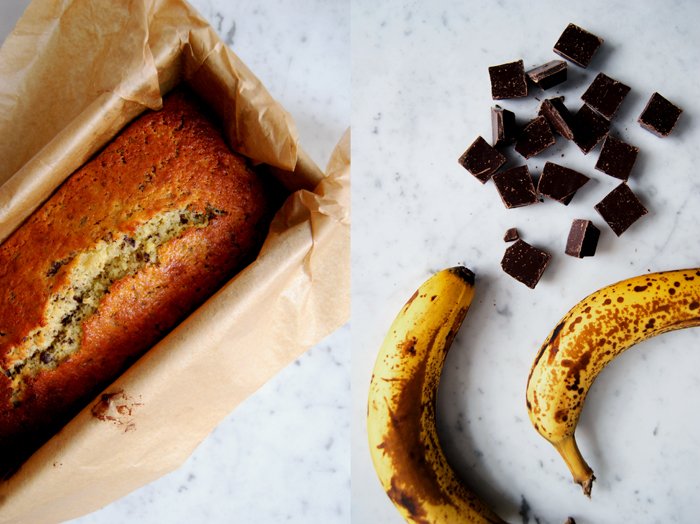
Sweet and Spongy Banana Chocolate Bread
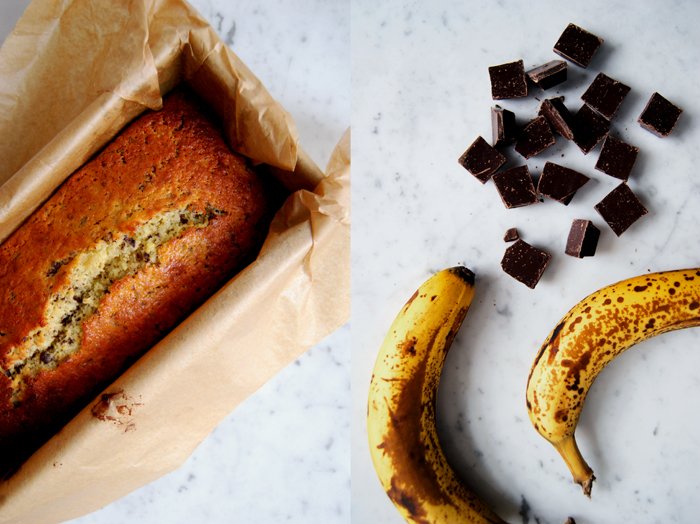
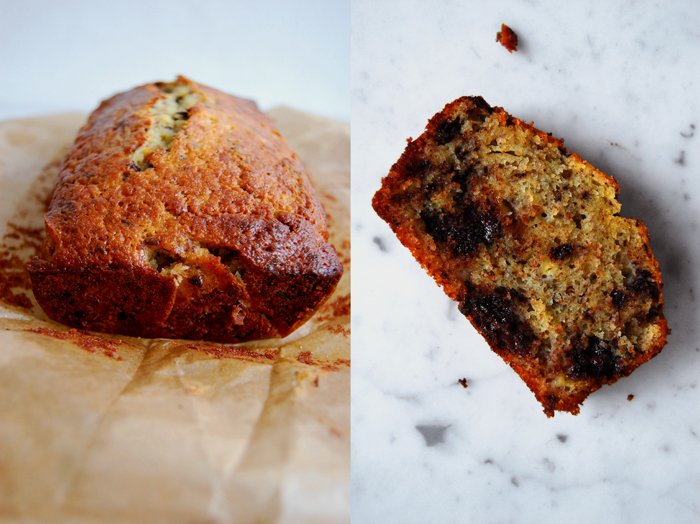
This is another perfect weekend breakfast treat, Banana Chocolate Bread. I like mine juicy, almost moist, with lots of big pieces of banana and bittersweet chocolate chunks. When you take the bread out of the oven, golden and warm and you cut the first thick slice off the loaf, pushing the knife through sweet banana chunks and melted chocolate, you'll understand why there's no better start to the weekend. It feels, smells and tastes just right! I never wait for the bread and chocolate to cool, I have to eat a slice immediately as soon as it's done, the chocolate still warm and liquid.
The combination of banana and bittersweet chocolate is a special one as the sweetness and the bitterness balance each other out perfectly. I love it in ice cream, cookies and cakes, but to me nothing beats this duo when their big chunks merge into a warm cake, or morning bread. For one loaf I use three big bananas and 100g / 3.5 ounces of bittersweet chocolate, I don't want a hint of their flavours, I want an explosion on the taste buds.
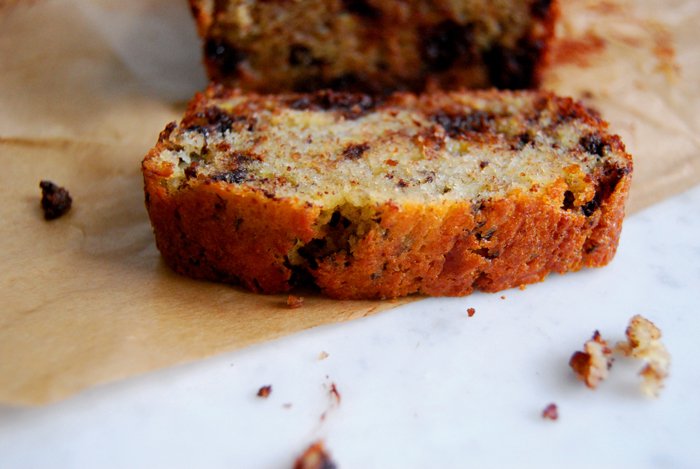
Banana Chocolate Bread
For a 24cm x 10,5cm / 9.5″ x 4″ loaf tin you need
butter 120g / 4.5 ounces
granulated sugar 100g / 3.5 ounces
vanilla sugar 1 package (you can also use vanilla extract)
organic eggs 2
large and ripe bananas, quartered, 3
plain flour 120g / 4.5 ounces
baking powder 2 teaspoons
salt 1/2 teaspoon
bittersweet chocolate, chopped roughly (leave a few bigger chunks), 100g / 3.5 ounces
Set the oven to 160°C / 320°F (fan-assisted oven) and line the loaf tin with parchment paper.
Combine the flour, baking powder and salt. Mix the butter together with the sugar and vanilla sugar till fluffy. Add the eggs, one at a time, and continue beating for a couple minutes. Add the bananas, beating for 10-20 seconds and stop before they get too smooth, they should be a bit chunky. Gently fold in the flour mixture with a spoon, add the chocolate chunks and fold them in, carefully as well. Scoop the dough into your prepared tin and bake for 55 minutes or until golden brown. Check with a skewer, it should come out clean.