ISCHIA / ISOLA VERDE

Crunchy Artichoke Hearts with Spinach Tagliatelle
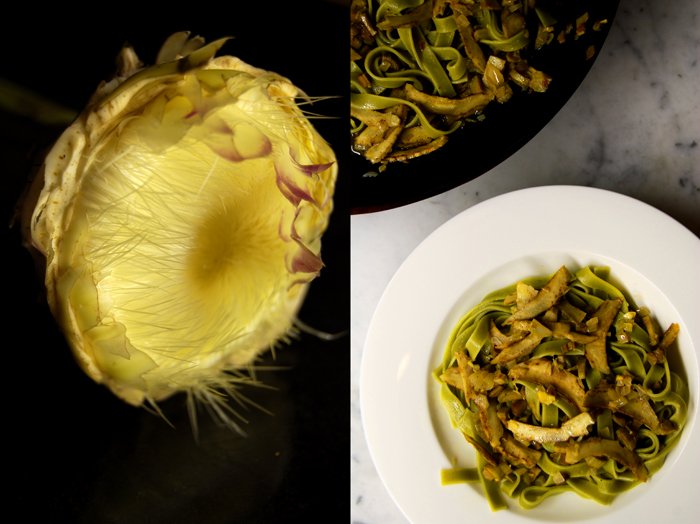
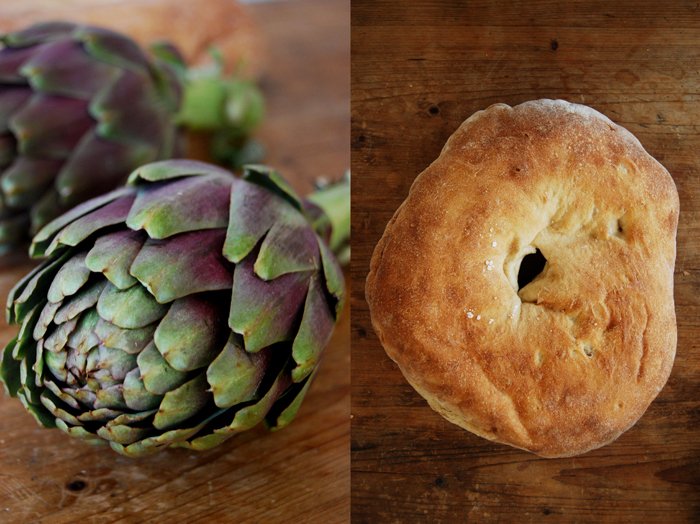
I had three artichokes left from Emma's wonderful gift from Malta, where they are already in season. I kept them to cook a meal which I usually enjoy in late summer, artichoke fried with onion and garlic mixed with pasta. I remove their leaves and use just their heart and stem, cut into thin slices as opposed to the bigger, round ones which have thicker, fleshy leaves, perfect to dip into dressings and nibble on, also a summer treat I look forward to!
As soon as the leaves have been removed from the artichoke, this meal is really quick to cook. First I prepared the three vegetables which are enough for a dinner for 3. When you pull the leaves off and cut out the fine hair, you can keep the artichoke heart and stem in a bowl with water and half a lemon. This keeps them from changing their colour as you continue preparing the rest of them. I didn't do this as I don't mind.
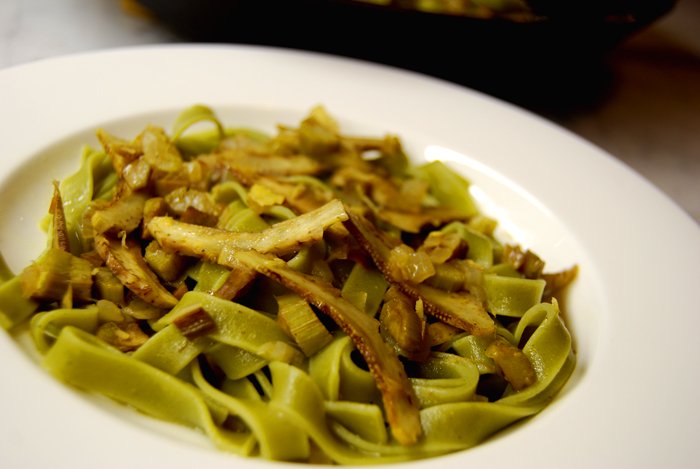
I went for Delverde Tagliatelle Agli Spinaci (around 300g / 10.5 ounces) to bring in some colour and cooked them al dente while I prepared the artichokes. First I fried 1 finely chopped onion and 1 crushed garlic in some olive oil in a large pan until golden and soft. I added the finely sliced artichoke and fried it until golden brown on all sides. I deglazed it with some white wine, seasoned with salt and pepper and let it cook for a few minutes. When the tagliatelle were done, I poured some of the water I used for cooking the pasta over the artichokes, mixed in the pasta and seasoned everything with salt and black pepper to taste.


Ginger Honey glazed Navet Steaks with Orange Juice and Rosemary
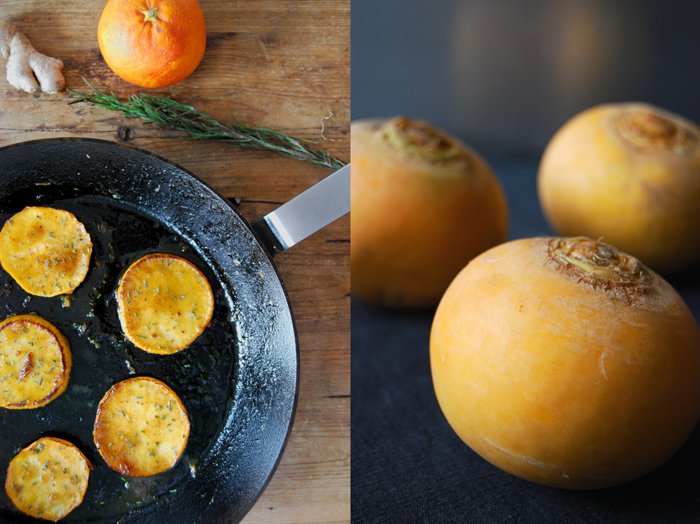
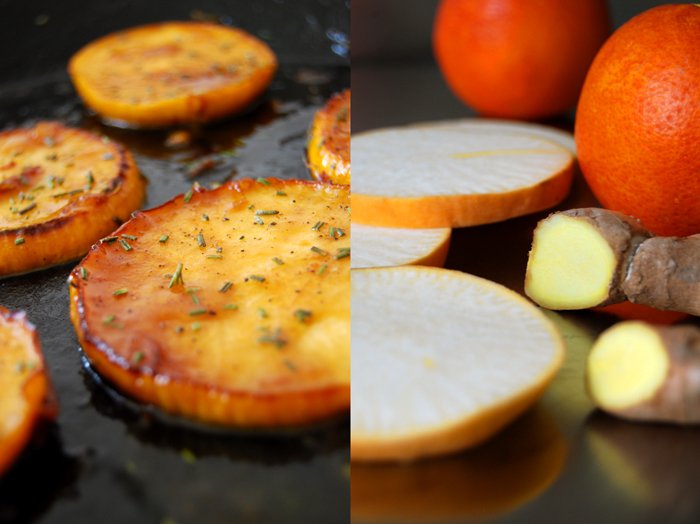
When I saw these beautiful yellow turnips, also known as Navet, at the store, I had to buy them although I wasn't really sure what to cook with them. They are related to beetroot but taste more like rutabaga. After 1 or 2 days of looking at them I found my inspiration, thick Navet steaks fried in butter with ginger, honey, orange juice and rosemary. I made a similar recipe with rutabaga in December and the combination of turnip and ginger is one that I like a lot.
This time, I wanted to add a few more aromas, the sweetness of honey, the fruity sourness of orange juice and some woody rosemary, all this combined in the buttery juices of my yellow turnip. The result left me speechless! I couldn't get enough of this sauce, so thick, sweet, spicy and sour, simply amazing, and the Navet steaks covered in this sticky glaze combined perfectly with all the different flavours.
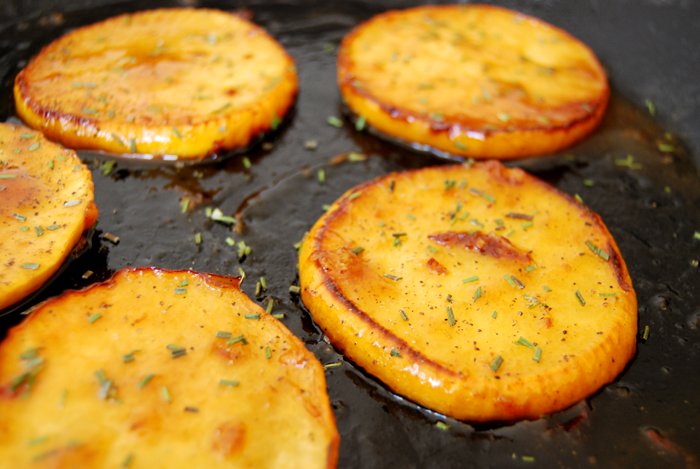
Ginger Honey glazed Navet Roots with Orange Juice and Rosemary
For a lunch or side dish for 2 you need
yellow turnip, cut into thick steaks, 2 (you can also use rutabaga)
ginger, grated, a thumbnail sized piece
honey, 1 teaspoon
orange juice for deglazing
fresh rosemary, chopped, 2 tablespoons
butter 3 tablespoons
salt and black pepper
In a large pan, heat the butter together with the honey and ginger, add the turnip and season with salt and pepper. On medium heat, fry for 2-3 minutes on each side until golden brown. Deglaze with a splash of orange juice, let it cook for 1-2 minutes and sprinkle with rosemary.
Elsa's Poppy Seed Crumble Cake
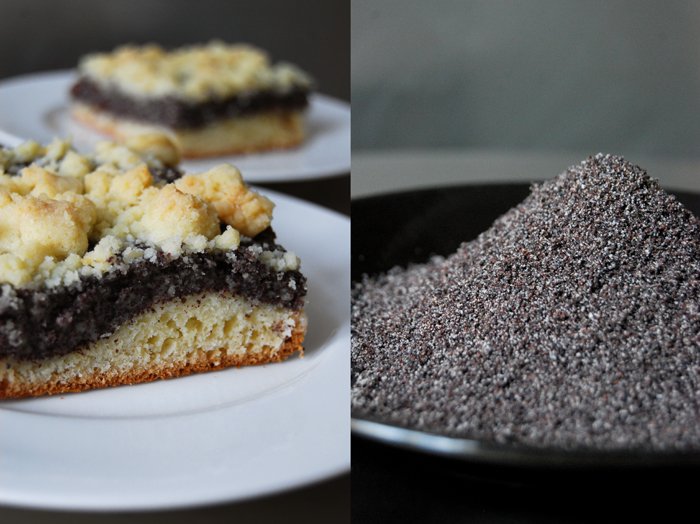
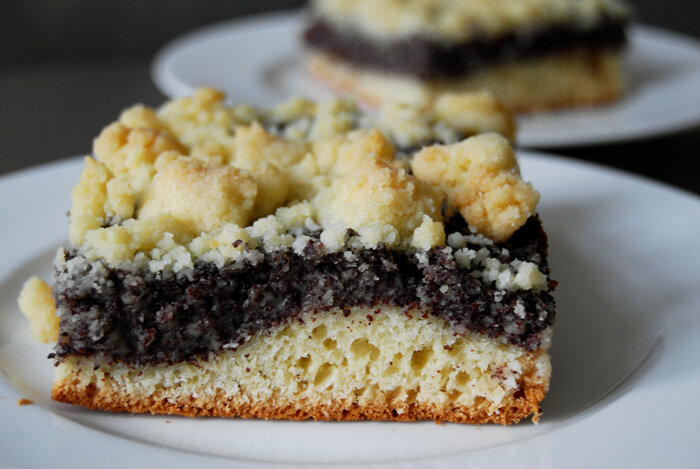
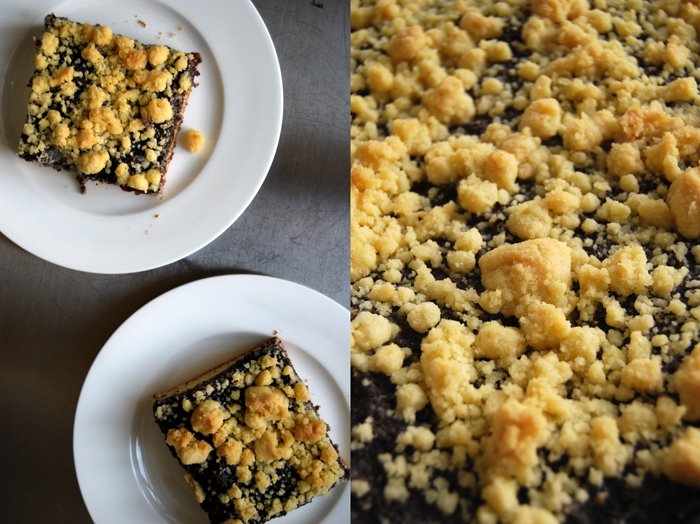
My aunt asked me for a helping hand in the kitchen because she had a baking marathon of three cakes to manage in one day, so I decided to bake one of them. She let me choose, they all sounded nice but I went for a recipe which I wouldn't usually bake. It's a poppy seed crumble cake with a sweet yeast dough, an old German recipe which she got from her friend Elsa many years ago.
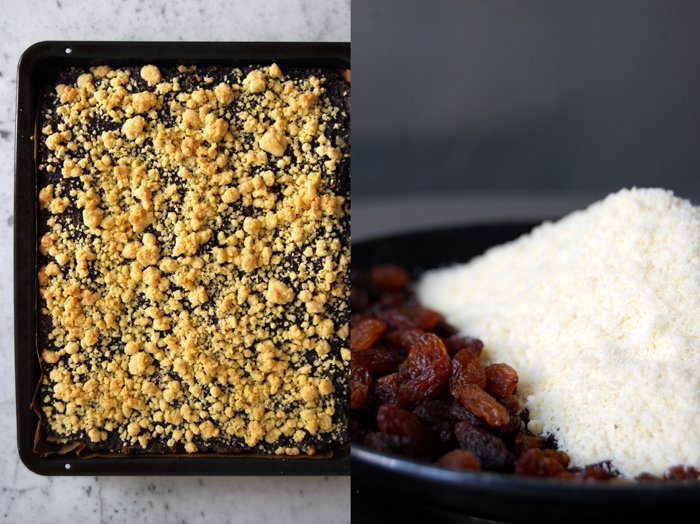
I'm happy about my choice as the yeast dough alone is already wonderful, light and not too sweet. I will definitely use it for other recipes soon, maybe a Sunday morning Challah (plaited yeast cake). Although it's so light and spongy it's still strong enough to carry the thick layer of smooth poppy seed cream, semolina, ground almonds and raisins. If this wasn't enough, the cake is topped with crunchy buttery crumbles (I used the crumble recipe of my Apple Crumble Cake).
When I was a child, I loved poppy seed swirl cake. I couldn't get enough of it, but then at one point I lost interest for no apparent reason. So for years I haven't baked with these crunchy black seeds at all but I think they will return to my kitchen after this cake!

Poppy Seed Crumble Cake
For a 39 x 32cm / 15.5 x 12,5" tray of cake you need
For the yeast dough
plain flour 500g / 1 pound
dry yeast 1 package (for 500g / 1 pound of flour)
granulated sugar 60 g / 2 ounces
a pinch of salt
milk, lukewarm, 150ml
butter, melted and cooled, 100g / 3.5 ounces
organic eggs 2
Combine the dry ingredients, add the milk, butter and eggs and mix with your dough hooks for 5 minutes. Continue kneading with your hands for a couple minutes. Put the dough back into the bowl, cover with a tea towel and let it rise in a 35°C / 95°F warm oven (top / bottom heat) for about 45 minutes until well risen.
Prepare a baking sheet with parchment paper. Roll out the yeast dough and put it on the baking sheet. Cover with a tea towel and let it rise for 15 - 20 minutes in a warm place.
Set the oven to 175°C (top / bottom heat) and prepare the poppy seed mixture and crumbles.
For the poppy seed mixture
semolina 125g / 4.5 ounces
granulated sugar 150g / 5.5 ounces
salt 1/4 teaspoon
milk 1000ml
organic egg yolks 2
poppy seeds, crushed, 250g / 9 ounces
almonds, ground, 100g / 3.5 ounces
raisins 50g / 2 ounces
zest of 1 lemon
In a large pot, bring the milk, semolina, sugar, salt and egg yolks to the boil, stirring constantly. Continue stirring and let it cook for 5 minutes on medium heat. Add the poppy seeds, almonds, raisins and lemon zest, combine everything and set aside.
For the crumbles
The crumbles need good preparation as you have to make sure that the mixture is neither too moist nor too dry. Have some extra flour and melted butter close at hand so that you can add some immediately if necessary.
plain flour 200g / 7 ounces (plus more if the crumbles are too sticky)
granulated sugar 125g / 4.5 ounces
vanilla sugar 1 teaspoon
butter, melted, 125g / 4.5 ounces (plus more if the crumbles are too fine)
Combine the dry ingredients in a bowl. Pour the melted butter on top and mix quickly with the hooks of your mixer, this shouldn’t take longer than 20 seconds. If the crumbles are too moist and sticky add a bit more flour (1-2 tablespoons). If they are too fine and don’t form bigger crumbles add more melted butter.
For the cake, spread the poppy seed mixture over the yeast dough and sprinkle with the crumbles. Bake the cake for 40 minutes or until the crumbles are golden.

French Toast with Maple Syrup for a cosy breakfast in bed
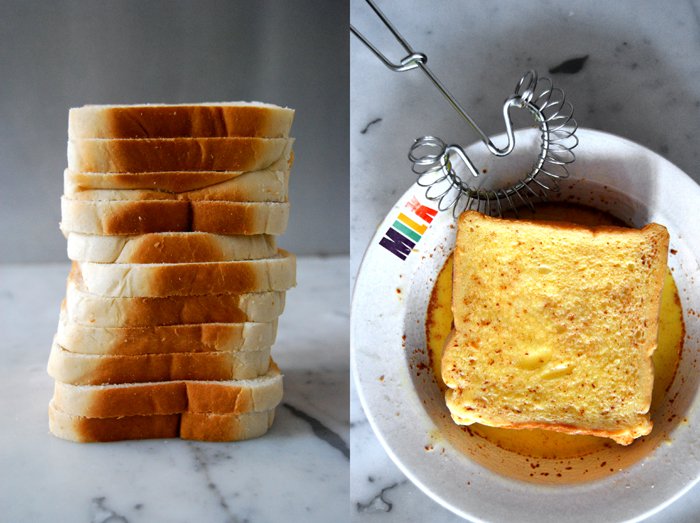
French toast is the perfect breakfast for a cosy day in bed, with books and magazines, daydreaming and chatting, with nothing important on my mind and no decisions to be made. While pancakes are an equally satisfying morning treat, they take a bit more time so I gladly make my french toast on a day like this. It requires just a few minutes out of bed for preparation before I can snuggle back into the cushions with a plate full of sweet cinnamon toast covered in maple syrup.
I like my french toast soft and juicy on the inside, soaked in lots of cinnamony milk with eggs, and with a buttery crust on the outside. For 4 slices of white bread I mix 2 large eggs with 1/3 to 1/2 cup of milk (depending on the size of the eggs), the mixture should be quite liquid. I whisk in a pinch of salt and 1/8 teaspoon of ground cinnamon, then I let the bread soak in this mixture, turning it once or twice, repeating with the other slices until most of the liquid is absorbed. Now they just need to fry in 3 tablespoons of butter in a large pan on medium heat until golden brown before you can sprinkle them with more cinnamon and pour over some maple syrup.


King Prawns, Ginger and Leek Pasta for a special night
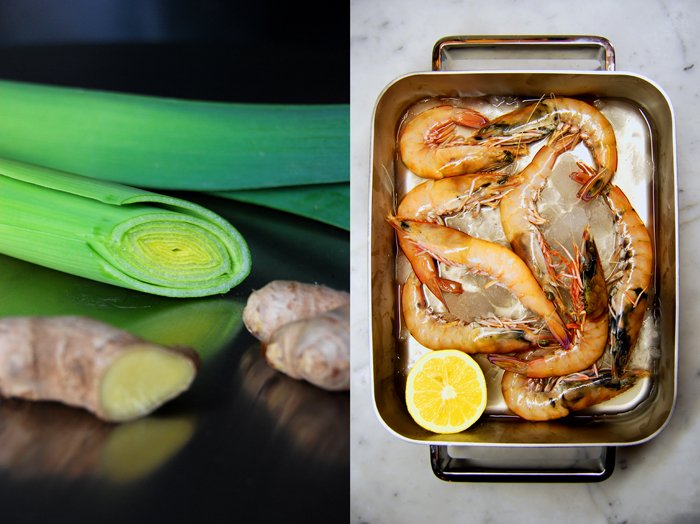
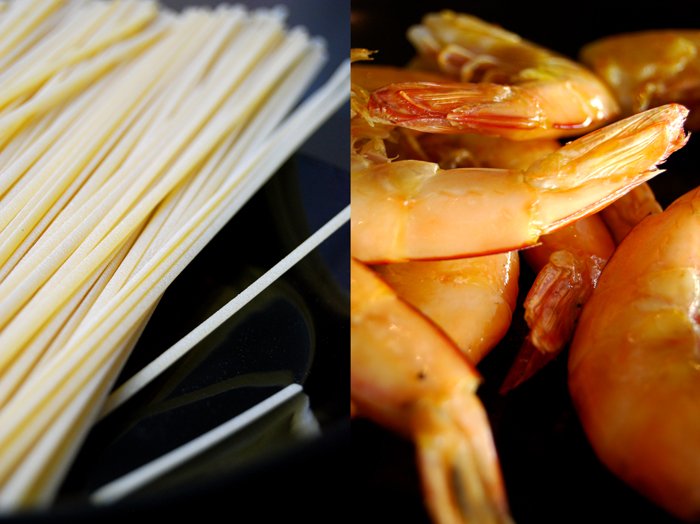
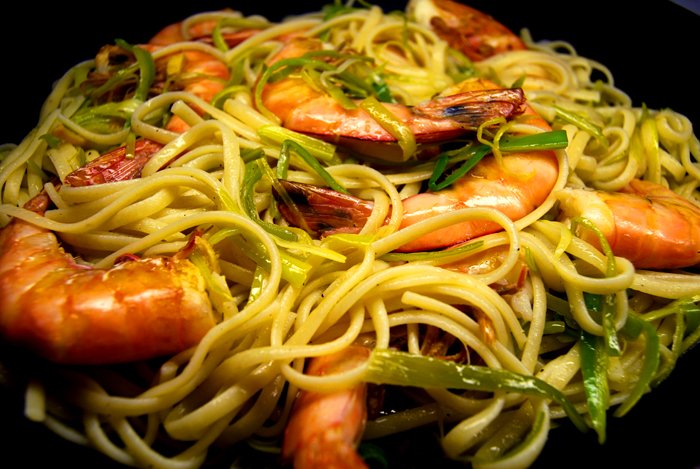
Sometimes when I visit my mother and it's just the two of us, we go for a luxurious mother and daughter treat. In our case that's not a day at the spa but a sumptuous meal. We both love seafood, so we go to the fish shop and buy a few king prawns for one of our favourite meals. We fry the prawns, add some ginger, garlic and leek and mix them together with Linguine pasta - so simple yet so delicious! The pasta is glazed with the gingery oil infused with the aroma of the prawns which are so strong on their own that you just have to fry them in hot oil to unfold their pure quality. No sauce, no further distraction, just a subtle spiciness from the leek and ginger. We love it!
It's one of those days again, my mother is at my home at the moment, we went to some great restaurants in the past few days and had some wonderful dinners out but now it's time to cook together in my kitchen again, but first it's time to go shopping! I mentioned my favourite department store when I wrote about my Camembert and Pomegranate Sandwich because of their amazing (and huge) cheese section. I started my own tradition more than 20 years ago when I was still only a regular visitor to my current home city. I would always visit their food section whenever close by, and I still can't resist its attraction. I walk around, take a look at the displayed goods and I always end up in the seafood section to buy a shrimp sandwich. Yesterday I went there with my mother, I ate my shrimps in a crisp bun and she had a few oysters. We bought some king prawns for our dinner, fresh from the open sea, we also chose some wine, cheese and petit fours for dessert and couldn't wait to get home to prepare our special dinner.
I must admit we're still two girls so we didn't just leave it at the food. The fashion section was nearly as attractive as the food so we ended up spending some time there as well. A perfect day - and night!
King Prawns, Ginger and Leek Linguine
For 4 people you need
king prawns, uncooked, rinsed, cleaned, the head removed but with the shell, 12 (we got the ones with head and shell, their taste is stronger and you can make an amazing broth with the shells)
linguine pasta 400g / 14 ounces
leek, cut into thin slices, 1
ginger, cut into strips, 3 tablespoons
garlic, cut in half, 3 cloves
white wine for deglazing and a little of the water used for cooking the pasta
salt and black pepper
olive oil for frying
In a large pot, cook the Linguine al dente. While the pasta is cooking you can continue with the prawns.
In a large and heavy pan, fry the prawns in hot oil for a couple minutes on each side until their shells turns golden brown. Take the prawns aside (I leave mine in their shell but you can also peel them before you mix them with the pasta). Pour some more oil into the pan and fry the leek, ginger and garlic for 2-3 minutes on medium heat. Deglaze with a splash of white wine, add half a cup of the water used for cooking the pasta and season with salt and pepper. When the leek is soft, add the pasta and prawns. Mix everything and divide between the plates.
You can make a delicious broth with the hard shells and heads, fry them in hot oil and deglaze them with Noilly Prat or white wine. Add an onion, 1/2 leek, 1-2 carrots, 1 small parsley root, 1 celery stalk, 4 black pepper corns and 2 bay leaves and cover everything with 1800ml of water. Cook for half an hour and pour through a sieve. I fill mine in containers and put them in the freezer.


Earthy Porcini Lentil Soup with Honey and Ginger
A couple days ago I ate a very aromatic porcini soup at one of my favourite restaurants and I was very surprised when the chef and owner told me where the mushrooms for this wonderful meal came from, the desert. The dunes of the Kalahari in southern Africa produce sensational truffle and porcini in season from now till May. I savored this dinner together with my family and we were all surprised and impressed at the same time! I've never seen mushrooms from the Kalahari in a store or at the markets before but I will definitely look out for them!
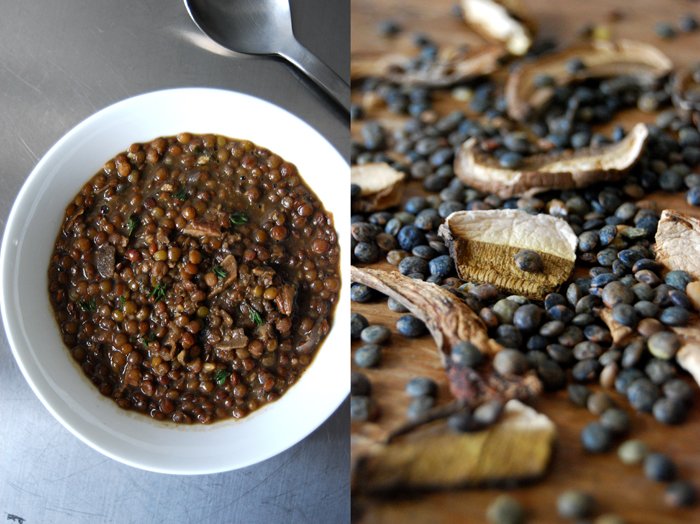
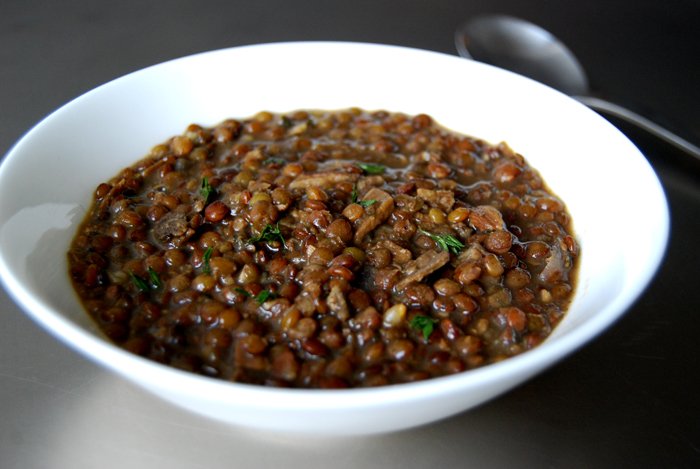
The soup was so tasty that it aroused my appetite for mushrooms and I had to think of a lentil soup my aunt Ursula had told me about (she was at the dinner as well). It combines the earthy flavours of lentils and porcini. I went for dried porcini (from Italy not from Africa). My aunt recommended them for this meal as you have to shred them finely into a very concentrated porcini flour which you cook together with the lentils. I used my Swabian Alb Leisa Lentils from South Germany for this meal which conveniently don't need to soak in water. Their taste is strong enough for the aromatic porcini, so strong that I could even add a piece of ginger, some thyme sprigs and a spoon of honey. The result is an absolutely delicious lentil soup full of wintery aromas.
Porcini Lentils with Honey, Ginger and Thyme
This is great to cook in large batches to keep in the freezer for quick dinners!
For 4 people you need
lentils 350g / 12.5 ounces (I use a small dark type which doesn't need to soak)
dried porcini mushrooms, shredded finely in a blender, 50g / 2 ounces
medium sized onion, chopped, 1
garlic, crushed, 1 clove
broth 1000ml plus more for cooking depending on the lentils
fresh thyme 5 sprigs
ginger, thumbnail sized
bay leaf 1
honey 1 tablespoon
salt and black pepper
olive oil for frying
In a large pot, fry the onion and garlic in a little oil on medium heat until golden, add some more oil and the shredded porcini and fry for 1 minute. Add the lentils, ginger, thyme, bay leaf and the broth. Don’t season with salt yet or the lentils will stay hard. Close the lid and let it cook for about 30 minutes. The cooking time depends on the lentil type, mine needed 30 minutes. When the lentils are soft, add the honey, season with salt and pepper and take out the thyme sprigs, bay leaf and ginger.

The taste of Summer in my Mediterranean Sandwich
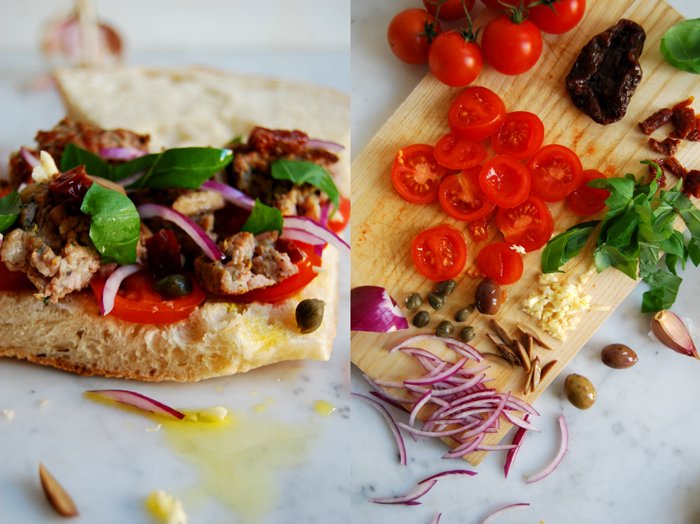
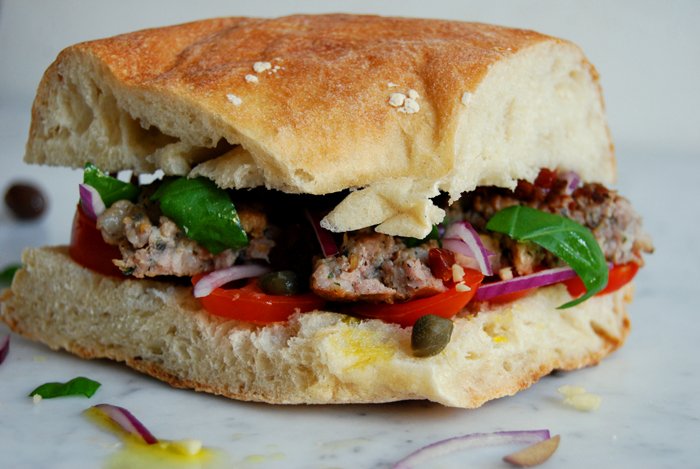
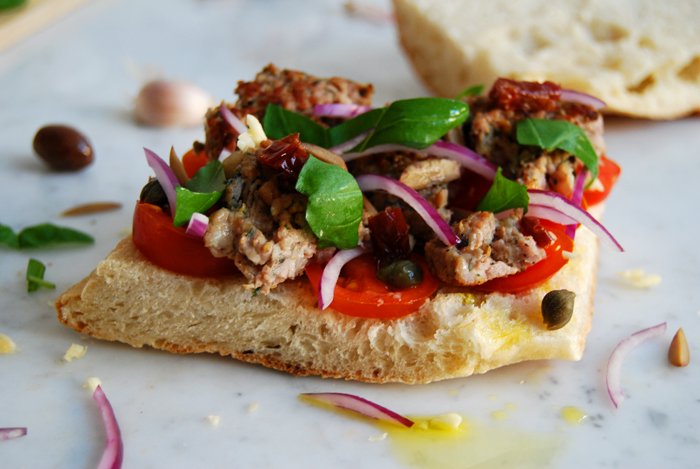
Maltese sausage, tomatoes, capers, olives, basil, red onions, garlic and olive oil on Maltese Ftira bread - as soon as I started to make this sandwich the sun came out, literally! You can't really put more of the taste of summer into a sandwich than in this one. In Malta, this is a local hero, the famous Ftira, enjoyed by everyone on this island. It's a celebration of their specialities combining quite a few different tastes, all strong and honest, and creating one of the best sandwiches you can imagine.
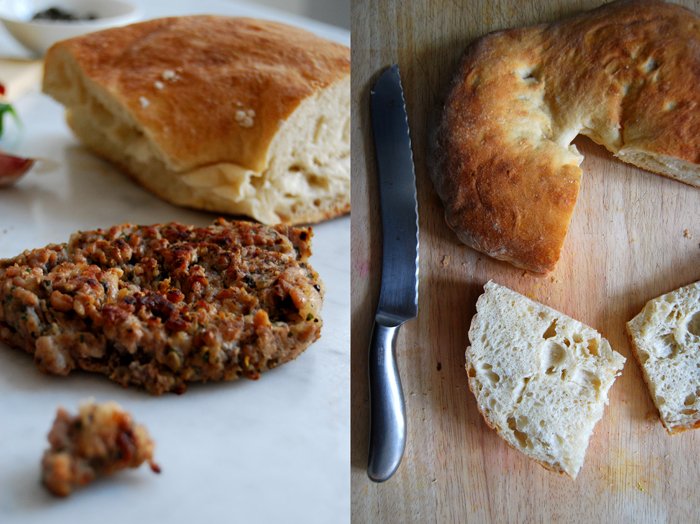
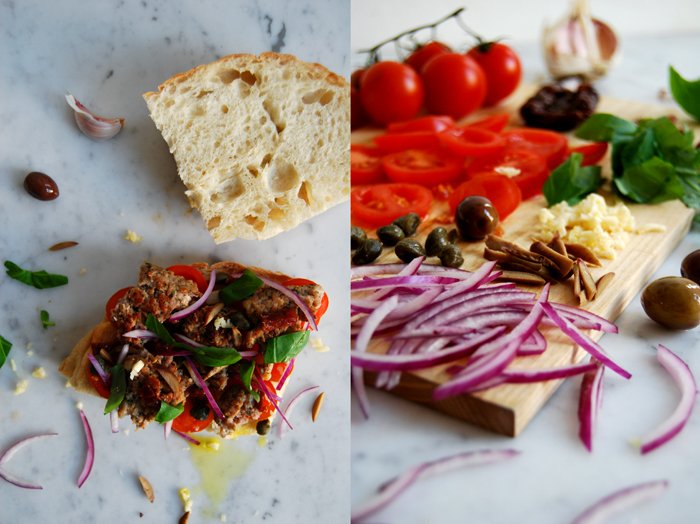
I made it last weekend when I had all the ingredients at hand, freshly delivered from Malta by Emma. I fried the coarse Maltese sausage with its strong coriander flavour until golden brown, without its skin and cut in half. It looked a bit like a burger stuffed with herbs. You can also use Salsiccia as it's made with similar spices and herbs as well. I recommend a white bread with a nice crust but soft on the inside to soak the juices and olive oil like the Maltese bread I used. I cut a few cherry tomatoes, half a red onion, 4 green olives, 1 dried tomato and a few basil leaves into slices and piled everything carefully onto a slice of bread drizzled with olive oil. I finished it off with 1 crushed clove of garlic and a few capers and closed it with another slice of bread. When I took a bite, I was on my favourite island in the Mediterranean again!

A Purple Risotto with Bitter Radicchio
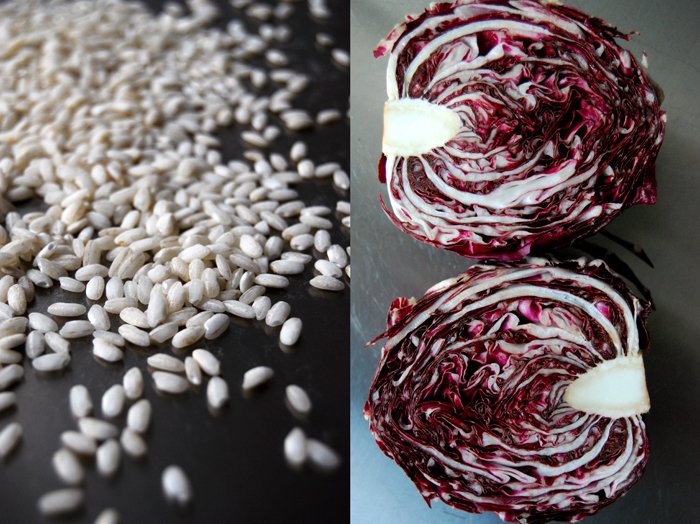
When it comes to risotto I like the rice to have a bit of bite, with a velvety texture and not too liquid. I always make mine with broth and wine adding a little at a time so that I don't miss the point of my favoured texture. What's great about this meal is that it's made of ingredients which I usually have in stock. There are always one or two vegetables in my fridge waiting to be used and Arborio rice, onions, garlic, olive oil and wine to cook is on my shelves anyway. So it's perfect for an indecisive day when I don't know what to put on my cooker, or I don't have the time to think about dinner. Conveniently, it's also ready in half an hour!
My purple risotto has a biting bitterness from the radicchio which combines very well with the thyme. The rice is infused with the strong flavours in my broth and spices. I use a bay leaf and cloves which introduce a woody element to the bitterness (although that sounds strange, it describes it best!). When I cook with radicchio I like to have a strong counterpart to balance out its dominant character.
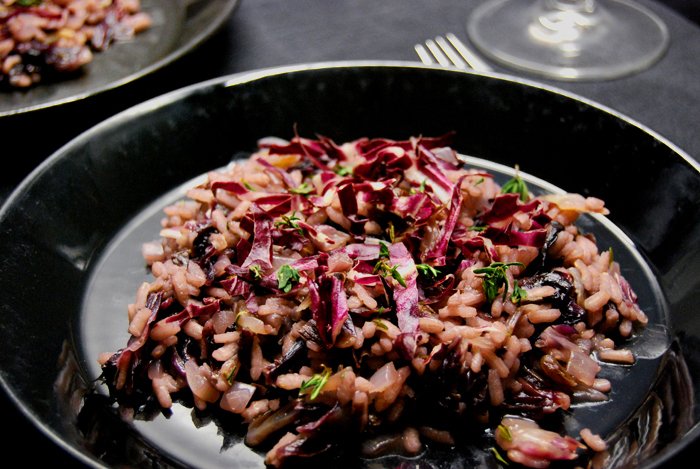
Radicchio Risotto with Spices and Thyme
For 2 hungry people you need
Arborio rice 200g / 7 ounces
radicchio, quartered and cut into slices, 1 medium sized head (I cut a few radicchio slices very thinly which I leave uncooked for the topping)
onion, chopped finely, 1
garlic, cut in half, 1 clove
red wine around 200ml
broth 1200-1500ml
fresh thyme leaves from 4-6 sprigs
bay leaf 1
cloves 2
salt and black pepper
olive oil for frying
butter 1 tablespoon
In a large pot, fry the onions and garlic in a little olive oil until golden and soft, stir in the rice and radicchio and fry on medium temperature for a couple minutes. Deglaze with 1/3 of the wine, let it cook until evaporated and repeat twice, stirring in between. Add 4 sprigs of the thyme, the spices, salt and pepper and some of the stock, enough to cover the rice. The temperature should be between low and medium. When the liquid has been absorbed continue to add more broth, a little at a time stirring in between. Depending on the rice, it sometimes needs more or less liquids. When the rice is al dente and the broth is more or less absorbed take it off the heat, take out the spices, stir in the butter and season with salt and pepper to taste. Arrange on plates sprinkled with the uncooked radicchio slices and some thyme leaves.

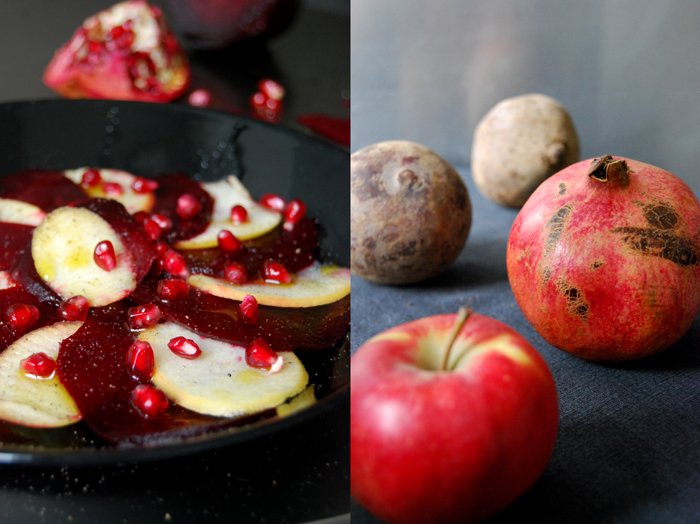
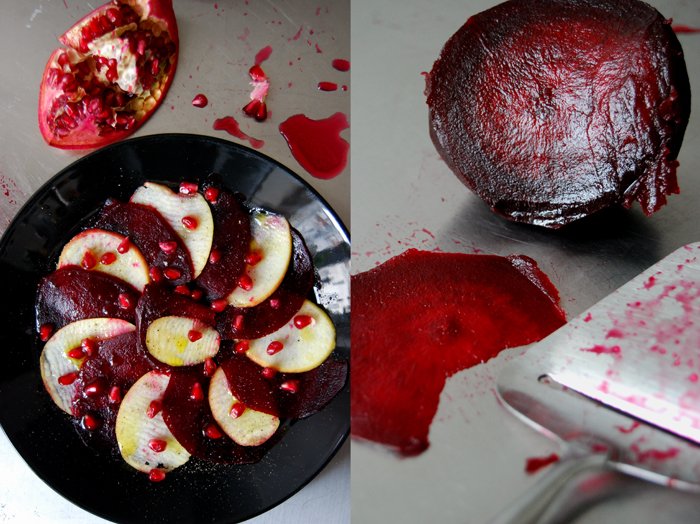
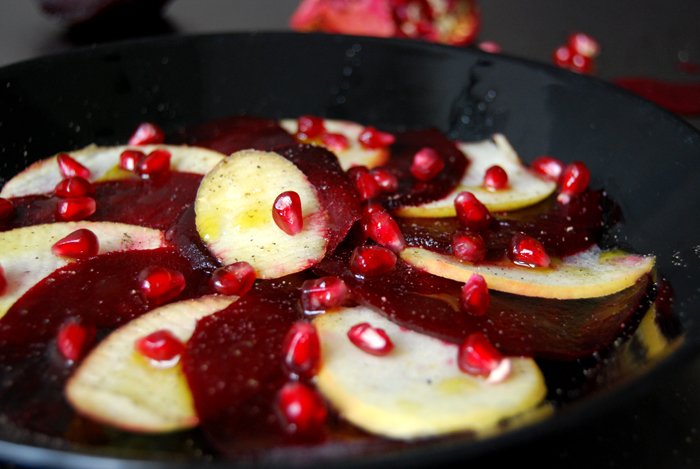
Beetroot and Apple Carpaccio with Pomegranate
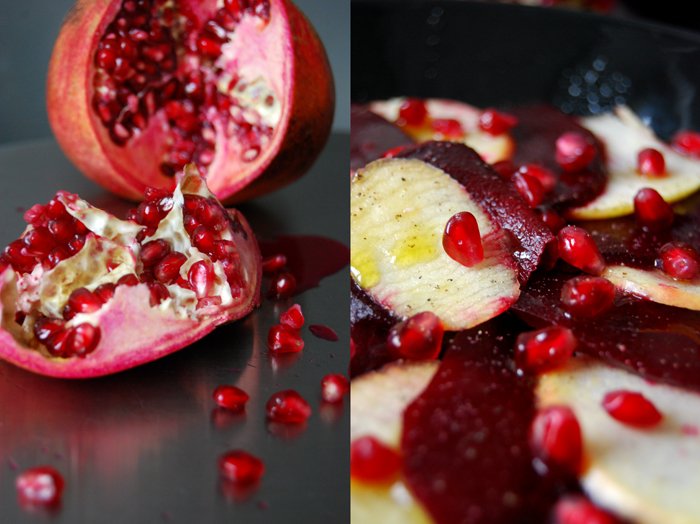
A quick carpaccio in bright red with cooked beetroot, apple and pomegranate to welcome a special guest! My mother will be at my home (and in my kitchen) over the next few days. I'm sure we'll be out a lot but I really hope we'll find some time to cook together which I enjoy a lot!
I'm a big fan of vegetable carpaccio. It allows you to combine different flavours in a very pure, quick to make and beautiful way. All you have to do is slice a vegetable or fruit very thinly, arrange it and top with a simple dressing. My red carpaccio is based on the strong, earthy-sweet taste of cooked beetroot which combines perfectly with the sweetness of the apple and pomegranate. I cooked the roots in a bigger batch - as I do every week - in salty water with two bay leaves for 50 minutes (depending on their size they might need shorter but mine were big). For my carpaccio for 2 I need 1 root cut thinly with a slicer, 1 sweet apple prepared in the same way and the seeds of 1/3 of a pomegranate. I drizzle my current favourite lunchtime dressing on top, 3 tablespoons of olive oil mixed with 2 tablespoons of white Balasamico and season it with salt and pepper. It's a great lunch, as pretty as it is tasty!

Blood Orange Cake
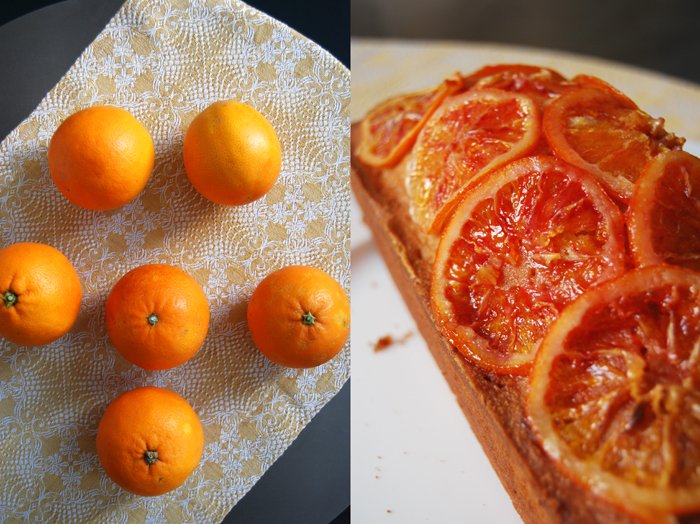
Two things led to this cake, firstly, I haven't written about blood oranges in more than two weeks, secondly, my mother. She reads (nearly) everything I share on eat in my kitchen, she is my mother after all. She recently mentioned that my photos could do with some new decoration. She's a woman of action, so within a few days she sent me a parcel packed with some pots, silver plates and a selection of her favourite linen from an artisan weaver in the Italian Dolomite Alps. I'm not really a big decorator, I'm more of a minimalist but I'm open to some inspiration, especially when it comes from my mother.
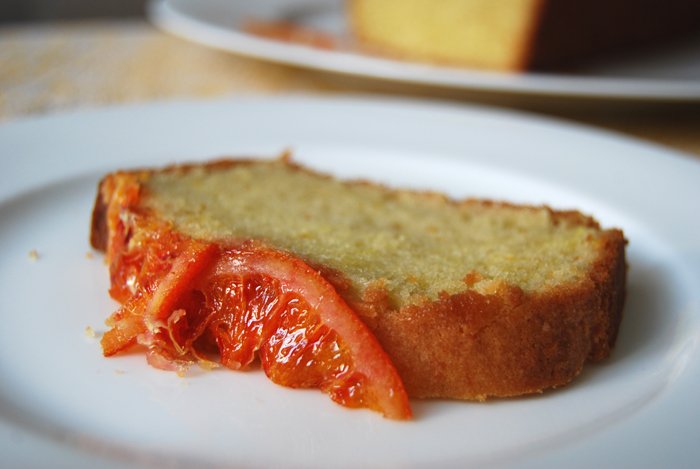
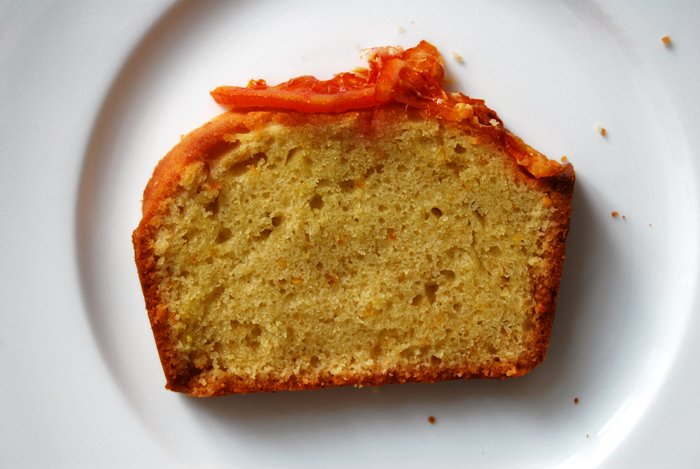
The package arrived, with beautiful handwoven craftsman's work, a table cloth and runners in various colours and designs. One of them caught my attention, a golden yellow design, a bit more frilly than my usual style but I liked it. I knew it would need to be paired with the right food to unfold its beauty. The inspiration came within a split second, a spongy blood orange cake with sugared slices on top, a bit opulent and the fruits are also from Italy, like the cloth.
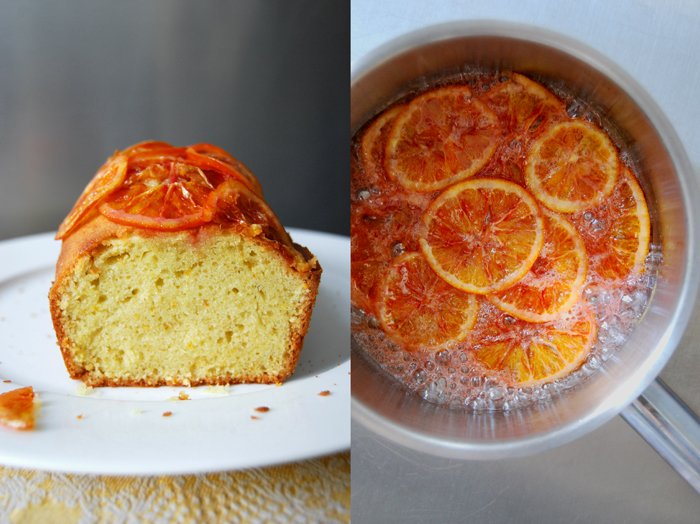
Blood Orange Cake
For this recipe you need a 24cm x 10,5cm / 9.5" x 4" loaf tin.
butter, soft, 180g / 6.5 ounces
granulated sugar 180g / 6.5 ounces
organic eggs 3
blood orange zest 2 tablespoons
freshly squeezed blood orange juice 3 tablespoons
plain flour 210g / 7.5 ounces
baking powder 1 teaspoon
For the topping
blood orange, cut into very thin slices, 1
granulated sugar 50g / 2 ounces
water 2 tablespoons
icing sugar 2 tablespoons, for the syrup
freshly squeezed blood orange juice 4 tablespoons, for the syrup
Set the oven to 160°C / 320°F (fan-assisted oven) and line your loaf tin with parchment paper.
For the topping, cook the orange slices, sugar and water in a sauce pan on high temperature for around 5 minutes until the water has evaporated. Put aside.
Mix the butter together with the sugar till fluffy. Add the eggs, one at a time, and continue mixing for a couple minutes. Mix the orange juice and zest into the mixture, gently fold in the flour combined with baking powder and scoop into your prepared tin.
Bake for 35 minutes, take it out and arrange the sugared orange slices on top. Bake for another 15 minutes. Check with a skewer, it should come out clean.
Mix the icing sugar with 4 tablespoons of blood orange juice for the syrup and pour over the cake (you can spike the top of the cake first).


Spaghetti Carbonara with Onions and Prosciutto
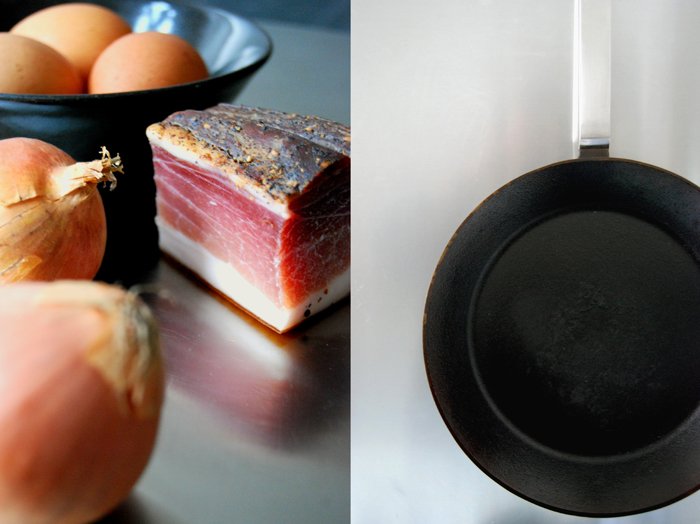
There was a time when I had this meal at least once a week. It was a special winter that I spent in the North of England, in North Yorkshire directly on the coast. The sea was rough, the air was damp and salty, and it was cold, the kind of wet cold that creeps into your bones. My diet concentrated on fish and chips (every year, this place is voted for the best fish in England), pies and simple dinners I could cook in our tiny kitchen. Spaghetti Carbonara was one of them. Fried Prosciutto, onions and eggs and you can brave any weather.
I use my Tyrolean Prosciutto from San Cassiano - luckily there's still some left. I tried many others for this recipe but I still think this one is the best. In the past I used to make it with crispy bacon but the spices of the Prosciutto add something really nice to the creamy egg and onions. I cut it into strips, like the onions, and fry everything before I mix it with the pasta, eggs, cream and Parmesan. And crushed black pepper, of course!

Spaghetti Carbonara
For 2 people you need
spaghetti 200g / 7 ounces
Tyrolean Prosciutto, cut into strips, 5 slices
medium sized onion, cut in half and into thin slices, 1 -2
egg yolks 3
heavy cream 80ml
salt and crushed black peppercorns
olive oil for frying
Parmesan, freshly grated
In a large pan, fry the onions in some oil until golden and soft. Add the Prosciutto and fry for a couple minutes as well. Mix the egg yolks together with the cream, salt and pepper.
Cook the pasta al dente and immediately put it into the warm pan (off the heat) on the fried onions and Prosciutto. Pour the egg and cream mixture on top, mixing well. Sprinkle with lots of crushed black pepper and Parmesan, and enjoy a glass of red wine with it - that's what I do!

Hobz biz-Zejt u Tadam and more delicious Goods from the Maltese Rock
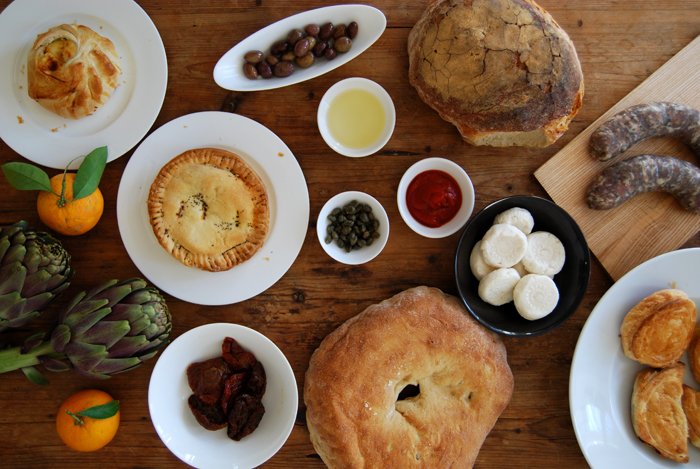
Today I will share some special food with you! I got a wonderful gift from Emma, my boyfriend's sister who lives in Malta and came to visit us for a few days. She put a big smile on my face when she opened her bag and I saw all the nice food she brought for me (well, not just for me actually). Emma knows which food I love and miss so much from her home island in the Mediterranean, especially now that it's been a few months since I was last there. Her gift reminded me of the taste and smell of this island which I got to know so well over the past years, during so many holiday trips and summers we spent there. Our family and friends, the food, the sea, so many memories connect me to this rock in the Mediterranean (this is what many Maltese affectionately call their home island).
This is a very personal introduction to Maltese food through my eyes and taste buds.
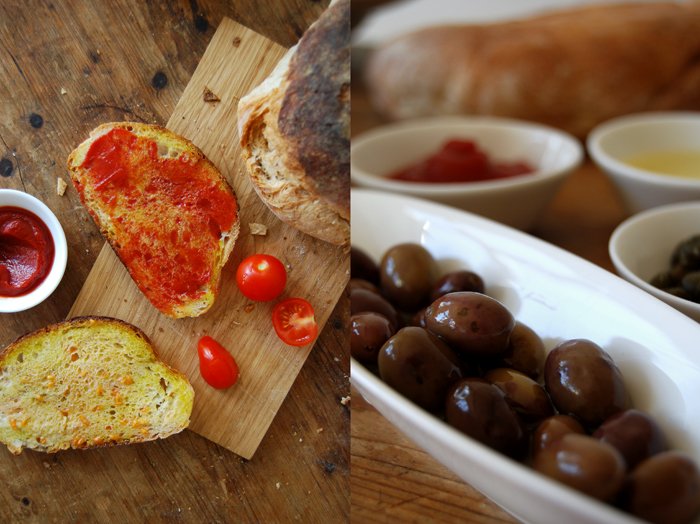
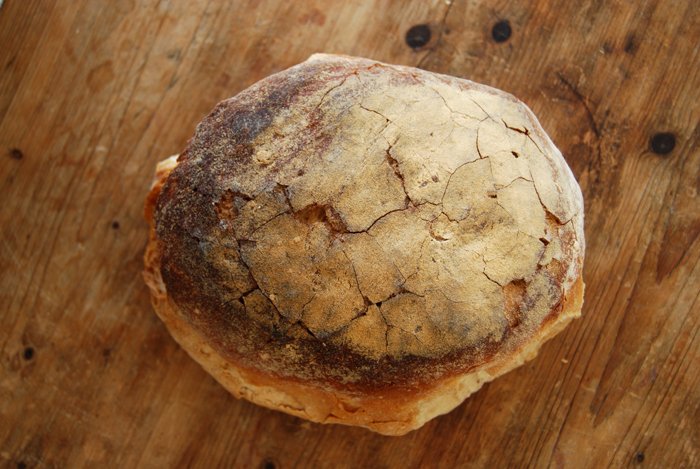
Whenever I'm in Malta, first thing in the morning I go to a wonderful traditional bakery, St. Josephs Bakery in Msida, to buy the most amazing white bread with the perfect crust. Every Maltese is proud of this bread and it's famous for good reason. There are two different types of bread, the big loaf called Hobz Malti (Maltese Bread) and the round Ftira with a hole in the middle. Usually, I cut thick slices off the loaf, dip them in olive oil and spread the sweetest tomatoes and some crushed pepper on top which makes the Hobz biz-Zejt u Tadam (Maltese bread with oil and tomato). There is also a famous (and quick) beach version which is made with Kunserva, a concentrated tomato paste full of ripe Maltese tomatoes and some mint or basil in between two slices of this amazing bread. There's nothing better than sitting on the beach after a long swim, this sandwich in your hands and your fingers staining with juicy tomatoes and olive oil - I love it!
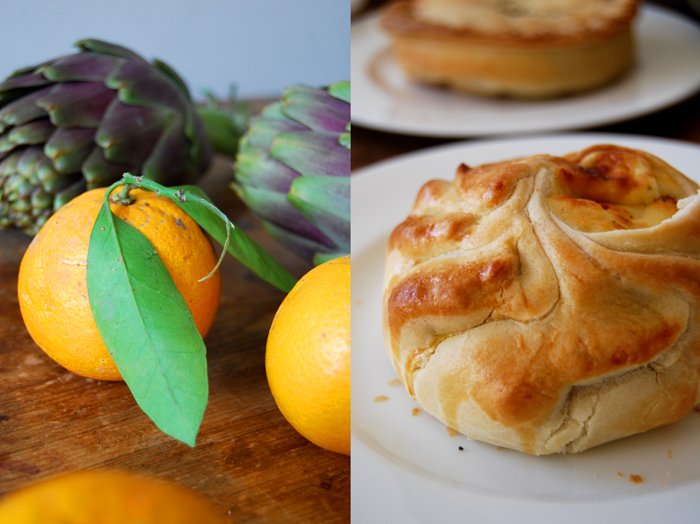
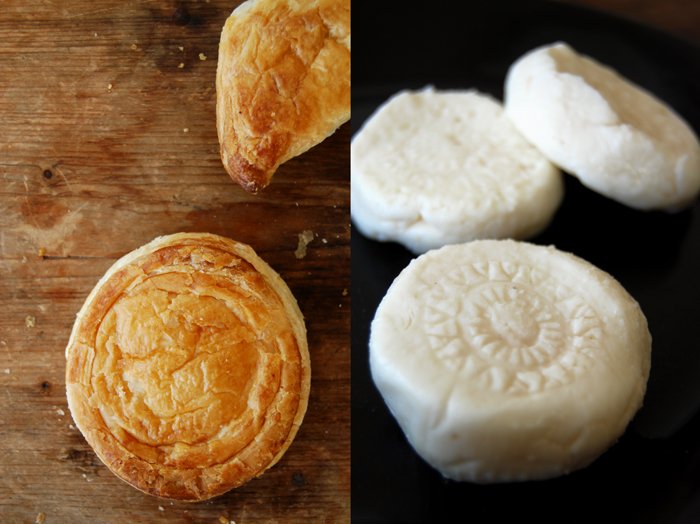
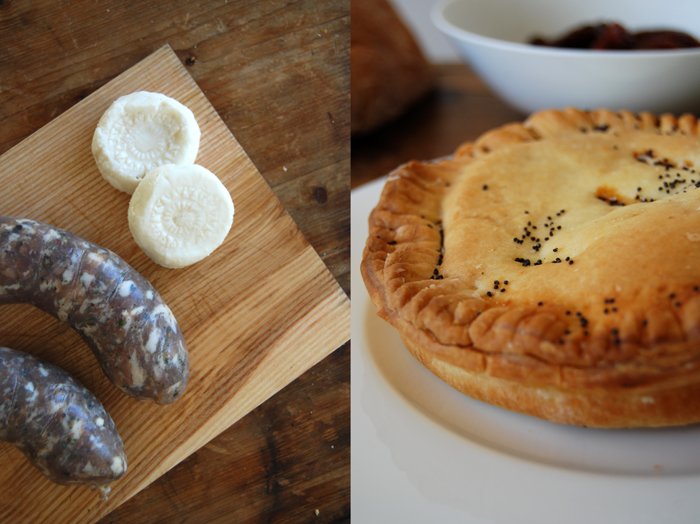
Fruits and vegetables are heavenly in this sun kissed place, strong and honest in taste, ripe, with the flavours of a soil rich in clay. There's not much water, but the sun and the ground make up for it. My taste buds are always disappointed when I'm back home and have to get used to the store bought quality again. Maltese sausage is another speciality I'm very fond of as it's full of spices, the meat is coarse, its taste so strong that you can season a meal with it. Dairy products are limited, this rock isn't really made for cows, but the Maltese make a strong cheese from goat milk which is called Gbejna, delicious tiny round cheeselets. There are two kinds, the hard one which is a bit salty, great for salad and pizza, and the soft one, milky and mild. On the photos you see the hard ones from Gozo, Malta's sister island.
One of my favourite places is Busy Bee Confectionery where I get my daily dose of delicious cakes and pies. I love their sweet Mediterranean specialities like Cannoli, Cassata Siciliana and Ottijet (figure of 8 shaped tea time cookies with sesame seads). Unfortunately the Cannoli didn't survive the flight very well so I can't show them to you. On the savory side there is Qassata tal-Irkotta (a round short crust pie filled with ricotta), Pastizzi tal-Irkotta or tal-pizelli (puff pastry filled with ricotta or peas) and a huge Torta tal-Laham (Beef Pie), filled with tasty beef stew.
The colourful sweets are Perlini, filled with almonds, a traditional Maltese carnival treat.
Go visit and enjoy!


A warming Soup with Chestnuts, Cinnamon and Thyme

For this soup I appreciate the convenience of vacuum packed peeled chestnuts - even though I love the romantic, wintery atmosphere when you bake them in the oven and they fill the air with the smell of their burned peel. I need quite a few nuts for my recipe and with so many to peel, the thought of burnt fingers puts me off. I want a soup without major frustration and injury, so I bought them pre-cooked and peeled. This is a quick soup, relaxed cooking and I didn't want to change that.
I had a velvety soup in mind, smooth and a bit sweet, enhanced with some cinnamon and thyme. I wasn't sure if the chestnuts would be too overpowering so I added a few cooked potatoes. When you have a nice broth on hand, the preparation only takes a few minutes. All you need to do is fry an onion in a little oil, add the chestnuts, potatoes, cinnamon and thyme and heat everything together with the broth, some cream, salt and pepper. When you have everything together, mix it in a blender.
As a main for 2, I used 250g / 9 ounces chestnuts, 3 medium sized cooked potatoes (cut into cubes), 1 large onion (chopped and fried in olive oil), 600ml of broth, 1 tablespoon of heavy cream, seasoned with 1/2 a teaspoon of cinnamon plus salt and black pepper to taste. Fill into bowls and if you like sprinkle with chestnut crumbles, cinnamon and thyme.


Sandwich Wednesday with Camembert and Juicy Pomegranate
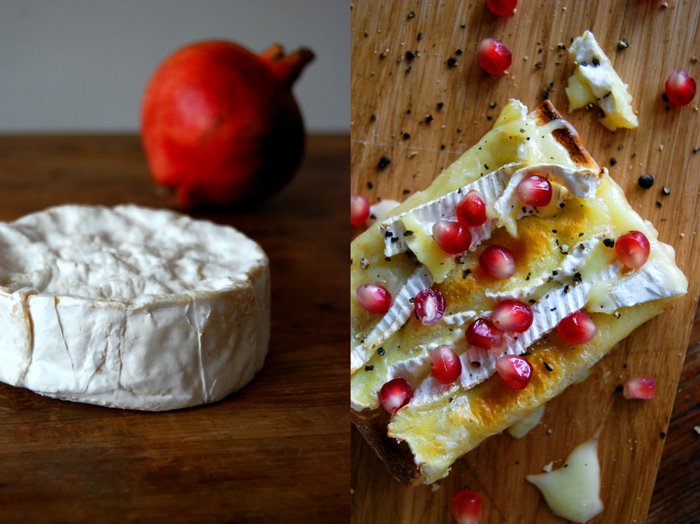
It felt like a lot of people enjoyed my Stilton and Pear Sandwich a couple weeks ago as much as I did. I received quite a few messages from people who tried it and loved it which made me think about further possible cheese and fruit combinations. There are a million variations but I particularly love a mix of sweet and aromatic flavours. When it comes to cheese, I'm the kind of person who eats what others might consider to be beyond the expiry date, to me a cheese can't be too ripe. There is a wonderful cheese section in my favourite department store which has - as you can imagine - a very distinct smell in the air. So when I go there with friends you can be sure that when the others are already on the run, I'm still standing there fascinated by the variety. When it comes to cheese, I feel no pain!
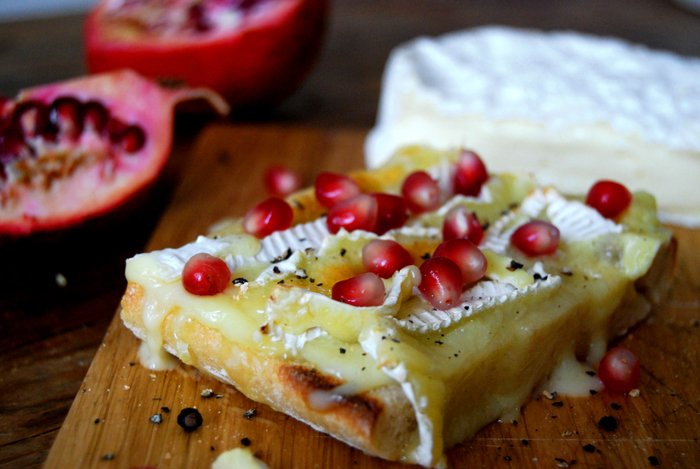
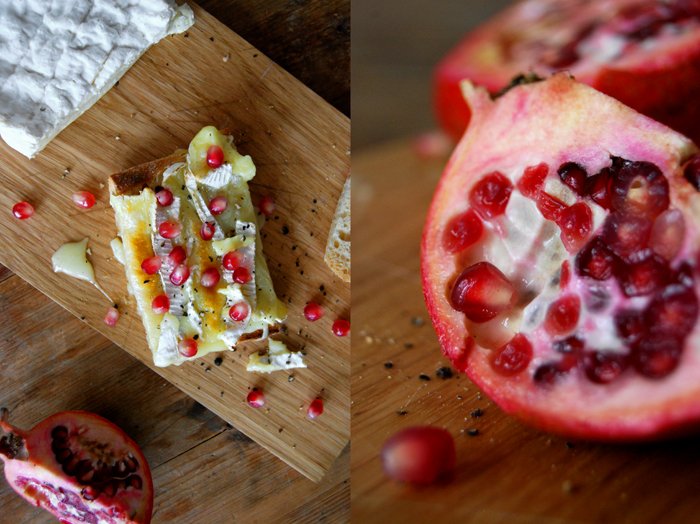
At the moment I buy a lot of pomegranate, they are sweet and juicy (and full of antioxidants which isn't bad either). So the fruit is set. My cheese of choice is an an aged Camembert, so stinky that I have to wrap it twice and put into a box to keep the rest of my fridge safe, but it tastes delicious! I bought a loaf of Ciabatta, my current favourite for sandwiches when I don't bake my own bread, which I cut in half and cover with thick slices of my creamy Camembert (for 2 people I needed around 90g of this cheese). I baked it in the oven under the grill for just 20 seconds, any longer and there wouldn't be any cheese left. This one melts really quick! I kept a baking dish under it to collect the cheese running down the sides of the bread. When it was golden brown, I took it out and sprinkled my sandwiches with the seeds of 1/3 of a pomegranate and crushed black pepper.

Ginger Honey Glazed Duck with Spices and Polenta
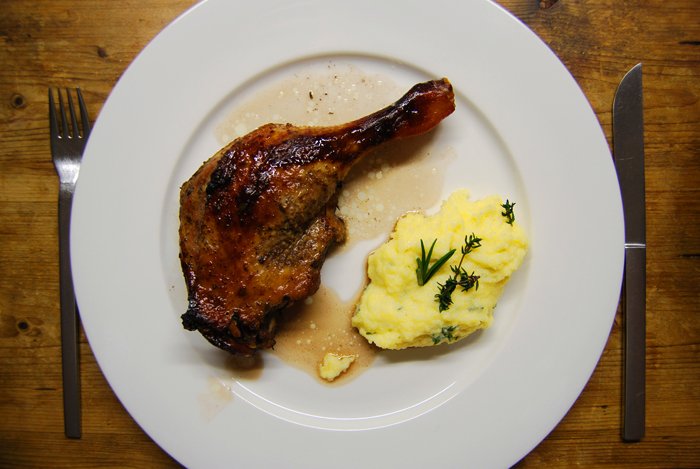
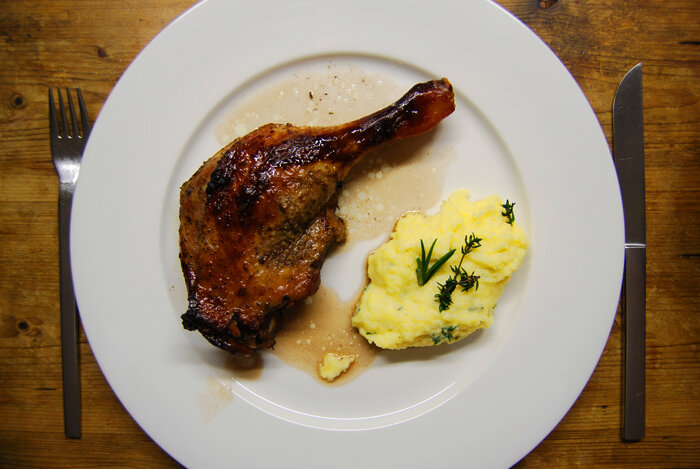
Sometimes I don't have the time or patience to slow cook a whole duck for hours like I do with my Christmas Duck. Although this really makes for the most tender and juicy meat, I need a quicker alternative. Here's what I came up with, honey glazed duck legs, juicy as well, with crisp skin, rubbed with spices and - most importantly - you can enjoy all of this after about an hour. If I find the time I marinade the meat in the morning so that the flavours can spread and soak into the skin during the day but it's great either way.
I prefer the darker, deeper meat of wildfowl like duck, goose and pheasant, especially in the cold season. They allow you to rub strong spices and herbs into their skin without loosing their own qualities. For my duck legs, I went for an aromatic mixture of clove, bay leaf, ginger, star-anis, thyme, allspice and a good amount of honey for a crispy caramelized skin. The juices made an amazing sauce, a concentrate of all the spices, I just added some red wine. Perfect to dip the polenta in which I seasoned with thyme and rosemary.
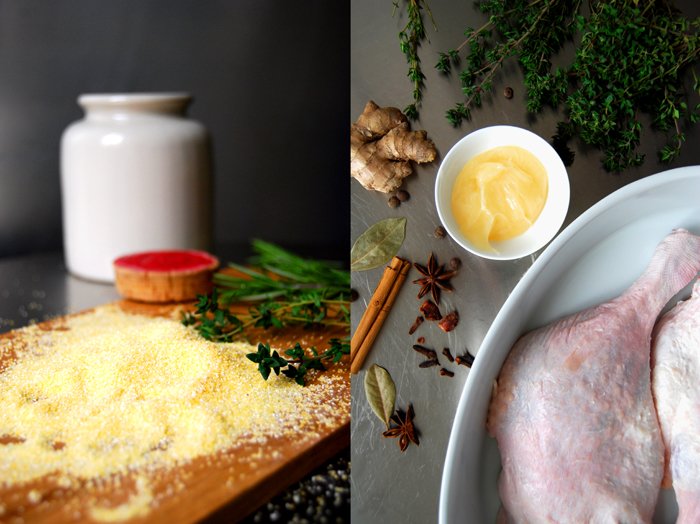
GingerHoney Glazed Duck with Spices and Polenta with Thyme and Rosemary
I prepare the polenta around 4o minutes after I put the duck legs into the oven.
For 2 people you need
duck legs 2
red wine 250ml (or 100ml red wine and 150ml broth)
salt and black pepper
olive oil
For the marinade
aromatic honey 2 tablespoons
ginger, thumbnail sized, grated
thyme, leaves of 5 sprigs
allspice berries, ground, 3
cloves, ground, 5
bay leaf, ground, 1
star-anis, ground, 1
cinnamon, ground, 1/4 teaspoon
Warm up the honey in a small sauce pan until it becomes liquid, spread on the duck legs together with the spices and rub everything into their skin marinating them for 1 hour (if possible). You can also prepare them in the morning (like I do) and keep them in the fridge all day before you cook them in the evening.
For the duck legs
Set the oven to 260°C / 500°F. My oven has a Rotitherm roasting setting which works perfectly for poultry.
Put the duck legs into an oiled baking dish, skin side up, and season with salt and pepper. Pour the remaining honey and spices of the marinade over the duck and place the dish in the hot oven. When the skin starts to get brown after a few minutes turn the temperature down to 130°C / 265°F and pour the red wine into the baking dish (a little over the duck as well) and bake for 60 minutes. Check with a skewer, if only clear juices come out the duck is done. Keep the duck legs in a warm place, pour the juices into a sauce pan and season with salt and pepper to taste. I didn't even need to cook the sauce down. It was perfect, very intense, it didn't need anything else. If you like you can add some more honey, Balsamico or a little orange juice.
For the polenta
polenta 120g / 4 ounces
water 250ml plus 150ml for cooking
milk 250ml
thyme, leaves of 4 sprigs
rosemary, chopped, 1/2 - 1 teaspoon
salt 1 teaspoon
olive oil 2 tablespoons
In a sauce pan, mix 250ml of water with the milk and salt and bring to the boil. Take the pan off the heat, add the olive oil, polenta and herbs and mix with a whisk. Turn down the heat to the lowest temperature and put the pan back on. Cook the polenta for 10 minutes mixing and adding the rest of the water once in a while.


Sweet Pear and Bitter Chicory Salad
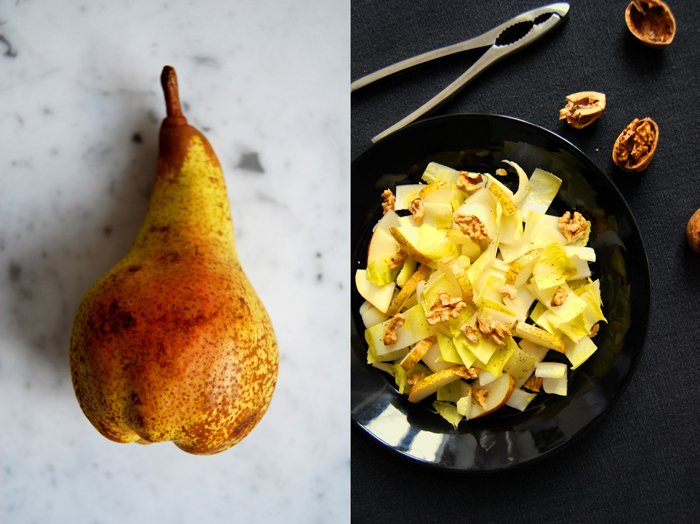
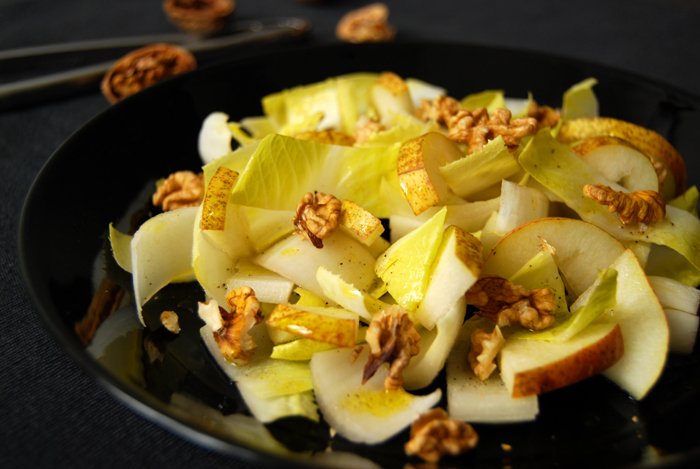
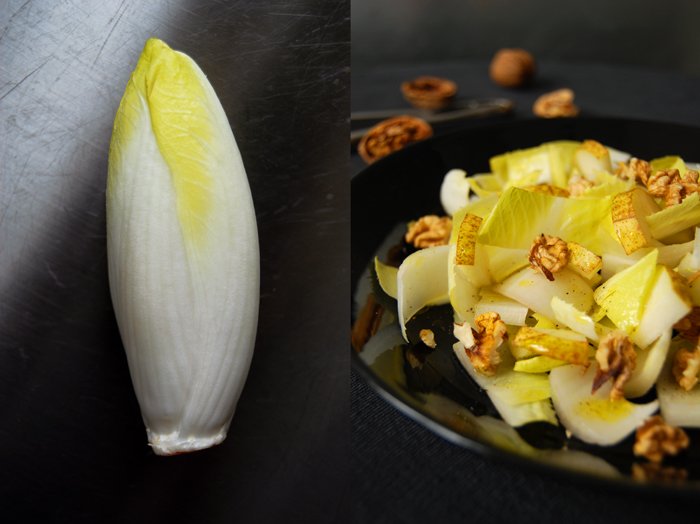
This was my favourite salad during my university years! When I was too busy to cook or my fridge didn't have much to offer, this was always an option (besides spaghetti with tomato sauce). A crunchy sweet and bitter combination which I always love but here especially together with the walnuts. In winter I make sure I have these three in stock, pear and walnuts as a quick snack and chicory is one of my quick emergency dinners. If I'm running out of time, I cut 2 chicories in half, fry them in butter, golden brown on each side and season them with salt and pepper - done.
For my salad I need 2 chicories and 1 pear, both sliced in strips, enough to feed 2-4 people. At lunch time people have different eating habits so it's hard to estimate the exact amounts. At a dinner party this is definitely enough for a a side dish for 4. I make a light dressing with 3 tablespoons of olive oil mixed with 2 tablespoons of white Balsamico (I can't live without this vinegar in winter!), seasoned with salt and pepper. You could also add some fresh lemon juice. Some walnuts on top and I'm back in my student years!


Flaky White Chocolate and Cranberry Twists
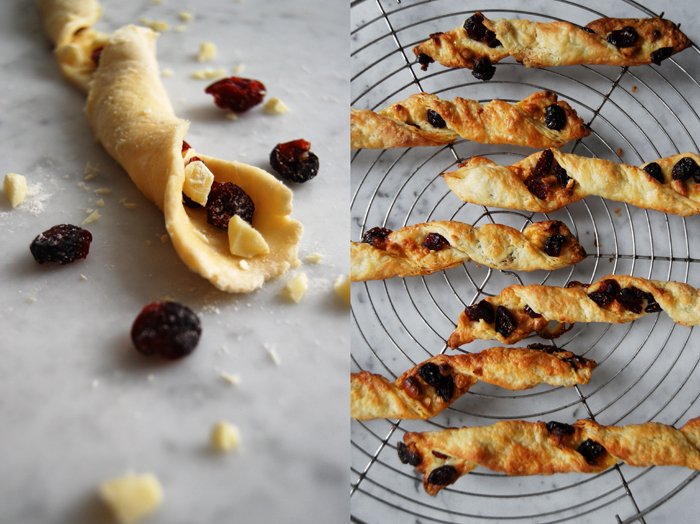
I've been wanting to bake something with white chocolate and cranberries since December but this idea never reached my oven - too much to bake, too little time. I was drawn to this combination last winter when I mixed them into my crunchy cookie recipe. The chocolate and the berries gave them a nice sweetness, milky and fruity. I enjoyed them so much that I decided to share them with our family and friends in Malta, so I sent them a big parcel stuffed with these cookies at Christmas time. The box was emptied within moments as we witnessed on Skype.
This weekend I felt like this duo again but didn't want to bake cookies. Croissants are more what I had in mind, just without the hassle of making two different doughs for the perfect puff pastry. I thought of my buttery flaky Rugelach, this dough is made to be wrapped around a sweet filling but I wanted something bigger, not just a mouthful - a handful! This is a Sunday morning pastry which you hold in your buttery fingers while you sip your coffee. I went for a long and twisted shape, quick to prepare, easy to eat, no hassle on a Sunday - Good morning everybody!
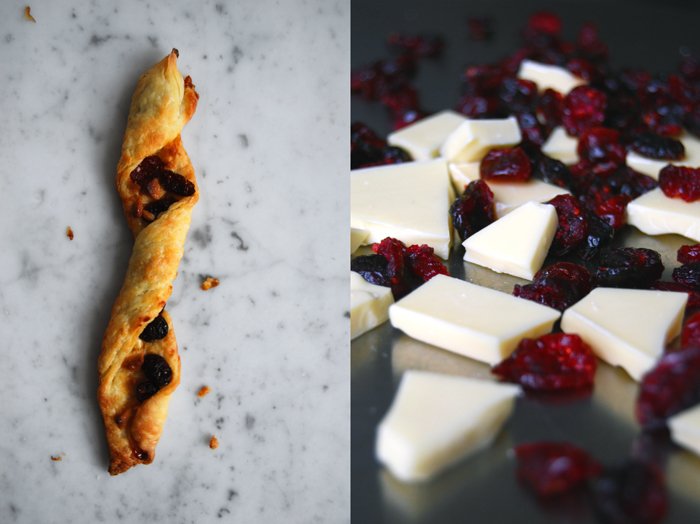
White Chocolate and Cranberry Twists
For 16 twists you need
plain flour 150g / 5 ounces
icing sugar, 1 heaped tablespoon
butter, cold, 125g / 4.5 ounces
cream cheese, at room temperature, 120g / 4.5 ounces
a pinch of salt
white chocolate, chopped, 70g / 2.5 ounces for the filling
dried cranberries 70g / 2.5 ounces for the filling
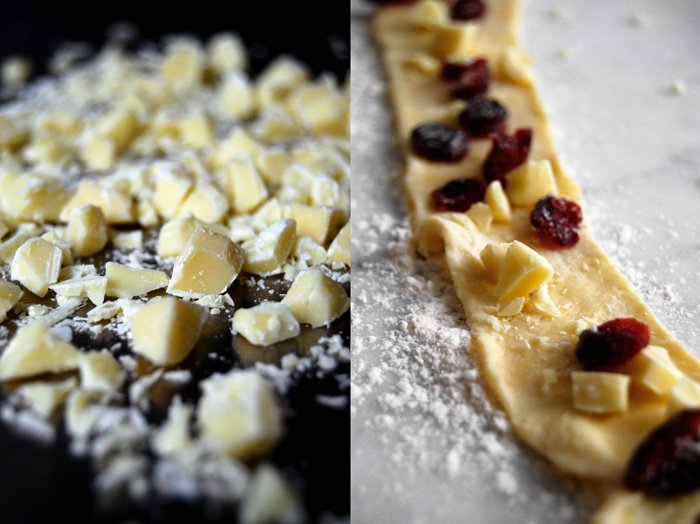
For the filling, mix the chocolate and cranberries.
Combine the dry ingredients. Cut the butter with a knife into the flour mixture until there are just little pieces of butter left. Mix with your dough hooks for a few seconds. Add the cream cheese and work it into the mixture with a spoon or the mixer until you have a crumbly mixture. Form 2 discs and put them in the freezer for 30 minutes. The dough should be very cold but not too hard, still rollable.
Preheat the oven to 185°C / 365°F and prepare a baking sheet with parchment paper.
Take out one disc, leave the second one in the fridge while you're preparing the first batch. Roll out the disc between floured cling film as the dough becomes very sticky at room temperature. Give it a rectangular shape, the width will be the length of your twists. Cut off a 4.5cm / 2" strip and pull it off the foil (don't worry if it's sticky, it's an elastic dough, you can also use a knife to lift it). Lay the pastry strip flat on your working surface, sprinkle with the filling, pushing it a little into the dough. Carefully, twist the pastry, starting on one side twisting it up to the middle and then continue from the other side. This way you don't loose too much of the filling. Place the twist on the baking sheet and continue with the rest of the dough. Bake the pastry for 12 minutes or until puffy and golden brown. It’s best to check them after 10 minutes to be sure that they don’t get too dark. Let them cool on a wire rack for a few minutes.


A Sweet Berliner - Our Family Feast

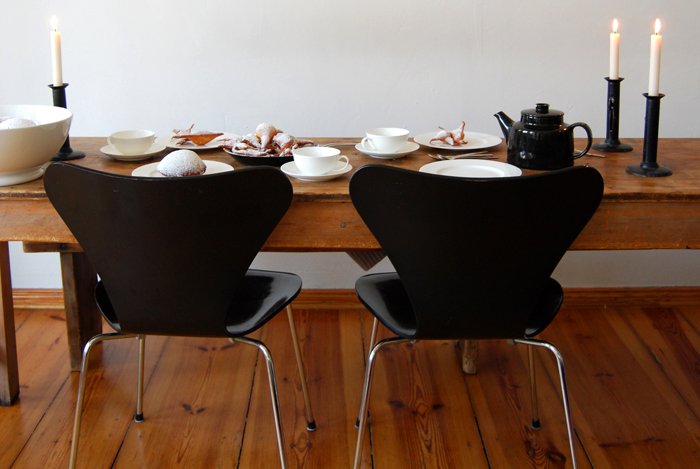
A long time ago, my family started a beautiful tradition. All my sisters, their children and friends of the family meet at my mother's house in the countryside to celebrate carnival. We listen to silly carnival music, the children dress up in funny costumes and we make huge amounts of a special traditional carnival pastry - the famous "Berliner". When the sweets are done, we fill them in my mother's large white bowls from Tuscany, place them on her long table and enjoy the fruits of our work, which usually goes on for hours. In general, I can't say that I'm too fond of the 5th season (the name given to carnival time in Germany) but the mood and the food at my mother's home makes me love it!
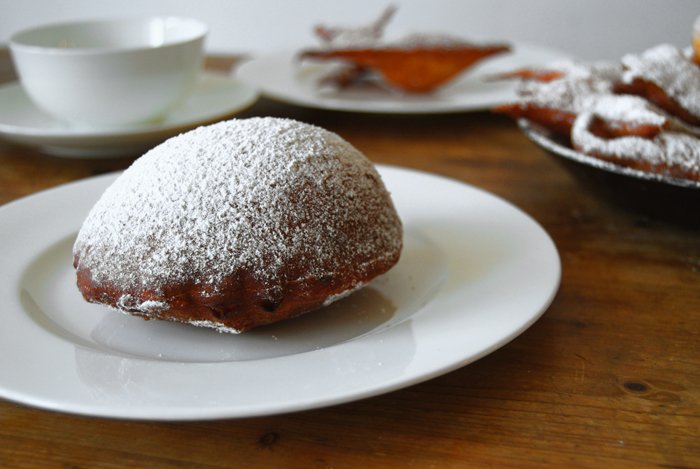
The sweet speciality we make looks a bit like a doughnut without a hole, it's made of yeast dough, filled with jam and deep fried in vegetable shortening. It has different names in different regions but where I come from, which is the center of carnival in West Germany, they are called "Berliners". Funnily enough, they are called "Pfannkuchen" in Berlin, which means pancakes. In the Swabian area in the South of Germany where my step father comes from, people call them "Fastnachtskuechle". I could continue endlessly with even more names "Krapfen", "Kreppel", seemingly every region wanted to give them a name of their own.
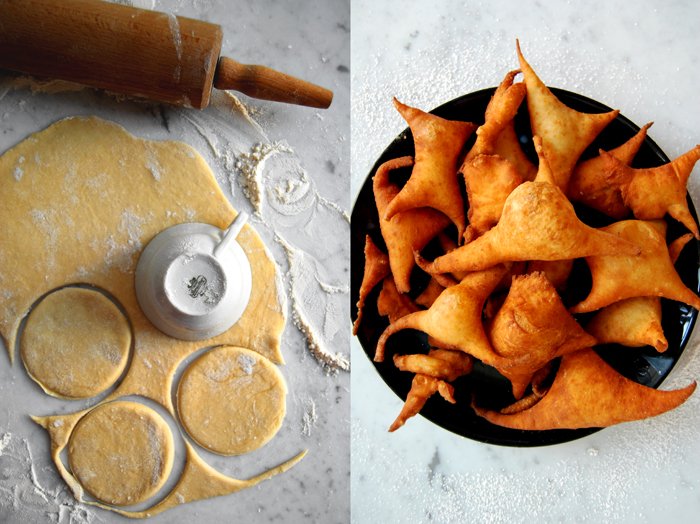
So we all gather in my mother's kitchen and each of us has a specific job to do in the making of our "Berliners" - which never changes. For years now, my job is to watch the sweets together with my step father while we fry them in a large cast iron pot. We have to turn them and dust them with sugar when they are done. My mother and sisters, on the other side of the kitchen, take care of the dough and filling the "Berliners". On my photos you can also see some free shaped sweets which are the bits and pieces of dough that are left after cutting out circles.
Carnival is still a month away (and I'm also not at my mother's house at the moment) but there is a reason I made my own "Berliners" at my home now. I was asked to participate in a blog tour with 13 other blogs from America and Australia and write about "Hearts At Home". My heart is always where good food is and that's at my home most of the time but also at carnival at my mother's together with my family. Our tradition, to meet at this time and to make this special food means a lot to me. I look forward to seeing my loved ones and spend a few wonderful, silly days together with them. That's where my heart is and that's home to me. Making "Berliners" without my family was still a fun experience. I was a bit worried that I wouldn't manage on my own but I did, and even more so it was surprisingly easy which makes me think about having this adventure more than just once a year!

Blueberry Jam Filled Berliner
I made 12 jam filled "Berliners" plus several free shaped sweets (without filling), all in all of 500g / 1 pound of flour. I melted 1kg / 2 pounds of vegetable shortening for deep frying in a large pot, enough to allow the sweets to float freely. My mother uses a much bigger pot and 3kg / 6 pounds of shortening but she starts off with 3kg / 6 pounds of flour as she has to feed more hungry people than I did.
plain flour 500g / 1 pound
dry yeast 1 package (for 500g / 1 pound of flour)
granulated sugar 3 tablespoons
vanilla sugar 1 package
salt scant 1 teaspoon
milk, lukewarm, 250ml
butter, melted and cooled down, 80g / 3 ounces
blueberry jam, around 200g / 7 ounces for the filling
egg white, mixed with a fork, 1-2 (to stick the discs of dough together)
vegetable shortening 1kg / 2 pounds for frying
For dusting
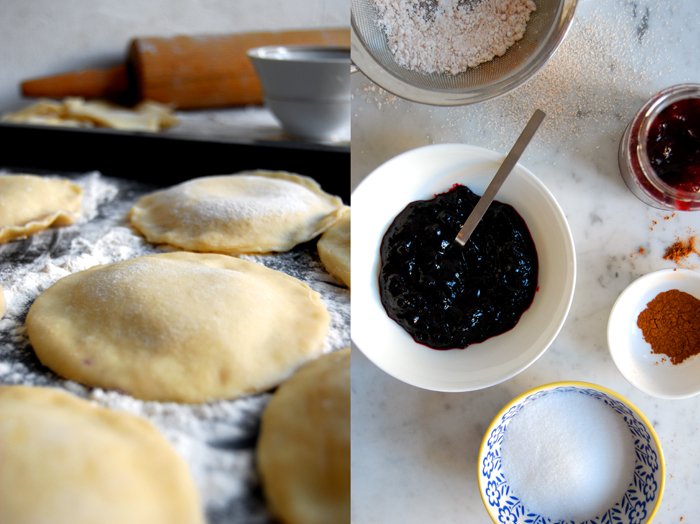
50g / 2 ounces of icing sugar sieved together with 3/4 teaspoon of cinnamon
Combine the dry ingredients, add the milk and butter and mix with your dough hooks for 5 minutes. Continue kneading and punching with your hands until you have an elastic dough ball. Put the dough back into the bowl, cover with a tea towel and let it rise in a 35°C / 95°F warm oven (top / bottom heat) for about an hour.
When the dough has doubled in size, take it out, punch it down and knead with your hands for 2 minutes. On a floured working surface, roll the dough out in batches and cut out 10cm / 4" circles (I used an old tea cup from my grandmother). Put the bits and pieces of dough which are between the circles aside as you will fry them as well (without filling).
Heat the shortening in a large pot on highest temperature.
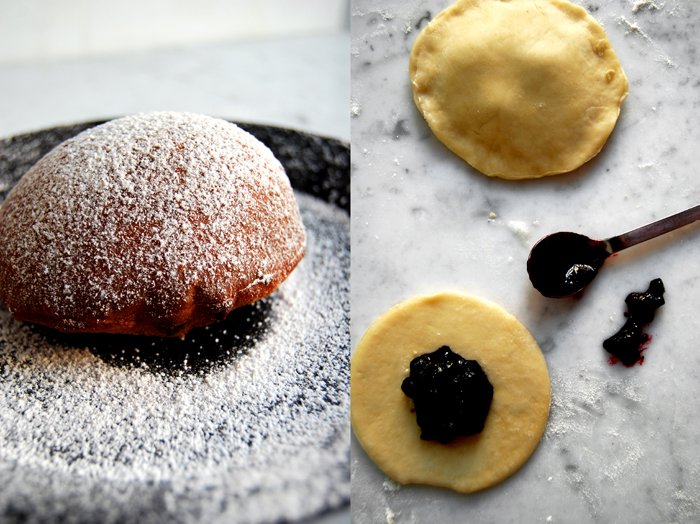
Take one disc of dough, drop a teaspoon of jam in the middle and brush the edge with egg white. Put a second disc on top, sealing well by pushing with your fingers along the outline twice to make sure that they won't open in the hot fat.
To check the temperature of the fat, put a piece of dough inside, carefully as it's very hot! Turn it with wooden spatulas or spoons, it should be done within a few seconds. The "Berliners" might take a few seconds longer. They will become a bit dark, that's normal, but they shouldn't burn, so adjust the temperature if necessary. Keep in mind that if it's too low the inside won't cook through. I always cut the first "Berliner" in half when I think it's done to see if I have to change the setting.When you take them out, let them cool for a few seconds before you dust them with your cinnamon icing sugar.

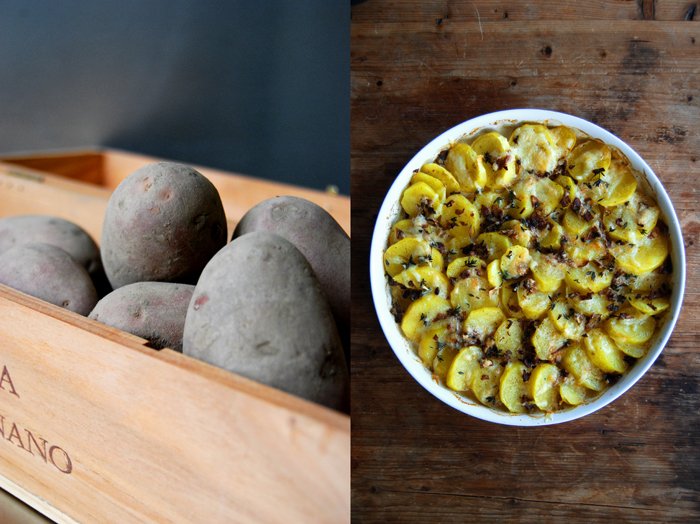
Potato Porcini Gratin with Raclette and Thyme
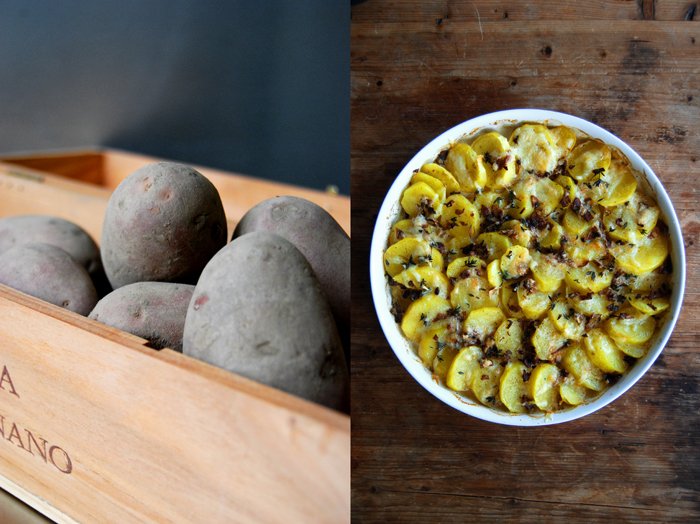
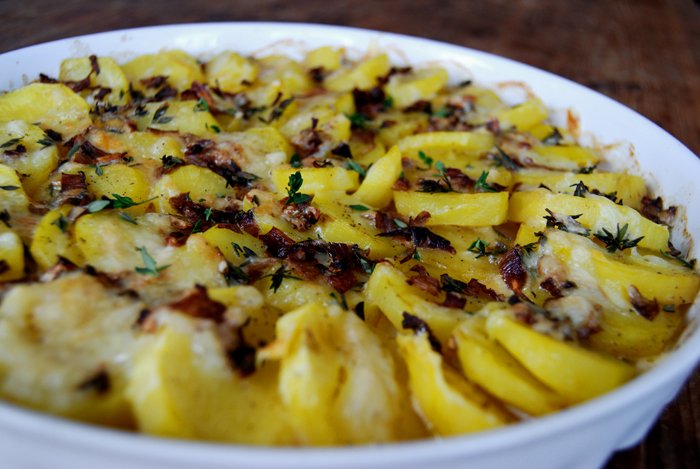
Imagine bubbling Raclette cheese, golden potatoes, earthy Porcini and aromatic thyme and you have all the strong but well balanced flavours of my hearty gratin. Add some cream, salt, pepper and nutmeg and you're pretty much done. It's a quick one, the potatoes are boiled already and I used dried Porcini which only had to soak for a couple minutes. Normally I make my gratin with raw potatoes, sliced very thinly, several layers stacked on top of each other with cheese in between. It takes longer to prepare and to cook, I didn't have the time so I went for a quicker one.
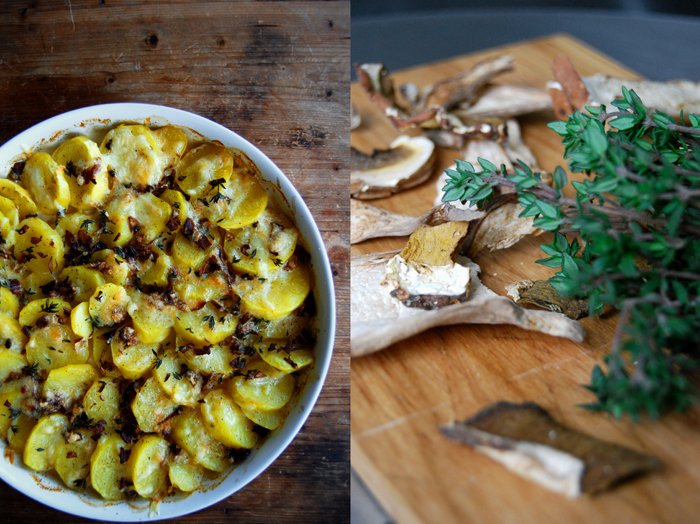
I like to cook with dried Porcini. It's convenient as you can use them all year round and they are really tasty, even more intense than the fresh ones. I always use the liquid after I soak them in water as it absorbs lots of the mushroom's taste. It's great for risotto or, in my case, to mix with the cream. It makes a lighter sauce than my usual gratin milk and cream mixture. I add some thyme which is the perfect herb for Porcini (parsley also fits well but the thick thyme leaves give it this nice wintery touch). I cut the potato slices quite thick, I don't want them to become mushy when they soak a bit of the sauce. To finish it off it just needs some strong meltable cheese sprinkled on top. Swiss Raclette became one of my my favourites over the past years as it tastes really strong. I don't like to drown my poor food under piles of cheese for a bit of taste, I rather use less of a good and aromatic one.
Potato Porcini Gratin
For 4 people as a side dish, or for 2 as a main, you need
boiled potatoes, cut into thick slices, 800g / 1 1/2 pound
dried Porcini, soaked in 120ml of warm water, chopped, 20g / 1 ounce (keep the water, you will need 100ml for the sauce)
heavy cream 100ml
Raclette cheese, grated, 50g / 2 ounces
thyme leaves of 2-3 sprigs
salt and black pepper
nutmeg, ground
olive oil to brush the baking dish
Set the oven to 200°C / 390°F.
Arrange the potato slices in the oiled baking dish. Mix the cream, Porcini water, chopped Porcini, cheese and thyme leaves. Season with salt, pepper and nutmeg and pour over the potatoes. Bake for 30 minutes or until bubbly and golden. At that point you can also put the gratin under the grill for a couple minutes so that the cheese becomes a bit crisp.

Thai Soup and Beef
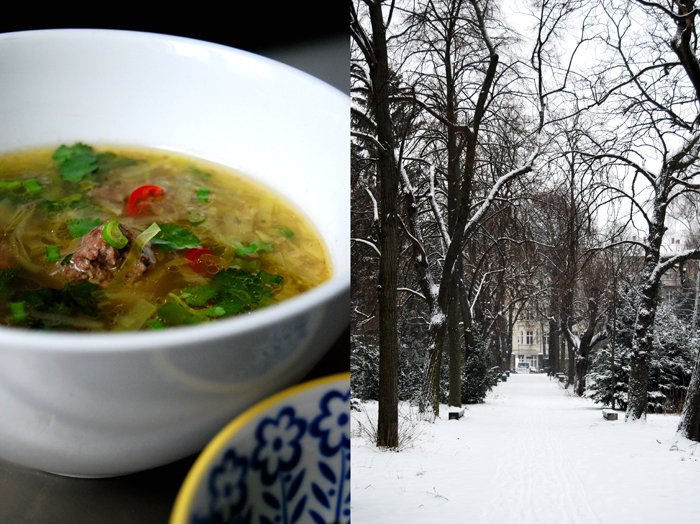
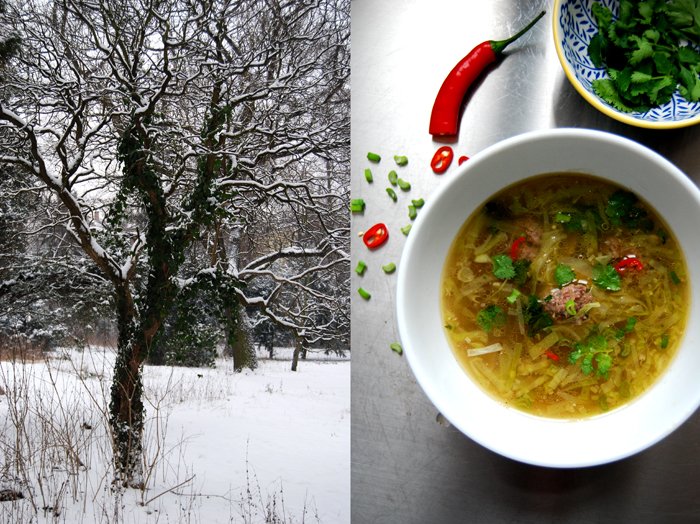
The past couple of days have brought a lot of snow, turning the world outside into a winter wonderland. Everything is covered by a soft white blanket, which is true magic to me! It looks different, sounds different and it even smells different. Two days ago I had time for a short walk so I went down the road to a tiny park that looks a bit like a secret garden. It's my city hideaway as it seems to leave the noise and bustle outside as soon as you enter the iron gates. The trees and bushes were covered in snow and I had my camera with me, luckily, so I could take some of these wonderful impressions home with me and share them with you.
After walking for a while I started to feel cold and I got in the mood for a warm, spicy broth, a Thai soup. I have all sorts of broth in my freezer. Every few weeks I cook a few litres of vegetable broth to use for soups and risottos, but I also have duck and pheasant broth in stock at the moment. When you have a strong broth you are already well on your way to a good soup. I warmed up the duck broth and added some lemongrass, ginger, fresh chili and coriander. I was really hungry, so I decided to throw in some pointed cabbage and some tiny meatballs mixed with the spices. The meatballs weren't bigger than walnuts, after cooking in the soup for 5 minutes they were done, the cabbage needed even less. If you prefer the vegetarian version just leave out the meat, which is what I often do. Either way, this soup is a perfect treat for this cold season, you can be sure you will feel warm, strong and refreshed afterwards!
Thai Soup with Meatballs
For 2 people as a main or for 4 people as a starter you need
broth 1500ml
pointed cabbage, sliced thinly, 250g / 9 ounces
ground beef 400g / 14 ounces
fresh ginger, thumb sized piece, 1/3 sliced thinly, 2/3 grated
garlic, crushed, 2 cloves
coriander roots, ground in a mortar, 2-3
coriander leaves, a handful
fresh chili, sliced thinly, 1
lemongrass, peeled and cut into thin slices, 1
salt and black pepper
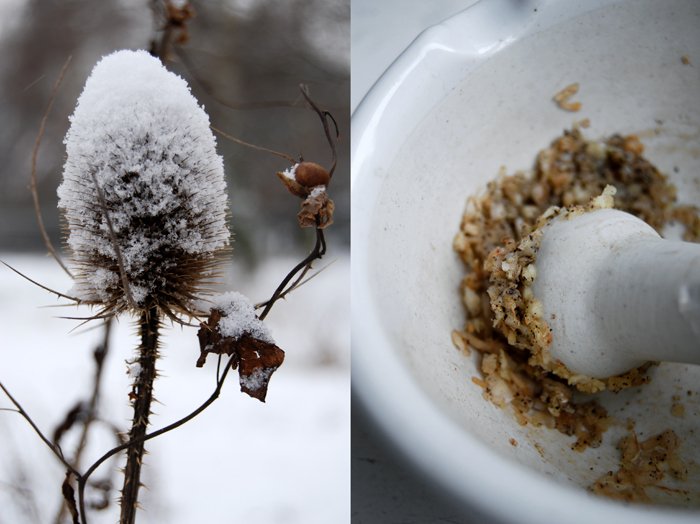
Mix the coriander roots, the grated ginger, the garlic and a generous amount of ground black pepper in a mortar and grind to a smooth paste. Mix the paste together with the beef, half of the coriander leaves (chopped) and a teaspoon of salt. Form little walnut sized balls with a teaspoon.
Season the broth with salt and pepper to taste, add the slices of ginger and lemongrass and bring to the boil. Cook the meatballs in the broth on medium heat for 4 minutes. Keep the lid closed. After 4 minutes, add the cabbage and cook for another 2 minutes. Serve in deep bowls topped with the chili slices and the rest of the coriander leaves.